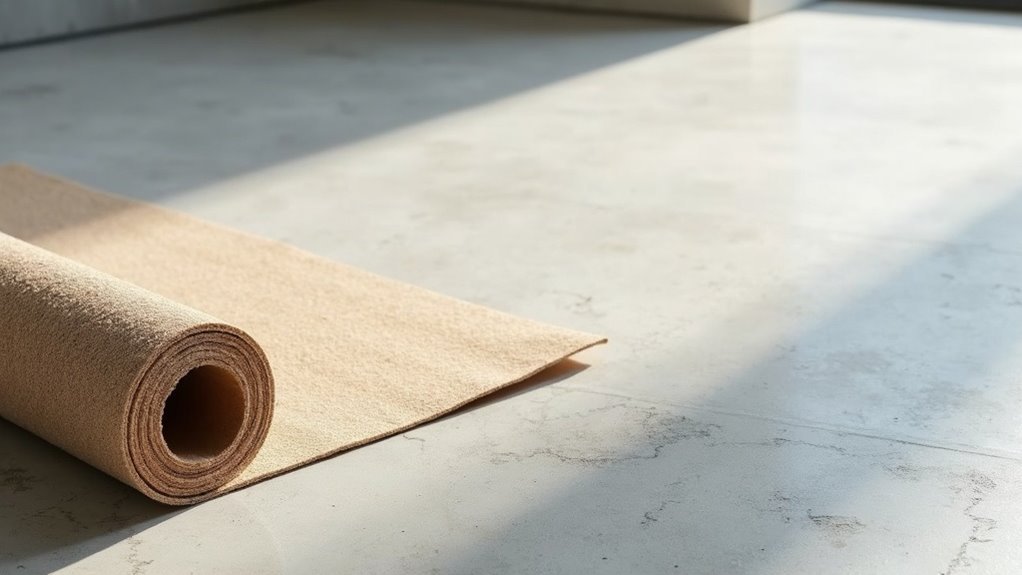
Yes, flooring underlayment is crucial for home gyms set up on concrete slabs. It serves as a moisture barrier, protecting your flooring from the inherent porosity of concrete and helping to prevent mold growth—an important factor for maintaining a healthy workout space. Additionally, underlayment enhances comfort underfoot, making your exercise routines more enjoyable, and it significantly improves sound insulation, which is essential for minimizing noise disturbances in your home.
Choosing the right type of underlayment, such as foam or rubber, can also help safeguard your gym equipment and flooring from excessive wear, ensuring that your workout area remains in top condition. Understanding the specifics of installation can further boost the performance and longevity of your flooring, so taking the time to explore these details can be highly beneficial for your home gym setup.
Key Takeaways
- Flooring underlayment is crucial for home gyms built on concrete slabs, as it serves as a moisture barrier that protects your flooring from the concrete’s moisture absorption.
- This underlayment enhances comfort, reduces impact noise, and provides a better workout environment, making it easier to stay motivated during high-intensity sessions.
- By preventing mold growth, proper underlayment contributes to a healthier workout atmosphere, ensuring you can focus on your fitness goals without health concerns.
- Various types of underlayment, including foam and rubber options, offer different levels of moisture resistance and durability to meet your specific workout needs.
- Neglecting to use underlayment can lead to flooring failure, void any warranties, and increase maintenance costs, ultimately affecting your home gym experience.
The Importance of Underlayment on Concrete Slabs
When you set up a home gym over a concrete slab, incorporating underlayment is crucial for several reasons.
First, underlayment serves as a moisture barrier, protecting your gym flooring from the concrete’s porosity and preventing mold growth, which can be detrimental to your health.
Additionally, it provides essential noise reduction, enhancing comfort during workouts and minimizing impact sounds from exercises like jumping or lifting weights.
Skipping this step can lead to cold surfaces and faster wear on your equipment, resulting in higher replacement costs down the line.
Always opt for the right thickness, ideally between 1.5 mm to 2 mm for rubber flooring or mats, to ensure optimal performance.
Prioritizing underlayment not only extends the life of your home gym flooring but also creates a safer and more enjoyable workout environment.
Types of Underlayment Suitable for Concrete
Selecting the right type of underlayment for your home gym flooring is essential for maximizing performance and ensuring a safe workout environment.
Underlayment comes in various forms, including foam with an attached vapor barrier, cork, rubber, and combination systems.
Foam underlayment is budget-friendly and provides adequate moisture resistance, making it suitable for home gym spaces.
Cork offers eco-friendly benefits and excellent sound control, but it may require an additional vapor barrier for optimal moisture protection.
Rubber underlayment is highly durable and ideal for high-traffic areas, providing outstanding moisture resistance and sound absorption, which is crucial for creating a comfortable workout atmosphere.
Combination systems merge materials for comprehensive protection, making them among the best options for home gym flooring, though they typically come at a higher price point.
Benefits of Using Underlayment
Using underlayment on concrete slabs in your home gym offers significant moisture protection, acting as a barrier against potential damage from the concrete’s porosity. This is especially important for maintaining a healthy exercise environment.
Additionally, it enhances comfort underfoot, which is crucial during workouts, particularly in high-traffic areas where you’re frequently on your feet.
The right underlayment also effectively reduces impact noise, ensuring a quieter atmosphere for your fitness routines.
Moisture Protection Benefits
While many homeowners may overlook the importance of underlayment in their home gym setups, it plays a crucial role in moisture protection when installed over concrete floors.
Concrete is porous and can absorb moisture from the ground, which can pose a risk to your gym equipment and flooring. Underlayment acts as an effective moisture barrier, preventing water from seeping through and compromising the integrity of your flooring.
Neglecting this step can lead to mold growth and deterioration, particularly in humid environments where you exercise. Many manufacturers recommend using a vapor barrier with underlayment to ensure warranties are upheld and performance is guaranteed.
Choosing the right underlayment not only protects your flooring but also enhances the longevity of your home gym equipment by addressing moisture-related issues during installation.
Comfort and Sound Reduction
When it comes to creating the ultimate home gym experience, incorporating underlayment is a game changer for both comfort and acoustics. It provides essential cushioning underfoot, making those intense workout sessions on hard concrete surfaces much more enjoyable.
Beyond comfort, underlayment is a champion in sound reduction, effectively minimizing the echo and noise that often come with direct concrete flooring. Materials like cork and rubber are particularly effective, offering superior sound absorption to enhance the auditory environment of your gym.
This is especially beneficial in multi-story homes, as underlayment helps reduce sound transmission between floors, creating a quieter workout space. Plus, it aids in maintaining a consistent temperature on chilly concrete slabs, ensuring you stay comfortable and focused during your fitness routines.
Elevate your home gym setup with quality underlayment for a truly enjoyable workout environment!
Moisture Management and Vapor Barriers
When setting up a home gym over concrete slabs, managing moisture is crucial to ensure optimal performance and longevity of your equipment.
A vapor barrier is essential to protect your flooring and workout surfaces. Without it, you risk warping, buckling, and mold growth, which can compromise your gym environment.
Be sure to test the moisture levels of the concrete using methods like MVER and in situ RH testing. This will help you select the appropriate underlayment and ensure a durable and effective home workout space.
Importance of Vapor Barriers
Understanding the importance of vapor barriers is essential for anyone setting up a home gym, especially when installing flooring over concrete slabs.
These barriers play a significant role in moisture management, which is crucial for maintaining a safe and comfortable workout environment. Concrete slabs are naturally porous, allowing moisture to seep through, potentially leading to serious issues like warping, buckling, or even mold growth.
Installing a vapor barrier not only protects your flooring materials but also ensures a stable foundation for your workout equipment. Many manufacturers require vapor barriers for warranty validity, making their use vital in preserving your investment.
In humid climates, such as Kyle, TX, effectively managing seasonal moisture fluctuations is even more critical. Neglecting this installation can lead to costly repairs and voided warranties, jeopardizing your home gym setup and fitness journey.
Moisture Testing Methods
Before setting up your home gym on concrete floors, conducting moisture testing is crucial to avoid potential damage to your equipment.
Two primary methods are commonly used: Moisture Vapor Emission Rate (MVER) and in situ Relative Humidity (RH) testing, following ASTM F2170 standards.
MVER measures the moisture emitted from the concrete surface over 24 hours, requiring three tests for the first 1,000 square feet and one additional for each extra 1,000.
In situ RH testing assesses moisture levels within the concrete itself.
Accurate readings are essential, as excessive moisture can lead to issues like flooring warping or equipment instability, making it necessary to install effective vapor barriers to ensure the longevity and safety of your home gym setup.
Selecting Appropriate Underlayment
How do you ensure your home gym flooring performs optimally on a concrete slab? By prioritizing moisture management and selecting the right underlayment. A proper vapor barrier is crucial to prevent moisture-related issues that could lead to costly repairs and disruptions to your workout routine.
Consider these important factors:
- Opt for underlayment with an integrated vapor barrier for effective moisture protection, ensuring a safe and comfortable workout environment.
- Always adhere to manufacturer guidelines to maintain warranty validity and ensure the longevity of your flooring.
- Evaluate moisture levels in the concrete to prevent premature flooring failure, keeping your home gym functional for all your fitness needs.
Installation Considerations for Various Flooring Types
When selecting the right flooring for a home gym built on a concrete slab, it’s essential to consider the specific underlayment requirements for each flooring type.
Underlayment provides critical moisture protection and sound insulation, which is particularly important for laminate and carpet, ensuring a comfortable and durable workout environment.
For vinyl flooring, a denser underlayment is necessary to prevent wear and enhance stability during intense exercises.
Tile installations can benefit from underlayment as well, helping to reduce the risk of cracking due to movement in the concrete slab.
Always consult flooring professionals to ensure you choose the correct underlayment, as each flooring type has unique specifications that adhere to manufacturer guidelines.
Following these recommendations not only protects warranties but also ensures peak performance and safety for your home gym flooring.
Common Mistakes to Avoid When Installing Underlayment
While installing underlayment for your home gym flooring may seem straightforward, many homeowners make critical mistakes that can jeopardize the longevity and performance of their workout space.
To ensure a successful installation, avoid these common pitfalls:
- Skipping the vapor barrier, even in dry climates, can lead to moisture issues that can affect your equipment and flooring.
- Using carpet padding instead of the correct underlayment can compromise the support needed for high-impact exercises and reduce the effectiveness of your workout area.
- Ignoring manufacturer recommendations may void warranties, risking costly repairs if your flooring or equipment is damaged.
Taking shortcuts in the installation process often results in premature flooring failure, which can hinder your fitness journey.
Proper attention to detail when installing underlayment in your home gym is essential for a durable and effective workout environment.
Real-World Applications and Recommendations
Choosing the right underlayment for your home gym flooring is crucial for both performance and comfort. In areas with high humidity, such as Kyle, TX, a foam underlayment with vapor barriers is recommended to protect against moisture damage, particularly in spaces where you may sweat during workouts.
For basements or lower levels, rubber or combination systems provide excellent durability and moisture resistance, ensuring your equipment remains stable and your flooring stays intact.
Selecting the appropriate underlayment not only safeguards against potential mold growth but also enhances sound insulation, allowing you to enjoy your workouts without disturbing others in your home.
Additionally, consulting specific manufacturer guidelines is essential to ensure compatibility with your flooring and to maintain any warranties.