To use partial range movements effectively in your home gym, start with essential safety equipment like safety bars or adjustable pins to support your lifts and boost your confidence. Choose weights around 70-80% of your one-rep max, ensuring you maintain proper technique throughout each lift. Control your tempo, and make sure to incorporate full range exercises before transitioning to partials. Keep track of your progress and recovery closely, adjusting your routine as needed for optimal performance. There’s plenty more to explore on maximizing your training potential right from the comfort of your home!
Key Takeaways
- Utilize safety bars and adjustable pins to securely perform partial range movements at home, minimizing injury risks while lifting heavier weights in your home gym.
- Begin with 70-80% of your one-repetition maximum to effectively engage muscles during partial range exercises, ensuring you’re making the most of your home workout.
- Incorporate partial reps only after reaching failure on full range movements to maximize muscle tension and growth, helping you achieve your fitness goals.
- Prioritize a controlled tempo during both lifting and lowering phases to maintain proper technique and prevent injuries, especially when exercising alone at home.
- Regularly assess and adjust weights in your home gym to ensure progression while maintaining a balance between full and partial range exercises, allowing for a well-rounded fitness routine.
Understanding Partial Range Movements
When you incorporate partial range movements into your home workout routine, you focus on executing repetitions within a limited range of motion, allowing you to target specific muscle segments effectively.
These movements can enhance strength development, particularly at weak points, by enabling you to use heavier weights where your muscles are strongest.
Incorporating partial range movements allows you to strengthen weak points by lifting heavier weights where your muscles excel.
Integrating short-length partials into your training regimen can promote muscle growth and hypertrophy without sacrificing overall balance, as they should complement your full range exercises.
Always prioritize safety by using home gym equipment like safety pins or blocks, especially when working through sticking points, to maintain control and reduce injury risk while exercising at home.
Importance of Safety Equipment
Safety equipment is crucial for anyone looking to maximize the benefits of partial range movements while minimizing injury risks, especially when exercising at home.
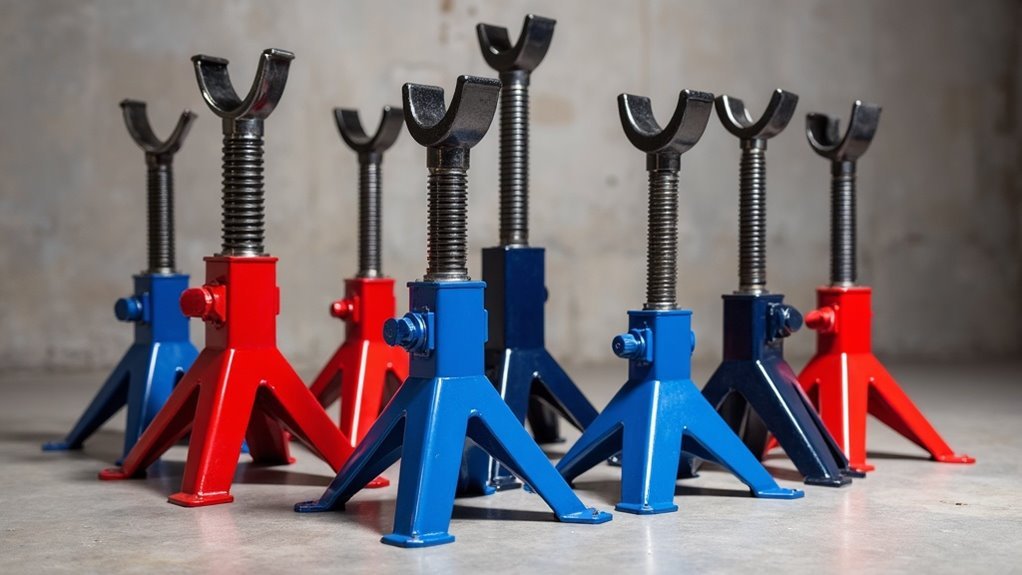
Utilizing safety bars and adjustable safety pins allows you to lift heavier weights with confidence, knowing there’s a safety net in place. This support not only helps prevent injuries but also enables you to concentrate on maintaining proper technique during your home workouts.
By incorporating these safety mechanisms, you create a safer training environment that enhances your performance and encourages consistent progress.
Ultimately, having reliable safety equipment boosts your confidence, empowering you to push your limits while prioritizing your safety and well-being in your home gym.
Selecting the Right Weight
When selecting the right weight for partial range movements at home, it’s important to assess your current strength levels to establish a baseline.
Begin with 70-80% of your one-repetition maximum and make incremental adjustments based on your performance.
Always prioritize safety measures, such as using a spotter if you’re lifting heavier weights, to minimize the risk of injury as you increase the load.
Assessing Strength Levels
To effectively select the right weight for partial range movements in your home gym, it’s important to assess your current strength levels by determining the maximum weight you can lift with proper form for 6-10 repetitions.
Aim for a weight that’s approximately 70-85% of your one-repetition maximum (1RM) to ensure effective training. Start with lighter weights to master your technique and range of motion, keeping safety as your top priority.
Make sure to utilize safety equipment such as squat racks or safety bars to manage your movements safely at home. Regularly reassess your strength levels and adjust the weights accordingly to reflect your progress and prevent plateaus in your training.
This will help you stay healthy and achieve your fitness goals right from the comfort of your home.
Incremental Weight Adjustments
After evaluating your strength levels, selecting the right weight for partial range movements in your home gym is essential for effective workouts.
Begin with 50-70% of your one-rep max to ensure safe execution. Utilize incremental weight adjustments of 5-10% based on your performance feedback. Focus on sticking points by applying slightly heavier weights to enhance strength at those critical angles.
Implement progressive overload by gradually increasing weight over time to keep challenging yourself. Aim for 2-4 sets of 6-10 repetitions for optimal results, while keeping an eye on your fatigue levels. Remember to allow for 48 to 72 hours of recovery between sessions to prevent injury.
- Feel empowered by each incremental gain.
- Experience the thrill of surpassing your previous limits.
- Build confidence in your strength journey at home.
- Discover the joy of mastering new techniques with your home gym equipment.
- Achieve your fitness goals safely and effectively from the comfort of your home.
Prioritizing Safety Measures
Selecting the right weight for partial range movements is essential for maintaining safety and achieving effective results, especially when working out at home.
Begin by using weights around 50-70% of your one-rep max to ensure you maintain proper form during partial repetitions. Gradually increase the weight in small increments of 5-10% to minimize the risk of injury within the limited range of motion.
If you have access to home gym equipment, consider utilizing safety bars to create a controlled environment that can catch the weight if necessary. Aim for a lower rep range of 3-6 reps for optimal strength gains while prioritizing a thorough warm-up to prepare your muscles and joints, reducing the likelihood of strain or injury.
This approach ensures that both men and women can safely engage in effective workouts from the comfort of their homes.
Mastering Technique and Control
To master technique and control in partial range movements while using home gym equipment, it’s essential to prioritize proper setup techniques before each lift.
Focus on controlling your range of motion, ensuring consistent execution throughout each movement.
This precision not only enhances your overall performance but also reduces the risk of injury, making your home workouts safer and more effective for both men and women.
Proper Setup Techniques
When setting up for partial range movements in your home gym, it’s essential to ensure that your safety bars or pins are positioned correctly to target the desired range while keeping safety in mind.
Here are some key setup techniques to follow:
- Ensure that your safety mechanisms are sturdy and properly adjusted for home use.
- Begin with lighter weights to master your technique and control, especially if you’re new to exercising at home.
- Maintain the same movement pattern as you’d with a full range of motion to promote proper form.
- Use a controlled tempo for both the lifting and lowering phases to enhance effectiveness.
- Focus on engaging your muscles while minimizing the risk of injury, making your home workouts both safe and productive.
Focus on Range Control
Mastering technique in partial range movements is essential for preventing injury and ensuring effective muscle engagement, especially when exercising at home.
Focus on controlling your range of motion; execute partial reps within a defined segment using home gym equipment like safety bars for bench press lockouts or squats.
Practice slow, deliberate movements to emphasize proper form, maintaining tension in the target muscle throughout each exercise.
Incorporate external supports, such as pins or boxes, to safely address sticking points while perfecting your technique.
Regularly assess and adjust weight to prioritize technique over overload, ensuring you maintain proper form and maximize safety in your home workouts.
This approach not only enhances your performance but also promotes a healthier lifestyle.
Incorporating Full Range Exercises
Incorporating full range exercises into your home workout routine is essential for maximizing muscle strength and hypertrophy, whether you’re training with resistance bands, dumbbells, or bodyweight exercises.
These movements activate all muscle fibers and improve functional strength throughout the entire range of motion.
- Establish a solid foundation for proper form using home gym equipment
- Enhance performance in subsequent partial range exercises to boost your at-home workouts
- Promote overall muscle growth with versatile exercises that fit any space
- Reduce the risk of injury through controlled movements while exercising at home
- Ensure a balanced training program that targets all major muscle groups
Prioritize full range exercises before partial reps in your home gym sessions.
This approach not only pre-fatigues your muscles but also allows you to lift heavier loads safely.
Focus on maintaining proper technique to reap the full benefits of both training styles, helping you stay healthy and fit right from the comfort of your home.
Progressing With Partial Reps
After establishing a strong foundation with full range exercises at home, you can effectively progress to partial range movements to further challenge your muscles.
Start by incorporating partial range of motion (ROM) by executing full ROM exercises until failure, then transition to half-ROM reps to enhance muscle tension and extend the set’s volume.
If you have access to equipment like pins or safety bars, use them to control the ROM, allowing you to lift heavier weights while focusing on sticking points.
Limit partial reps to the last set of your isolation exercises, ensuring their volume doesn’t exceed half of the preceding full ROM reps.
After 4-6 weeks of this training approach, consider implementing a deload phase to promote recovery and support muscle growth.
Monitoring Recovery and Performance
Since partial range movements can lead to significant muscle fatigue, monitoring your recovery is crucial for enhancing your performance in your home workouts.
It’s important to track your muscle soreness and strength gains closely, allowing for 48 to 72 hours of rest before targeting those muscle groups again.
Utilize training logs to document your weights and repetitions, adjusting your exercise volume as necessary.
Be mindful of performance plateaus; incorporating periodization into your routine can help optimize recovery and prevent overuse injuries.
Regularly assess your training program to ensure a balance of full and partial range movements, which will enhance recovery while still promoting strength gains at home.
- Experience intense muscle soreness
- Achieve significant strength gains
- Avoid overuse injuries
- Track progress effectively
- Maintain an ideal training balance