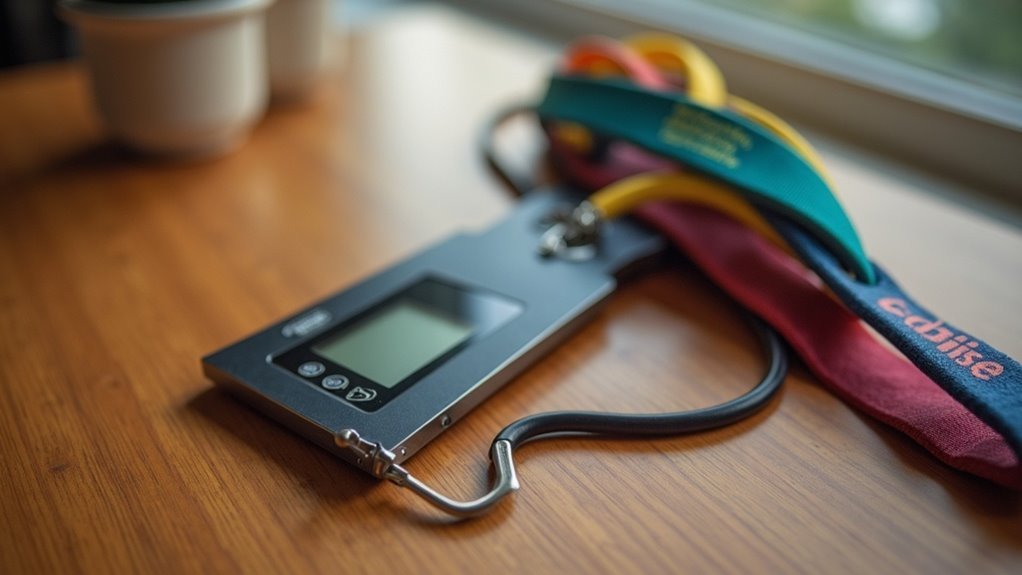
To test band resistance with a luggage scale at home, start by securely anchoring the resistance band to a stable point, such as a door frame or heavy furniture. Attach the luggage scale to the free end of the band. Pull the scale vertically until you reach your desired stretch length, ensuring the scale remains upright for accurate readings. Record the value displayed on the scale to determine the resistance level. Keep in mind that different stretch lengths will produce varying resistance levels, so it’s a good idea to perform multiple measurements for consistency. By adjusting your resistance bands accordingly, you can tailor your home workouts to better meet your fitness goals. Explore more tips on optimizing your training at home for a healthier lifestyle.
Key Takeaways
- Secure the resistance band to a stable anchor point in your home gym to ensure accurate measurements.
- Attach the luggage scale to the free end of the band for resistance testing, making it easy to assess your workout gear.
- Pull the band to your desired stretch length while keeping the scale vertical for optimal readings.
- Record the reading on the luggage scale to determine the resistance level, helping you customize your home workouts.
- Repeat the process multiple times for consistency and to note any variability in measurements, ensuring you get the most out of your resistance training.
Understanding Band Resistance
Understanding band resistance is essential for optimizing your home workout routines. For both men and women, band tension can vary significantly based on the stretch length and the specific band used, making accurate measurement crucial.
To quantify resistance effectively, use a luggage scale by attaching it to the band and pulling until you achieve the desired stretch. The recorded tension will indicate the force exerted by the band, directly correlating to the resistance you experience during your exercises.
To ensure consistent measurements, always use the same band and stretch it to the same length. This knowledge allows you to tailor your home workouts to your individual strength levels and fitness goals, promoting a healthier lifestyle.
Equipment Needed for Measurement
To accurately measure band resistance in your home gym, you’ll need a few essential tools. The primary tool is a luggage scale, which is both affordable and widely available. Ensure that it’s calibrated properly for precise readings. You’ll also need resistance bands, which you’ll attach to the scale and a fixed point for measurement. Here’s a quick reference table:
| Tool | Purpose | Notes |
|---|---|---|
| Luggage Scale | Measures resistance | Ensure proper calibration |
| Resistance Bands | Provide varying resistance levels | Regularly check for wear and tear |
| Fixed Point | Anchor for the band | Use a stable surface |
Incorporating these tools into your home workouts can significantly enhance your training effectiveness and help you achieve your fitness goals.
Step-by-Step Measurement Process
With your home gym equipment set up, you can effectively measure band resistance to enhance your workouts.
First, securely attach the resistance band to a stable anchor point and connect the luggage scale to the other end. Pull the band to your desired stretch length, ensuring the scale remains vertical for accurate readings. Check the value displayed on the scale to determine the resistance level.
For a comprehensive understanding, gradually increase the stretch and record the corresponding scale readings. Performing multiple measurements is essential to ensure consistency and account for any variability in band tension.
Keep in mind that the resistance shown reflects the force required, not the weight lifted, helping you tailor your home exercise routine to your fitness goals.
Interpreting Measurement Results
As you evaluate the resistance values from your measurements, it’s important to consider how the stretch length of your resistance band affects the readings. Different stretch lengths will result in varying resistance levels, which can impact your home gym workouts. Consistency in your measurements is key, so be sure to repeat the tests and record each stretch length.
| Stretch Length (inches) | Weight Displayed (lbs) | Resistance Category |
|---|---|---|
| 10 | 30 | Moderate |
| 15 | 50 | High |
| 20 | 70 | Very High |
Leverage this data to effectively tailor your training regimen and maximize your results while exercising at home.
Tips for Selecting the Right Band
Selecting the right resistance band is crucial for effectively achieving your fitness goals at home. Here are some tailored tips to help you make the best choice:
- Consider Thickness and Material: A thicker band generally provides more resistance, making it important to choose one that aligns with your specific exercise routines and fitness level.
- Match Band Type to Your Home Workouts: Depending on the exercises you plan to incorporate into your home gym, opt for loop, flat, or tube bands to ensure you get the most out of your workouts.
- Account for Your Strength Levels: Using a band that’s too heavy can hinder your form and increase the risk of injury. It’s wise to try out different resistance levels to find the perfect fit for your home exercise regimen.