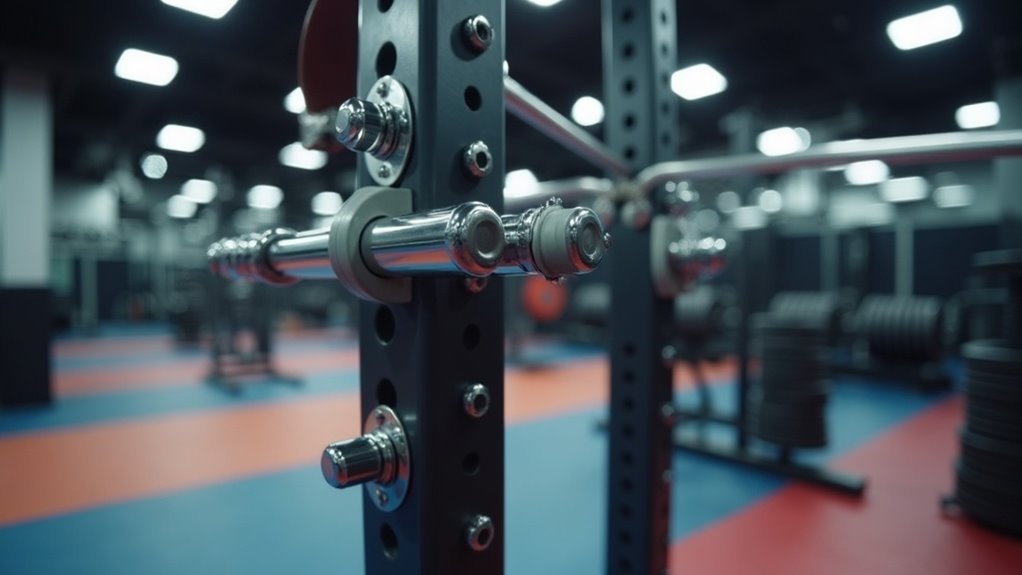
To set up belt squat attachments on a home gym rack, begin by ensuring your squat rack is suitable for your space and meets the necessary size and weight capacity requirements. Securely attach the belt squat mechanism at the appropriate height—aiming for 2-4 inches below your hip level for optimal performance. Fasten the belt snugly around your waist to ensure comfort and safety during your workout. Next, load weight plates onto the designated pins, adjusting as needed for your fitness level. Before diving into your workout, check the stability of your setup by performing a few test squats. Keep all connections tight and inspect the equipment regularly for any signs of wear. By following these steps, you’ll enhance your safety and effectiveness while squatting at home, allowing you to focus on your fitness goals with confidence. Stay tuned for more tips on maximizing your home gym experience!
Key Takeaways
- Align the belt squat attachment hooks with the squat rack uprights and secure them using the adjustment pin for a stable home workout setup.
- Position the attachment 2-4 inches below hip level to ensure an optimal squat stance and movement for effective exercise.
- Thread the belt through the designated slot and adjust it for a snug fit around your waist, making sure it feels comfortable during your workout.
- Load weight plates onto the designated pins, ensuring they are within safety limits and evenly distributed for a balanced workout.
- Test the setup with lighter weights to confirm stability and comfort before progressing to full workouts, ensuring a safe and effective exercise experience at home.
Selecting the Right Squat Rack
When selecting a squat rack for a belt squat attachment in your home gym, it’s essential to ensure it meets specific criteria for both safety and functionality.
First, verify that the squat rack has compatible dimensions and a weight capacity sufficient to support the additional load during exercises. Look for a sturdy frame and stable base to prevent tipping or wobbling, ensuring your workouts are safe and effective.
Verify the squat rack’s dimensions and weight capacity for safety, ensuring a sturdy frame to prevent tipping during workouts.
Opt for a rack that allows for easy attachment and detachment of the belt squat mechanism for added convenience in your routine. Additionally, consider adjustable height settings to accommodate various users and exercise variations, while confirming that the design includes ample space for movement and safety clearance during workouts.
This way, both men and women can enjoy a versatile and secure training environment at home.
Attaching the Belt Squat Mechanism
Attaching the belt squat mechanism to your home squat rack is a simple yet essential process that enhances your workouts and promotes safety.
Begin by aligning the attachment’s hooks with the appropriate height on your squat rack’s uprights, ensuring it suits your individual frame. Once aligned, use the adjustment pin to securely lock the mechanism in place, preventing any unwanted movement during your exercise sessions.
Then, attach the belt, making sure it rests comfortably at a height that works for your body type. Next, load the weight plates onto the designated pins, keeping within your squat rack’s specified safety limits.
Finally, perform a test squat to verify that everything is stable and the belt is positioned correctly, allowing you to focus on achieving your fitness goals from the comfort of your home gym.
Adjusting the Height for Optimal Performance
Achieving optimal performance with your belt squat attachment is essential for an effective home workout. Here’s how to adjust the height for maximum safety and effectiveness:
- Position the attachment 2-4 inches below your hip level to ensure a natural squat stance that suits both men and women.
- Make sure the belt aligns with your hips while standing, allowing for a full range of motion during your exercises.
- Test the setup with lighter weights first to ensure comfort and stability, preventing any strain on your knees or lower back.
As you progress in your fitness journey and your squat technique and flexibility improve, regularly reassess and adjust the height.
This commitment will help you maintain an effective and safe workout experience in your home gym.
Connecting the Belt to the Attachment
Connecting the belt to the attachment is a simple yet essential process that ensures a safe and effective workout at home. First, make sure your Revolt Fitness belt squat attachment is properly mounted on your squat rack. Take the provided belt and thread it through the designated slot. Adjust the length of the belt so that it fits snugly around your waist, preventing any slippage during your squats. Before you begin your exercise routine, it’s important to double-check all connections for security.
| Step | Action |
|---|---|
| 1 | Securely mount the attachment. |
| 2 | Thread the belt through the slot. |
| 3 | Adjust the belt length for comfort. |
| 4 | Attach weights as needed. |
| 5 | Verify that all connections are secure. |
Ensuring Stability and Safety
To ensure a safe and effective workout in your home gym, it’s crucial to maintain the stability of your belt squat attachment throughout your exercises. Follow these steps to verify safety:
Maintaining the stability of your belt squat attachment is essential for a safe and effective home workout.
- Securely fasten the belt squat attachment to the squat rack, following the manufacturer’s instructions for optimal setup.
- Ensure that the weight plates are evenly distributed on both sides for perfect balance and stability.
- Place a mat or platform beneath the attachment to absorb shock and improve grip during your workouts.
Additionally, make it a habit to regularly inspect for any signs of wear and tear, and always position the rack on a flat surface to minimize wobbling.
Prioritizing stability is key to ensuring your safety while exercising at home.
Loading Weights Properly
Before you start loading weights onto your belt squat attachment, ensure it’s securely fastened to your squat rack and positioned at the right height for your workout. Use standard weight plates with a 2-inch center hole, stacking them evenly to maintain balance. Always prioritize safety by avoiding overloading; stay within the attachment’s weight capacity. Begin with lighter plates to familiarize yourself with the mechanics before increasing the load. Confirm that the weights are snugly fitted on the posts and check for any movement.
| Weight Plate | Stability Check | Action |
|---|---|---|
| 10 lbs | No wobble | Add more |
| 25 lbs | Slight shift | Adjust weight |
| 35 lbs | Secure | Proceed |
| 45 lbs | Wobble | Tighten |
| 55 lbs | Stable | Start squats |
With proper loading, you can ensure an effective and safe workout at home, enhancing your fitness journey.
Preparing Your Space for Effective Squats
How can you ensure your home gym space is perfectly set up for effective squats?
Start by creating a safe and functional environment. Here’s a quick checklist to help you prepare:
Creating a safe and functional environment is essential for effective squats; follow this checklist to get started.
- Clear the Area: Remove any obstacles around your squat rack to ensure you have plenty of space for free movement, allowing you to focus on your form.
- Adjust the Attachment: Set the belt squat attachment height according to your body size and preferred squat depth to maximize safety and effectiveness during your workout.
- Check Your Flooring: Choose flooring that provides a bit of grip to prevent slipping while performing your squats, helping you maintain stability and balance.