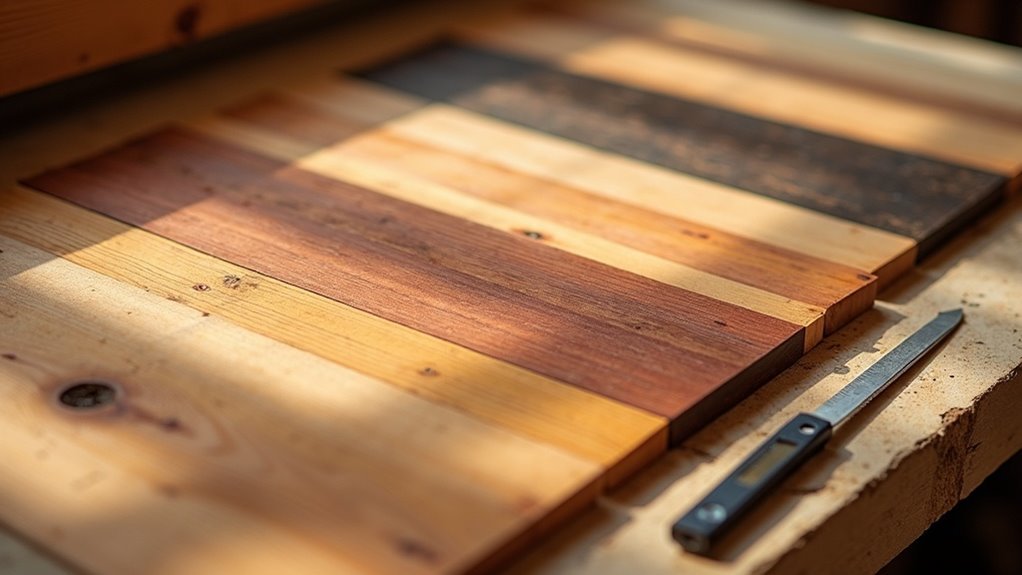
When selecting wood types for home gym platforms, consider durability, intended use, and aesthetic appeal. Hardwoods like oak and maple are excellent choices for high-impact workouts and heavy equipment, while softer options like pine can be suitable for lighter activities. Keep your budget in mind and prioritize responsibly sourced materials by looking for certifications such as FSC or PEFC. Conduct visual inspections for quality and moisture levels to ensure long-lasting performance. Additionally, explore sustainable practices and maintenance tips to keep your gym platform in top condition for your fitness journey at home.
Key Takeaways
- Consider the durability needs: choose hardwoods like oak for high-use platforms in your home gym, and softwoods like pine for lighter applications where less wear and tear is expected.
- Assess your budget: hardwoods may come with a higher price tag, so be sure to evaluate your financial limits to make an informed selection that fits your home gym setup.
- Evaluate aesthetic appeal: pick wood that complements your home gym’s design, as a visually pleasing environment can enhance your motivation and enjoyment while working out.
- Ensure responsible sourcing: prioritize certified wood from organizations like FSC or PEFC to make sustainable and eco-friendly choices that align with a healthy lifestyle.
- Inspect quality: examine the wood for knots, warping, and moisture content to guarantee its long-term durability and performance in your home gym.
Types of Wood for Platforms
When selecting wood types for home gym platforms, it’s important to understand the various options available to ensure both functionality and aesthetic appeal in your workout space.
Solid wood platforms, made from whole pieces like teak and merbau, offer durability and a warm feel underfoot, making them a great choice for comfort during exercise.
Solid wood platforms provide exceptional durability and a cozy underfoot feel, enhancing comfort during your workouts.
Laminated wood platforms provide an economical option with scratch resistance, which is ideal for high-traffic areas in your gym.
Engineered wood platforms combine real wood with composites, offering stability in fluctuating humidity, ensuring a consistent workout environment.
Parquet platforms can showcase artistic patterns, adding a unique touch to your gym, but they may require more maintenance.
When choosing the right type of wood for your home gym platforms, consider factors like durability, color, and budget to create a safe and long-lasting workout space that motivates you to stay healthy.
Characteristics of Wood
Understanding the characteristics of wood is essential for making informed choices about your home gym platforms. The types of wood are primarily classified as hardwoods or softwoods, which significantly influence their strength and durability. Hardwoods like oak and maple provide exceptional resilience, making them ideal for heavy weights and rigorous workouts. On the other hand, softwoods such as pine are lighter and more budget-friendly, perfect for those just starting their home gym journey.
| Wood Type | Characteristics |
|---|---|
| Hardwoods | Dense, durable, pronounced grain, ideal for heavy use |
| Softwoods | Lighter, uniform texture, cost-effective, suitable for lighter applications |
Incorporating responsibly sourced wood not only supports sustainability but also ensures that your gym equipment is made from safe and long-lasting materials. By prioritizing these wood characteristics, you can create a home gym that enhances both your performance and the longevity of your workout platforms, helping you stay fit and healthy from the comfort of your own home.
Factors to Consider in Wood Selection
Selecting the right wood for your home gym platform is crucial for ensuring both performance and durability.
Start by evaluating your durability needs; hardwoods like oak or maple are ideal for high-use environments, while softer woods like pine may be suitable for lighter applications.
Budget is another important consideration; hardwoods often come at a higher price point, so it’s essential to assess your financial limits.
Don’t forget about aesthetics—choose wood that complements your home gym’s design and motivates you to stay active.
Sustainability is also key; sourcing certified wood can help you make an eco-friendly choice while supporting responsible forestry practices.
Lastly, consider availability, as some types of wood may be more difficult to source than others.
Intended Use of the Wood
The choice of wood for your home gym equipment or flooring heavily depends on its intended use. For durable workout platforms or storage solutions, consider using hardwoods like maple or red oak for their strength and resilience.
In high-traffic workout areas, materials like teak or merbau can withstand heavy use and offer long-lasting performance. If your gym setup is in a lighter-use space or you’re looking for budget-friendly options, laminated or engineered wood can provide an attractive and cost-effective solution.
Always keep in mind the environmental conditions of your workout space; engineered wood is particularly stable in fluctuating humidity, making it a great fit for various climates.
Assess specific functional requirements like weight capacity and moisture exposure to ensure the selected wood type effectively meets the demands of your home gym.
Quality Inspection and Sourcing
When you’re selecting wood for your home gym equipment, pay close attention to visual quality factors like knots, warping, and grain inconsistencies, as these directly impact the durability and aesthetics of your gear.
Establishing reliable sourcing practices is essential; ensure your suppliers provide certification labels and detailed specifications about their wood.
Always assess the wood’s moisture content to prevent future structural issues, guaranteeing a robust and sustainable choice for your home fitness setup.
Visual Quality Assessment
How do you ensure that the home gym equipment you choose meets the highest quality standards? Conduct a thorough visual quality assessment, because appearance and functionality matter.
Focus on these key factors:
- Build Quality: Look for robust construction and durable materials; any signs of wear or damage can indicate potential issues.
- Stability: Ensure the equipment is stable and sturdy, providing a safe workout experience to prevent accidents.
- Design Features: Check for ergonomic designs that support proper form and reduce the risk of injury during workouts.
Reliable Sourcing Practices
When selecting wood types for your home gym equipment, prioritizing reliable sourcing practices is essential for ensuring durability and sustainability.
Start by inspecting wood for defects like cracks, knots, and warping, as these can impact the strength and appearance of your equipment.
Focus on sourcing practices that emphasize certified sustainable wood, such as FSC or PEFC, which ensure responsible forest management.
Understanding the wood’s origin and processing methods will enhance your insight into its long-lasting performance.
Build relationships with reputable suppliers to consistently secure high-quality materials for your gym setup.
Regularly assess supplier practices, demanding transparency to uphold quality standards and support ethical environmental practices in your fitness journey.
Budget Considerations
Selecting the right wood type for your home gym equipment requires careful budget consideration, as costs can vary widely. Here are three key factors to keep in mind:
1. Wood Type: For constructing sturdy gym equipment, softwoods like pine and cedar are budget-friendly options that provide adequate support.
However, if you’re looking for long-lasting durability, hardwoods such as oak and maple, while more expensive, may be worth the investment.
2. Alternatives: Consider engineered or laminated wood as economical alternatives.
These options can deliver the aesthetic appeal you desire for your home gym while maintaining strength and stability without breaking the bank.
3. Additional Costs: Remember to factor in expenses for tools, fasteners, and finishes, as these can significantly impact your overall budget.
Planning for potential sourcing challenges will also help you manage costs effectively and ensure the success of your project, allowing you to create a functional and inviting space for your workouts at home.
Environmental Sustainability
When choosing materials for your home gym equipment, prioritize sustainable sourcing practices that focus on responsible forest management.
Look for certifications like FSC and PEFC, ensuring the wood you select supports biodiversity and helps prevent deforestation.
Additionally, consider the environmental impact of your choices, such as the advantages of using reclaimed wood and sourcing locally to minimize carbon emissions.
This approach not only contributes to a healthier planet but also enhances your home workout space.
Sustainable Sourcing Practices
Sustainable sourcing practices play an essential role in mitigating the environmental impact of home gym equipment procurement, ensuring that you choose materials that support responsible manufacturing.
To effectively implement these practices, consider the following:
- Choose certified materials from organizations like the Forest Stewardship Council (FSC) or Programme for the Endorsement of Forest Certification (PEFC) to guarantee responsible sourcing of wood and other materials used in gym equipment.
- Select equipment made from sustainable resources, such as recycled metals and plastics, which offer a lower environmental impact and contribute to a circular economy.
- Support brands that engage in eco-friendly practices, such as using renewable energy in their manufacturing processes or implementing take-back programs for old equipment, ensuring a steady supply of high-quality, sustainable gym products.
Certifications and Standards
To ensure your home gym equipment choices align with environmental sustainability, it’s important to understand certifications and standards.
Look for certifications like the Forest Stewardship Council (FSC) and the Programme for the Endorsement of Forest Certification (PEFC) when selecting wooden components for your gym. These certifications confirm that the wood used in your equipment comes from responsibly managed forests, which supports biodiversity and helps reduce carbon emissions.
Certified wood goes through rigorous auditing processes, ensuring compliance with ecological standards throughout the supply chain. By choosing certified products, you not only adhere to environmental regulations but also contribute to broader sustainability goals.
Always check for labels or documentation that indicate certification status to prioritize responsible sourcing practices that benefit both forest health and communities, while creating a positive environment for your home workout space.
Environmental Impact Assessment
While selecting wood types for your home gym platforms may appear to be an easy task, conducting an environmental impact assessment is essential for making responsible and informed decisions.
By focusing on sustainable wood options, you can play a part in promoting environmental health while enhancing your workout space. Here are some key considerations:
- Choose wood certified by organizations like FSC or PEFC to help combat deforestation and ensure responsible sourcing.
- Opt for hardwoods like maple or poplar that are sourced sustainably to support thriving ecosystems and provide durability for your gym equipment.
- Consider using reclaimed wood or rapidly growing species to reduce waste and ensure quicker replenishment, all while adding a unique touch to your home gym.
Maintenance Tips for Wooden Platforms
Maintaining wooden platforms in your home gym requires consistent care to ensure their durability and aesthetic appeal while providing a safe workout environment.
Regularly clean your platform with a soft broom or vacuum to remove dust and dirt, which helps preserve its appearance and keeps your exercise area hygienic.
Avoid excessive moisture exposure; wipe up spills immediately to prevent warping, especially after intense workouts.
Protect the wood’s finish by limiting direct sunlight exposure, as prolonged sun can fade its color and compromise its integrity.
Use protective pads under heavy gym equipment to avoid scratches and dents on the surface.
Schedule periodic maintenance checks to identify and address any signs of wear or damage promptly.