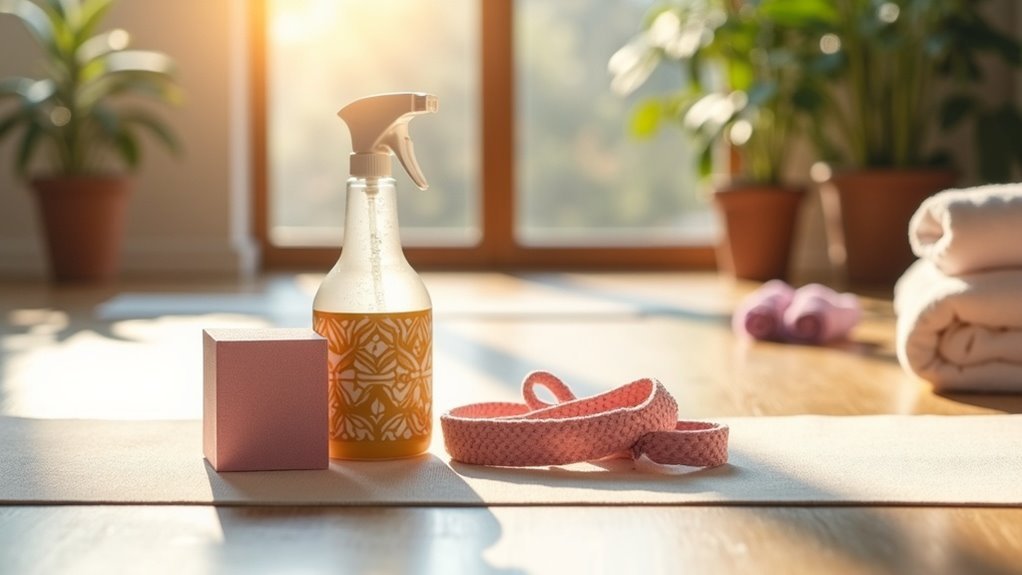
To ensure a clean and safe home gym experience, it’s important to sanitize shared yoga blocks and straps regularly. Begin by cleaning foam blocks with a mixture of dish soap and water, then allow them to air dry completely. For cork blocks, simply wipe them down with a damp cloth to remove any dirt or sweat. When it comes to yoga straps, hand wash them in cold water using a mild detergent, then rinse thoroughly to eliminate any residue. After cleaning, it’s crucial to apply an EPA-approved disinfectant to ensure that all surfaces are germ-free. Regular sanitation after each use is essential not only for maintaining hygiene but also for promoting a healthy workout environment. Keep your home gym equipment in top shape for a safe and effective exercise routine!
Key Takeaways
- To maintain hygiene, clean foam yoga blocks with a mixture of dish soap and water, then allow them to air dry completely before your workout.
- For cork blocks, use a damp soft cloth to wipe away any dirt, making sure they dry thoroughly to ensure longevity and safety.
- Hand wash yoga straps in cold water with a mild detergent, rinse them well, and lay flat to dry for best results.
- Always disinfect shared equipment after each use with EPA-approved disinfectants to minimize the spread of germs and keep your home gym safe.
- Schedule a deeper cleaning of all equipment at least once a week to create a healthy workout environment for your home fitness routine.
Importance of Sanitation for Yoga Blocks and Straps
When you step into your home gym, you mightn’t consider the bacteria and germs that can accumulate on your workout equipment, such as yoga blocks and straps.
These items can easily harbor viruses and bacteria, which can lead to infections and illness. Maintaining a clean and disinfected workout environment is essential, especially if you’re sharing equipment with family or friends.
Regularly cleaning and disinfecting your yoga blocks and straps not only promotes health but also extends the lifespan of your gear by preventing sweat and grime buildup.
By committing to proper sanitation, you help ensure a safe workout space for yourself and anyone else using your home gym.
Prioritize hygiene for a healthier and more enjoyable exercise experience!
Recommended Cleaning Solutions
To keep your home gym equipment in top shape, it’s essential to use the right cleaning solutions tailored to each material.
For foam yoga blocks, mix dish soap with water, then air dry for a thorough clean.
Cork blocks require a damp soft cloth to remove dirt without compromising their integrity.
When sanitizing yoga straps, hand wash them in cold water with a small amount of laundry detergent, rinsing thoroughly before laying flat to dry.
Regularly disinfect shared equipment with an EPA-approved disinfectant, like Force of Nature, to kill 99.9% of germs and prevent bacteria from growing.
Always check manufacturer guidelines to ensure proper care.
Step-by-Step Sanitizing Process
Maintaining cleanliness in your home gym may seem challenging, but following a straightforward step-by-step sanitizing process for shared yoga equipment is essential for your health and well-being.
| Equipment | Cleaning Method | Disinfecting Step |
|---|---|---|
| Foam Blocks | Clean with dish soap and water; ensure they air dry completely | Apply disinfectant; keep the surface wet for proper contact time |
| Wood Blocks | Use the same soap mixture; dry them thoroughly | Apply disinfectant; ensure full coverage on all surfaces |
| Yoga Straps | Hand wash in cold water with a mild detergent | Rinse thoroughly and lay flat to dry |
Start by following the manufacturer’s recommendations for cleaning, then proceed to disinfect your yoga blocks and straps to ensure they are safe and moisture-free for your workouts at home.
Tips for Maintaining Clean Yoga Equipment
Maintaining clean home gym equipment is crucial for your health and can enhance your workout experience.
Always sanitize shared items like resistance bands and weights after each use, using a safe disinfectant and allowing them to air dry.
For foam weights, clean them with a mixture of dish soap and water, while metal weights should be wiped down with a damp cloth.
Hand wash your exercise mats in cold water with detergent, rinse, and lay flat to dry.
Whenever possible, use personal gym items or designate specific equipment for your use to minimize cross-contamination and effectively maintain hygiene while working out at home.
Frequency of Sanitation for Shared Items
When you share home gym equipment like weights and mats, regular sanitation is essential to keep everyone safe and healthy.
It’s important to sanitize after every use to minimize the risk of spreading germs, especially in shared spaces. Schedule sanitation breaks during your workout sessions to maintain cleanliness.
Sanitize after each use to reduce germ spread and keep your shared workout space clean and safe.
In addition to post-use sanitation, plan for a deeper cleaning at least once a week to tackle any remaining contaminants.
Using an EPA-registered disinfectant, such as Force of Nature or Key Oxide, ensures that you effectively eliminate 99.9% of germs, enhancing the hygiene of your shared gym equipment.
Stay safe and enjoy your workouts at home!
Best Practices for Storing Yoga Blocks and Straps
To keep your yoga blocks and straps in optimal condition, store them in a clean, dry area away from direct sunlight.
Utilize designated bins or shelves that promote air circulation, which helps prevent moisture buildup that can lead to mold.
Proper Storage Techniques
Properly storing your home gym equipment, such as yoga blocks and straps, can enhance their longevity and ensure a hygienic workout space.
Follow these essential storage techniques to keep your gear in top shape:
- Store blocks and straps in a clean, dry area away from direct sunlight to prevent material degradation.
- Utilize storage bins or shelves to reduce clutter and facilitate easy access, making your workout routine more efficient.
- Hang straps or lay them flat to maintain elasticity and avoid kinks, ensuring they perform well during your workouts.
Regularly check your stored equipment for signs of wear, and replace items as necessary to guarantee they’re always cleaned and disinfected for a safe and effective home exercise routine.
Avoiding Moisture Buildup
Moisture buildup can be a hidden threat to your home gym equipment, including yoga blocks and straps, leading to mold and bacteria growth if not properly managed.
Always store your gear in a well-ventilated area to promote air circulation and allow moisture to evaporate. Avoid damp environments, such as near humidifiers or in bathrooms, which can increase the risk of mildew.
Instead, opt for breathable storage bins made from natural materials rather than plastic containers that trap moisture. Ensure your blocks and straps are completely dry before storing them, and regularly check for signs of moisture.
Designated Cleaning Areas
Establishing designated cleaning areas for your home gym is essential for maintaining hygiene and ensuring that shared equipment remains safe for everyone.
To create an effective process, consider these best practices:
- Clear Signage: Post instructions outlining cleaning procedures to remind users to sanitize equipment after each use.
- Labeled Storage: Use bins or shelves for clean and sanitized equipment, ensuring only properly cleaned items are accessible.
- Regular Deep Cleaning: Schedule routine deep cleaning of designated areas to uphold hygiene standards and prevent cross-contamination.
These steps foster a culture of cleanliness and responsibility in your home gym, helping you and others stay healthy while exercising at home.