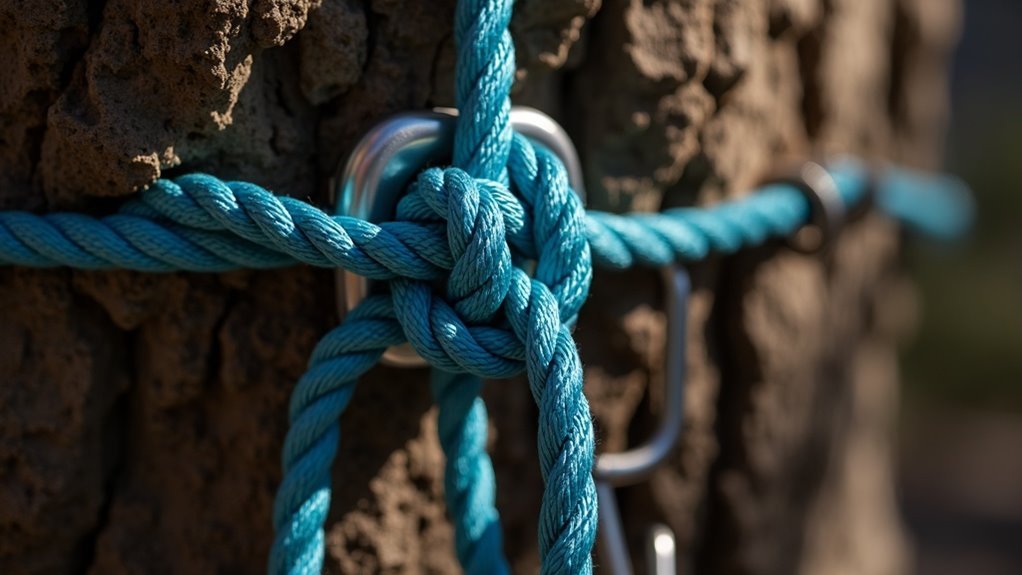
To rig a DIY pulley system for your home gym using climbing-rated hardware, begin by choosing a robust anchor point, such as a solid beam or wall stud. Secure the pulley with a climbing-rated carabiner, ensuring it is properly locked for safety. Next, thread a climbing rope (minimum 9.5mm) through the pulley to facilitate smooth movement during your workouts, and attach weights with climbing-rated carabiners for added resistance. Regularly inspect all components for wear and tear, and double-check all connections to maintain safety during your exercises. This setup not only enhances your workout efficiency but also ensures strength—continue reading to discover advanced techniques for optimizing your home gym performance.
Key Takeaways
- Choose a sturdy anchor point for your home gym setup, such as thick beams or wall studs, making sure it can support double the weight you’ll be using during your workouts.
- Utilize a climbing-rated carabiner to secure the pulley system, ensuring that the locking mechanism is engaged and positioned correctly to prevent any cross-loading.
- Select a climbing rope with a minimum diameter of 9.5mm, threading it through the pulley for optimal movement and securing it with a dependable knot to enhance your workout efficiency.
- Attach weights or resistance bands using climbing-rated carabiners, and implement wire rope clamps to avoid fraying and ensure stability during your exercises.
- Regularly check all components for signs of wear and ensure that all connections are secure to maintain safety and effectiveness during your home workouts.
Selecting a Sturdy Anchor Point
When setting up a DIY pulley system for your home gym, selecting a sturdy anchor point is crucial for both safety and effectiveness.
Look for a strong support structure, such as a thick beam or a solid wall stud, that can bear the load securely. If a suitable anchor isn’t available, consider constructing a sturdy upright using a treated timber, ensuring it’s deeply secured in concrete for stability.
Avoid using eye screws in living trees, as this can compromise their integrity. Always verify that your anchor point can withstand approximately double the force exerted, especially when employing pulley systems for heavy lifting.
Adhering to the working load limit is essential for maximum safety during your home workouts.
Attaching the Pulley and Carabiner
To effectively attach the pulley for your home gym setup, secure it to a stable structure using a climbing-rated carabiner. Ensure the carabiner’s locking mechanism is engaged for safety.
Choose a pulley rated for fitness use, ideally with a strength of at least 20 kN, to handle your workout loads. When connecting the carabiner to the pulley, position it correctly to prevent cross-loading, which can compromise safety.
Consider using a swivel pulley for enhanced flexibility, allowing the rope to move freely without twisting during your exercises.
Regularly inspect both the pulley and carabiner for wear and tear before each use to ensure safety in your DIY home gym pulley system.
Threading the Climbing Rope
Threading the climbing rope through your home gym pulley system is a vital step that affects both performance and safety during your workouts.
Begin by ensuring your climbing rope has a diameter of at least 9.5mm for optimal strength. Feed one end through the pulley wheel, checking that it glides smoothly without any resistance.
If your setup includes multiple pulleys, thread the rope in a way that preserves the intended mechanical advantage, allowing for efficient movement during exercises.
Finally, secure the end of the rope with a reliable knot, such as a figure-eight or bowline, to prevent slipping under load.
Always inspect the rope and hardware for any signs of wear to ensure a safe and effective workout experience at home.
Securing the Rope and Weights
Securing the rope and weights properly is essential for a safe and effective home gym pulley system. Use climbing-rated carabiners to ensure a secure attachment of the cable to the pulley and weights, providing confidence during your workouts. Employ wire rope clamps to prevent fraying and guarantee stability, keeping your equipment reliable. Confirm that the rope is threaded through the pulley correctly for smooth operation and to enhance your workout efficiency. Choose weights that align with the pulley and rope’s working load limits to ensure safety during your exercise routine. Regularly inspect all components for wear and damage to maintain optimal performance in your home gym.
| Component | Action |
|---|---|
| Cable | Secure with clamps |
| Loading Pin | Ensure tight fit |
| Carabiners | Check for integrity |
| Weights | Match specifications |
| Rope | Inspect for frays |
Ensuring Safety and Stability
Properly securing your rope and weights is crucial for maintaining safety and stability in your home gym pulley system. Always use high-quality, exercise-rated hardware, such as carabiners and pulleys designed to handle heavy loads.
Before each workout, inspect all components for any signs of wear and tear; damaged equipment can compromise your safety. Ensure that your anchor point is sturdy, ideally utilizing a solid structure like a strong ceiling beam or a properly installed wall mount.
Double-check all connections to confirm they’re tight, and avoid using surfaces with sharp edges that could fray your rope. Lastly, implement additional safety measures, such as secondary anchors, to help manage load control and minimize the risk of accidents during your workouts.