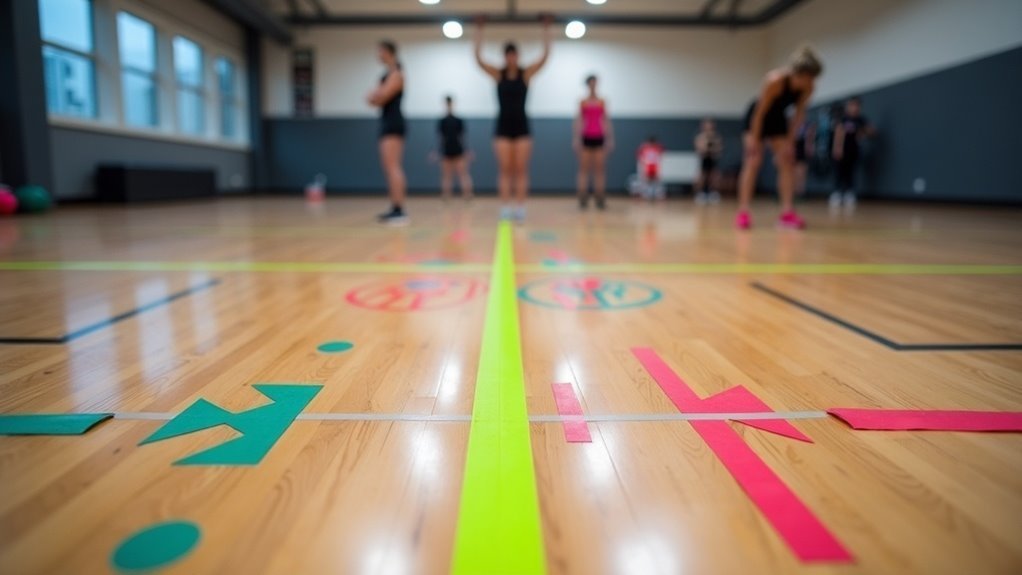
To effectively mark lifting zones in your home gym, use bright floor marking tape that is at least 2 inches wide for optimal visibility. Opt for vibrant colors like yellow to signify energy zones and red for high-intensity areas. Incorporate directional arrows and universally recognized symbols to ensure clear communication and safety. Regularly inspect your markings for wear and update signage as needed to maintain a safe workout environment. This attention to detail creates a secure space for both men and women to enhance their fitness routines. If you’re interested in further best practices to optimize your lifting zones, there’s a wealth of information available to explore.
Key Takeaways
- Use bright floor marking tape with a width of at least 2 inches to clearly designate lifting zones in your home gym.
- Incorporate directional arrows to guide movement between exercises and enhance flow in your workout area, making it easier to transition between sets.
- Choose vibrant colors like yellow for energizing zones and red for high-energy workout areas to create an inspiring atmosphere that motivates both men and women.
- Regularly inspect and maintain floor markings and symbols to ensure visibility and compliance with safety standards, helping to prevent accidents at home.
- Add universally recognized symbols against contrasting colors to enhance clarity and communication in lifting zones, making it easier for everyone to understand the layout of your gym space.
Identifying Lifting Zones
How can you effectively identify lifting zones in your home gym? Start by using bright floor marking tape to designate these areas, ensuring safety while exercising.
Markings should be at least 2 inches wide, enhancing visibility and safety for everyone using the space. Incorporate directional arrows within lifting zones to guide movement, especially in areas where you may transition between different exercises.
Regular maintenance of these markings is essential; inspect them frequently to prevent wear and ensure they remain clear.
Choosing the Right Colors
When selecting colors for your home gym equipment, it’s important to consider their psychological impact and how they influence motivation and mood.
Following best practices, you might choose vibrant colors like yellow for energizing spaces, red to inspire intensity and focus, green to promote a calming and restorative environment, and blue to create a sense of tranquility.
Consistent use of these colors not only enhances your workout experience but also helps reinforce your commitment to a healthy lifestyle at home.
Color Significance in Safety
Choosing the right colors for marking workout zones in your home gym is essential for ensuring a motivating and safe environment.
Understanding color significance in fitness helps enhance visual communication and create an inspiring workout space. Here’s a quick guide to color choices for your home gym:
- Yellow: Energizing; stimulates motivation and encourages activity.
- Red: Intensity; signifies high-energy zones for intense workouts.
- Green: Refreshing; indicates areas for cooling down or relaxation.
- Blue: Calm; promotes focus and mindfulness during workouts.
Consistent color usage throughout your home gym can enhance your workout experience and help maintain a positive atmosphere for your exercise routine.
ANSI and OSHA Guidelines
To ensure safety in home gym environments, it’s important to follow established guidelines for equipment placement and usage.
While there are no specific color codes mandated for home gyms, using bright colors like yellow for marking workout zones can enhance visibility and help prevent accidents.
Consistently marking areas with bright colors aids in memory retention and quick recognition, which is essential for maintaining a safe workout space.
Additionally, ensuring that the width of any floor markings is between 2 to 6 inches can improve visibility and delineate workout areas effectively.
Prioritizing safety in your home gym will help create a secure and motivating environment for your fitness journey.
Adding Symbols and Icons
Incorporating symbols and icons into home gym spaces is essential for enhancing safety and efficiency during workouts. To guarantee effective visual communication, follow these guidelines:
- Use universally recognized symbols, like dumbbell or treadmill graphics.
- Apply contrasting colors for symbols against floor markings to boost visibility, adhering to safety standards.
- Utilize pre-cut shapes and stencils for uniform size and placement across workout zones.
- Add directional icons to guide users on exercise movements, minimizing confusion and accidents.
Remember to regularly inspect and maintain these symbols to keep safety information clear and visible, ensuring they effectively communicate within busy home gym areas.
Reinforcing Awareness With Signage
Clear signage is essential for reinforcing awareness in home gym spaces, reducing the risk of accidents.
By using bold colors and recognizable symbols, you enhance visual cues that ensure everyone understands safety protocols while exercising.
Regularly updating these signs keeps your home gym environment informed and compliant, fostering a safer space for achieving your fitness goals.
Importance of Clear Signage
While you may think exercise safety protocols are well understood, effective signage plays an essential role in reinforcing awareness of workout zones in your home gym.
Clear signage can:
- Ensure individuals are aware of designated safe areas for lifting and exercising.
- Reduce the risk of accidents, supporting safe workout practices.
- Enhance visibility through color-coded signs and floor markings, creating an organized training space.
- Promote a culture of health and safety by regularly updating information on workout zones.
Implementing these strategies not only fosters a safe home gym environment but also significantly lowers the likelihood of injuries, reinforcing the importance of visual cues in your fitness space.
Visual Cues for Safety
To enhance safety in your home gym, it’s essential to utilize effective visual cues that grab attention and convey important information.
Follow a Floor Marking Guide by using colored floor markings—bright yellow for caution and red for danger—to improve visibility around lifting zones. Maintain consistent widths of at least 2 inches to ensure easy identification and compliance with safety standards.
Incorporate pre-cut shapes or symbols to enhance recognition of specific workout areas. Additionally, supplement these floor markings with overhead signage to provide a dual layer of visual communication.
Enhancing Employee Awareness
Visual cues like floor markings greatly improve safety, but reinforcing this awareness with signage takes it a step further.
To enhance employee awareness of proper exercise zones at home, implement these strategies:
- Use color-coded safety signs that match floor markings for cohesive visual communication in your workout space.
- Incorporate arrows or diagrams on signage to clarify proper exercise techniques and lifting practices.
- Schedule regular training sessions or workshops to strengthen safety protocols and ensure everyone is updated on best practices.
- Ensure signs remind users of the importance of maintaining safe lifting techniques and being aware of hazards associated with home workouts.
Regular Inspection and Maintenance
Regular inspections of your home gym equipment are essential to maintaining a safe and effective workout environment. Conduct maintenance checks at least quarterly to ensure that all equipment is functioning properly and meets safety standards.
Pay attention to any wear, fading, or damage to the equipment, as these issues can hinder performance and lead to injuries. Verify that all equipment adheres to safety guidelines, remaining in good condition and free from hazards.
Consistent maintenance enhances your workout experience by reducing the risk of accidents and injuries. Document your inspection and maintenance activities to track compliance and demonstrate your commitment to a safe and healthy home gym.
Your diligence can prevent unnecessary hazards and keep you on track towards your fitness goals.
Best Practices for Safety Compliance
While safety compliance is essential in any home gym environment, implementing best practices ensures that everyone can work out safely and effectively.
Follow these guidelines to enhance safety in your lifting zones:
- Use yellow floor tape for marking, as it signals caution and creates a clear workout space.
- Ensure markings are at least 2 inches wide for visibility, adhering to OSHA regulations for safety.
- Incorporate pre-cut shapes like arrows to indicate proper lifting directions, helping to guide your workout routine.
- Regularly inspect and maintain markings to prevent fading or damage, ensuring a safe environment for your at-home exercise sessions.