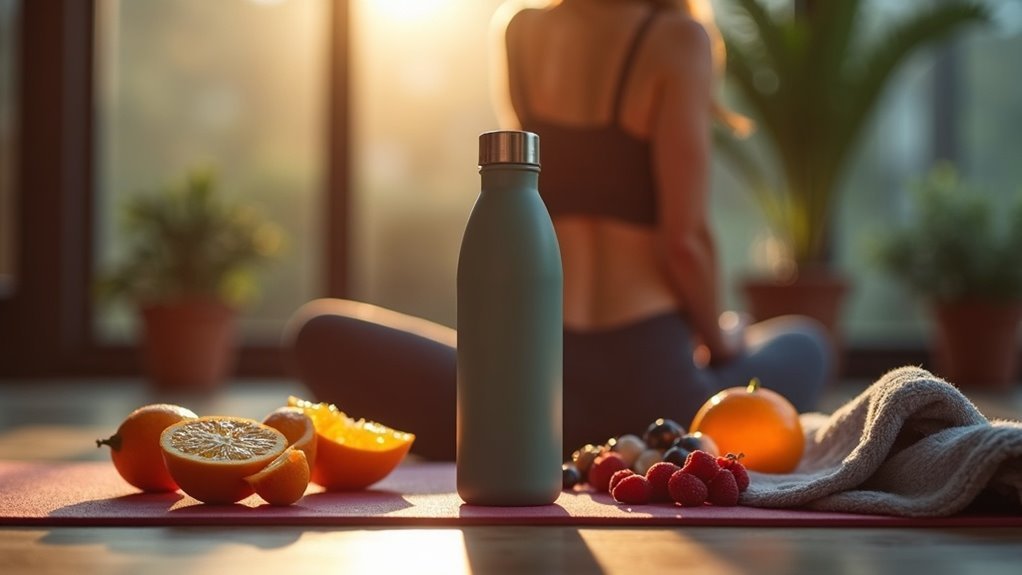
To hydrate effectively during your home workouts, start by drinking 500-750ml of water a few hours before exercising, and sip on 8-12oz about 15-30 minutes prior to your session. During your workout, aim to consume 4-8 ounces of water every 15-20 minutes to maintain optimal hydration levels. After your workout, it’s essential to replenish your fluids with 20-24oz of water for every pound lost during your session. Monitor your urine color as a simple indicator of your hydration status. Additionally, consider incorporating electrolytes into your hydration routine to enhance performance and support your fitness goals. Staying well-hydrated is key to maximizing your home workout experience!
Key Takeaways
- Drink 500-750ml of water a few hours before your home workout, and sip 8-12oz 15-30 minutes prior to exercising to ensure optimal hydration.
- During your session, aim to consume 4-8 ounces of fluid every 15-20 minutes to keep your hydration levels steady while working out at home.
- After your workout, replenish your body with 20-24oz of water for every pound lost during exercise to aid recovery and maintain health.
- Keep an eye on your urine color to gauge hydration: light yellow indicates ideal hydration, while dark yellow suggests you may need more fluids.
- Consider incorporating electrolyte-enhanced beverages during your workouts to replenish lost minerals and enhance your overall performance at home.
The Effects of Heat on Sweat Rate
When you work out at home, the heat can significantly influence your sweat rate. Higher temperatures and humidity levels can increase how much you sweat, particularly during intense indoor workouts.
As your core body temperature rises, your body initiates sweating to help regulate heat. In environments with limited airflow, fluid loss can accelerate, making hydration crucial.
As your core temperature rises, sweating increases; in stagnant air, fluid loss accelerates, highlighting the need for hydration.
The intensity of your workout is directly linked to sweat production; the harder you push yourself, the more you’ll sweat. To counteract this, it’s essential to drink water regularly to replenish lost fluids.
Stay mindful of how heat affects your body, and adjust your hydration strategy accordingly to ensure peak performance and safety while exercising at home.
Air Flow and Temperature
When you’re exercising at home, it’s easy to overlook how airflow and temperature impact your hydration.
In a home gym with limited airflow and higher humidity, your body may find it harder to cool down, resulting in increased sweat loss.
Indoor Airflow Challenges
While home workouts provide the convenience of exercising in your own space, they can also create notable airflow challenges that affect your hydration and overall performance.
The limited airflow during indoor training can lead to sweat building up instead of evaporating, particularly when using static exercise equipment like treadmills or stationary bikes. Elevated indoor temperatures and humidity levels can hinder the body’s ability to cool down, resulting in increased sweating.
As your body struggles to regulate its temperature, sweat may drip rather than evaporate efficiently, leading to greater overall sweat loss.
To tackle these issues, it’s essential to stay hydrated, and consider utilizing fans or air conditioning to improve airflow, ensuring a more comfortable and effective workout experience at home.
Humidity Effects on Hydration
Indoor humidity levels can significantly affect your hydration during home workouts. High humidity hampers sweat evaporation, making it more challenging for your body to cool down effectively.
In a home gym setting with limited airflow, sweat tends to drip off rather than evaporate, which can increase your awareness of fluid loss. This type of environment may lead to a higher sweat rate and disrupt your body’s thermoregulation, causing you to retain more heat.
To counteract these effects, it’s crucial to prioritize fluid intake before, during, and after your home exercise sessions. Stay proactive about rehydrating, as elevated humidity and temperature can substantially increase total sweat loss.
Implementing effective hydration strategies is essential for maintaining optimal performance and ensuring your safety while working out at home.
Temperature Gradients and Cooling
While exercising at home, understanding temperature gradients and airflow is crucial for effective cooling. Indoor workouts can trap heat, leading to increased sweat accumulation and potential dehydration.
Here are some key points to consider:
- Higher humidity levels can hinder sweat evaporation, making it harder to cool down.
- Reduced airflow from stationary equipment limits cooling efficiency during your sessions.
- Core body temperature may rise more quickly in a home gym environment.
- Effective thermoregulation is closely linked to maintaining proper hydration.
To ensure optimal hydration and manage your core body temperature while working out at home, take regular breaks, ensure proper airflow in your workout space, and drink water consistently.
Being mindful of these factors will enhance your home workouts, helping you stay safe, comfortable, and on track with your fitness goals.
Tips for Staying Hydrated During Indoor Training
Staying hydrated during your indoor workouts at home is crucial for optimizing performance and enhancing recovery.
Before you start your home gym session, ensure you’re properly hydrated by drinking water and planning your fluid intake throughout your workout.
Additionally, remember to rehydrate afterward to support your body’s recovery and help you stay healthy and active in your fitness journey.
Pre-Workout Hydration Strategies
To maximize your performance during home workouts, it’s crucial to prioritize hydration even before you start your session.
Here are some effective pre-workout hydration strategies for exercising at home:
- Drink 500-750ml (16-25oz) of water or an electrolyte drink a few hours before your workout.
- Avoid consuming excessive fluids right before your session; instead, sip 8-12oz of water 15-30 minutes prior to exercising.
- Keep an eye on your thirst cues and urine color to assess your hydration status.
- After your workout, replenish any lost fluids by drinking 20-24oz of water for every pound lost during your session.
Staying hydrated plays a key role in enhancing your performance and recovery while working out at home!
During Workout Fluid Intake
Maintaining proper hydration during your home workouts is crucial for achieving optimal performance. Aim to drink 4 to 8 ounces of fluid every 15 to 20 minutes. If you’re engaging in high-intensity exercises, consider increasing your intake to 8 ounces to effectively replace sweat loss. Including electrolytes, particularly sodium, can aid in better absorption and help replenish lost minerals. Be mindful of your thirst signals—overhydration can negatively impact your workout efficiency. To monitor your hydration status, weigh yourself before and after your sessions to evaluate fluid loss and adjust your rehydration accordingly.
| Fluid Intake | Frequency |
|---|---|
| 4-8 ounces | Every 15-20 minutes |
| 8 ounces | During high intensity |
| Electrolytes | As needed |
| 24 ounces | Per pound lost |
Post-Workout Rehydration Tips
Rehydrating effectively after your at-home workout is just as crucial as maintaining hydration during your session.
To ensure optimal recovery after exercising at home, follow these tips:
- Drink 16-24 ounces of water for every pound lost during your workouts.
- Weigh yourself before and after exercising to keep track of fluid loss.
- Incorporate sodium into your post-workout meals or drinks to boost rehydration.
- Consider using electrolyte-enhanced beverages to replenish lost sodium and enhance absorption.
How to Stay Fueled During Indoor Training
Fueling your body properly during indoor workouts is essential for maintaining energy and optimizing performance, especially when using home gym equipment.
Start with a carbohydrate-rich meal 2-3 hours before your workout to ensure you have the energy needed for an effective session. If you’re short on time, easily digestible carbs like toast or a banana work well closer to your workout.
During your indoor training sessions, consume small amounts of carbohydrates (up to 30g) every hour to prevent bonking and sustain energy levels. For longer sessions, aim for 60-90g per hour. Gradually increase your intake to help your gut adapt, ensuring proper absorption of fluids and keeping you hydrated throughout your training.
The Importance of Electrolytes
While you may focus on hydration during your home workouts, it’s equally important to consider the role of electrolytes in maintaining your performance.
- Electrolytes are essential for fluid balance, especially when exercising at home.
- Sodium helps retain hydration and prevents cramping, which is crucial for achieving your fitness goals.
- Inadequate electrolyte intake can lead to hyponatremia, affecting your workout efficiency.
- Incorporating sports drinks can enhance your recovery and performance, ensuring you get the most out of your home gym sessions.
Monitoring Hydration Levels
Monitoring your hydration levels during home workouts is essential for optimizing performance and overall health. To ensure you stay well-hydrated, weigh yourself before and after your sessions to evaluate fluid loss. For each pound lost, aim to drink approximately 24 ounces of water. Listen to your body; consume 4 to 8 ounces of water every 15 to 20 minutes during your workout. Pay attention to the color of your urine; a light yellow indicates proper hydration, whereas dark yellow suggests you need to drink more fluids. Additionally, keep track of your daily water intake, targeting half your body weight in ounces, and adjust accordingly based on factors like temperature and workout intensity.
| Hydration Level | Urine Color | Action Needed |
|---|---|---|
| Ideal | Light Yellow | Maintain current intake |
| Dehydrated | Dark Yellow | Increase fluid intake |
| Overhydrated | Clear | Reduce fluid intake |
Staying hydrated is key to achieving your fitness goals at home, so make it a priority!