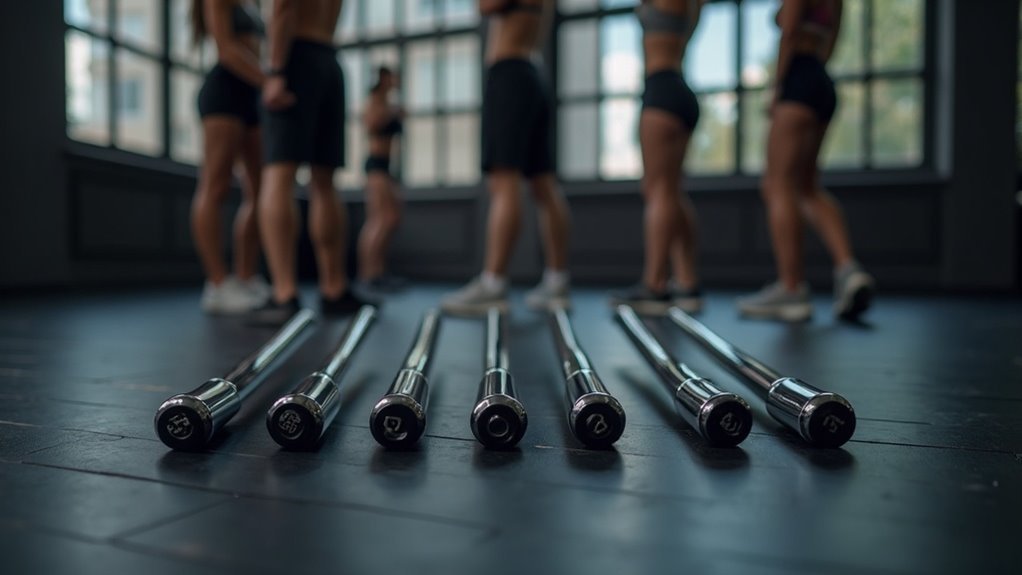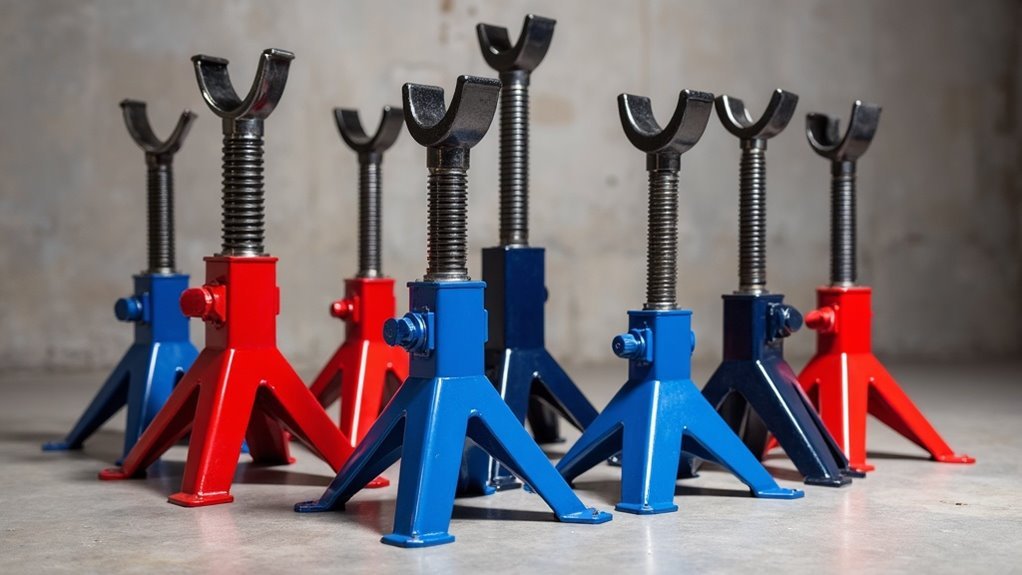
To prevent knurl damage when racking your barbell at home, always employ proper technique by gently placing the bar onto padded J-hooks instead of dropping it. Consider investing in padded J-hooks or wrapping them with soft materials, such as cloth tape, to reduce contact damage. Ensure that the weight is evenly distributed and make it a habit to regularly inspect both your barbell and J-hooks for any signs of wear. Consistent maintenance and protective measures are key to enhancing the longevity of your home gym equipment. There’s always more to discover about improving your workout tools for a healthier lifestyle.
Key Takeaways
- Use padded J-hooks or wrap them with soft materials like cloth tape to cushion the bar during racking, protecting your investment in home gym equipment.
- Gently place the barbell onto J-hooks instead of dropping it to minimize impact and avoid unnecessary damage.
- Ensure the knurl rests on the padded parts of J-hooks for optimal protection, helping to preserve the quality of your barbell.
- Regularly inspect J-hooks for wear and adjust them to shoulder level for controlled placement, ensuring a safe and efficient workout experience.
- Maintain proper weight distribution on the barbell to prevent shifting and excessive wear, allowing you to train effectively and keep your home gym in top shape.
Understanding Knurl Damage
When using a barbell at home, it’s essential to protect the knurling to maintain a strong grip and ensure optimal performance.
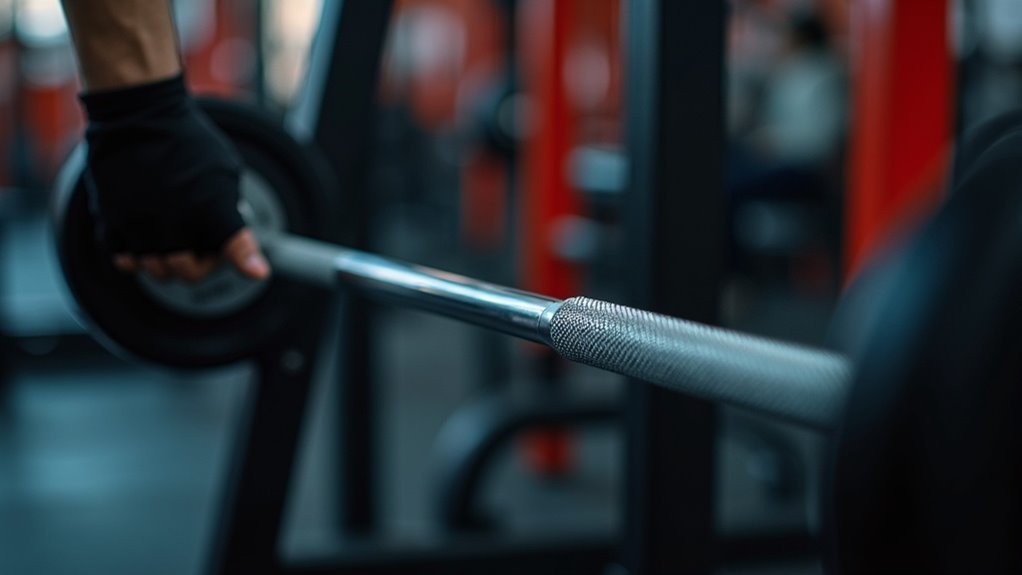
Damage to the knurling can occur if the barbell is placed on sharp or hard surfaces, such as metal pins or hooks, which can lead to wear over time. This risk is heightened with heavier weights, as they apply pressure to a small area, compressing the knurl.
For those who frequently rack their barbells, especially taller users, the increased force can further exacerbate wear. To safeguard the knurling, consider investing in padded J-hooks or using softer materials at contact points.
Additionally, regular maintenance and inspections can help extend the life of your bar’s knurling, allowing you to focus on your fitness journey at home.
Importance of Proper Racking Technique
Proper racking technique is crucial for maintaining the integrity of your barbell’s knurling, especially for those dedicated to building their home gym. By minimizing impact and wear during the racking process, you can ensure your equipment lasts longer.
To effectively employ proper racking technique, gently place the barbell onto the J-hooks rather than dropping or forcefully racking it. Make sure the knurl rests on the padded part of the J-hooks to protect it from excessive wear.
Choosing J-hooks with a lower lip design can facilitate a smoother shift, reducing sharp contact points that may cause damage. Regularly inspect your J-hooks for any signs of wear and practice controlled movements to significantly lower the risk of damaging the knurling while racking, ensuring your home gym remains in top condition for your fitness journey.
Protective Measures for J-Hooks
To protect the knurling on your barbell and ensure your home gym equipment lasts, consider implementing various protective measures for your J-hooks. Wrapping J-hooks with soft materials like cloth tape or foam can significantly reduce knurl damage, making your workout experience smoother. Using a PVC pipe split over the J-hooks provides an effective cushioning layer that absorbs impact. Self-sticking pads, such as SoftTouch Grip Pads, create a soft surface that minimizes contact damage and enhances grip. Additionally, electrical tape can be used to enhance the durability of your padding, ensuring it withstands regular use. Alternatively, upgrading to padded J-hooks is a great investment for guaranteed protection against wear and tear in your home gym.
| Protective Measure | Benefits |
|---|---|
| Cloth Tape | Softens contact |
| PVC Pipe | Adds cushioning |
| SoftTouch Grip Pads | Minimizes damage |
| Electrical Tape | Increases durability |
| Upgraded Padded J-Hooks | Effective long-term solution |
Weight Distribution and Stability
Ensuring that your barbell is evenly racked is crucial for maintaining stability in your home gym and preventing damage to your equipment.
Proper weight distribution during racking minimizes the risk of shifting and wear, making your workouts safer and more effective.
Follow these guidelines for optimal safety:
- Adjust J-hooks to shoulder level for easy and controlled placement.
- Ensure that the barbell is evenly loaded on both sides of the J-hooks.
- Use safety pins or blocks to prevent the bar from tipping or rolling.
- Regularly inspect your rack setup to accommodate varying weight loads.
- Keep your barbell clean to reduce friction and enhance your racking experience.
Equipment Quality and Its Impact
When choosing equipment for your home gym, it’s crucial to recognize how quality influences both performance and durability.
High-quality barbells come with durable knurling that can endure heavy usage, significantly minimizing the risk of damage when racking.
Pay attention to the design and material of your J-hooks and racks; sturdy options can reduce wear on the knurling, ensuring longevity.
Opting for adjustable or padded J-hooks can help distribute pressure evenly across the bar back, ultimately extending the life of your equipment.
Make it a habit to regularly inspect the quality of your barbell and rack to pinpoint potential wear areas, allowing you to take proactive steps to prevent knurl damage and keep your home workout space in top condition.
Regular Maintenance for Longevity
Quality equipment is essential for setting up your home gym, but regular maintenance is key to prolonging the life of your barbell and its knurling.
To ensure optimal performance and durability, incorporate these crucial practices into your routine:
- After each workout, clean the knurling with a nylon or brass bristle brush to keep it free of grime.
- Every few months, apply a light machine oil to prevent corrosion and maintain smooth operation.
- Store your barbell in a dry, elevated area to protect it from moisture and potential damage.
- Routinely inspect for signs of wear or rust and address any issues promptly to avoid further deterioration.
- Create a consistent maintenance schedule for cleaning and oiling, ensuring your equipment remains in top condition for your home workouts.
Effective Cleaning Practices
To maintain the integrity of your knurling and ensure a safe and effective workout, establish a regular cleaning schedule to prevent corrosion buildup.
Use appropriate tools, like nylon or brass brushes, to effectively remove sweat and chalk without damaging the surface.
Regular Cleaning Schedule
Maintaining a regular cleaning schedule for your home gym equipment, particularly your barbell, is crucial for ensuring its longevity and performance.
Here are some effective practices tailored for both men and women committed to exercising at home:
- Wipe down the shaft and sleeves with a lint-free cloth after each workout to remove sweat and grime.
- Utilize a nylon or brass bristle brush to clean the knurling, helping to prevent dirt buildup that can affect grip.
- Perform a deep clean on your barbell every 2-3 months, especially if you notice any rust or stickiness developing.
- Apply a light machine oil every few months, paying special attention to the knurling and sleeves for smooth operation.
- Regularly inspect your barbell for signs of rust or wear to catch and address any issues early, ensuring a safe workout experience.
Proper Cleaning Tools
A well-maintained barbell is essential for any home gym and requires the right tools for effective cleaning. To keep your barbell in top shape, use a nylon or brass bristle brush specifically designed for cleaning knurling—these tools effectively remove grime without damaging the surface.
After every workout, be sure to wipe down the barbell shaft and sleeves with a lint-free cloth to prevent sweat and chalk from building up. If you notice rust forming, apply a light machine oil and gently scrub with a brass brush; avoid using steel brushes as they can harm protective coatings.
Establishing a routine maintenance schedule is important: perform light cleaning daily and conduct a deeper cleaning every 2-3 months, especially if your home gym is in a humid environment.
Keeping your equipment clean not only enhances its longevity but also contributes to a healthier workout experience.
Preventing Corrosion Buildup
When you make it a habit to clean your barbell after each workout, you significantly minimize the chances of corrosion buildup on the knurling.
To keep your home gym equipment in excellent condition, follow these effective cleaning practices:
- Utilize a nylon or brass bristle brush to clear away sweat, chalk, and grime.
- Use a lint-free cloth to wipe down the shaft and sleeves, ensuring any moisture is removed.
- Every few months, apply a light machine oil for added protection.
- Perform a deep clean every 2-3 months, paying special attention to any rust spots that may appear.
- Store your barbell in a dry area, elevated off the ground, to reduce moisture exposure.
Following these steps is essential for maintaining your barbell and preventing corrosion, allowing you to focus on your fitness journey at home.
Storage Solutions to Prevent Damage
To effectively prevent knurl damage in your home gym, it’s essential to implement smart storage solutions that cushion and protect your equipment.
Use J-hooks with rubber or padded coverings to create a barrier between the barbell and rack, minimizing abrasion. Consider fitting split PVC pipes over J-hooks for added impact absorption.
Utilize J-hooks with rubber padding to protect your barbell and reduce wear, and enhance impact absorption with split PVC pipes.
Installing self-sticking rubber pads on rack posts enhances grip while reducing wear on the knurl. Additionally, adjustable height racks or blocks with rubber mats provide a stable landing, preventing excessive pressure on your gear.
Regularly inspect your storage solutions to ensure all padding remains intact and effective, safeguarding your equipment from potential damage while you focus on achieving your fitness goals at home.