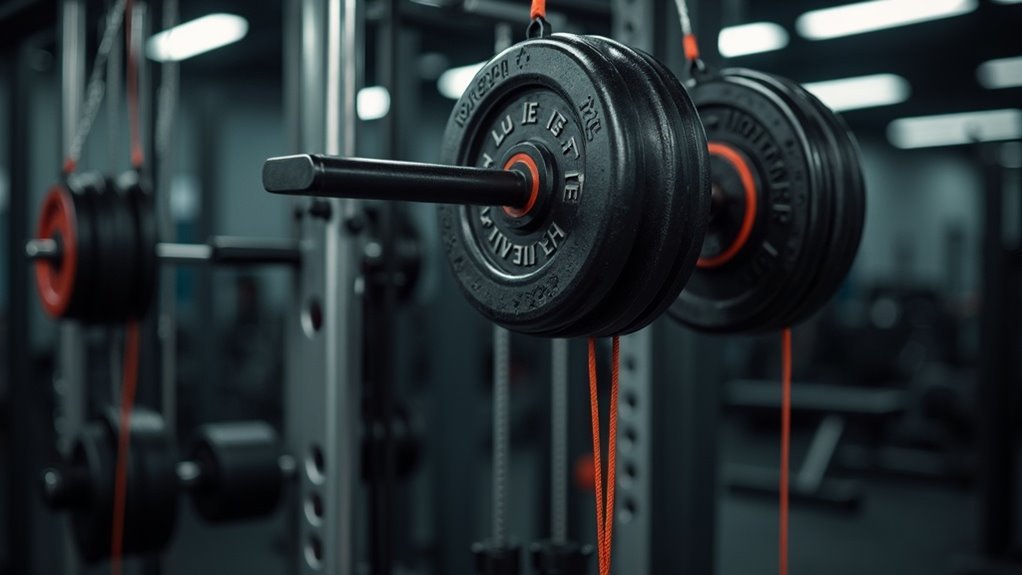
To add a lat seat to your home gym’s rack pulley system, begin by selecting sturdy materials such as 4×4 uprights for durability, along with 2×6 wood for crafting the seat and kick plate. For leg positioning, use a PVC pipe cut to 19.25 inches. Construct the seat with comfortable foam padding and secure it using strong brackets for safety. Next, carefully install the low pulley system, ensuring that all cables are securely attached and stable. After assembly, test the entire setup for functionality and make any necessary adjustments to optimize your workouts. Following these steps will help you create a safe and effective addition to your home exercise routine.
Key Takeaways
- Gather essential materials such as sturdy wood pieces, PVC pipe, and grip tape to construct a lat seat and kick plate, ensuring a reliable setup for your home gym.
- Securely attach the seat using brackets and screws, making sure it is properly aligned for maximum stability and comfort during your workouts.
- Install the low pulley system with cable clips, ensuring it is anchored securely to the rack for safe use while you exercise at home.
- Check the positioning of foam rollers and kick plate to provide excellent support during seated exercises, helping you achieve your fitness goals effectively.
- Regularly inspect all components for wear and tear to maintain safety and performance, ensuring your home gym remains a reliable space for staying healthy and fit.
Selecting the Right Materials
When building a lat seat for your home gym pulley system, selecting the right materials is essential for ensuring both stability and functionality.
Begin with four sturdy 4×4 pieces for the uprights and base connections, as these will provide the strong support needed for your lat seat attachment. Incorporate two 2×4 pieces to create anchoring brackets, effectively securing the unit to your rack for safe workouts.
Start with four robust 4×4 pieces for the uprights and base, ensuring strong support for your lat seat attachment.
For the seat and kick plate, choose two 2×6 pieces, which will offer ample surface area for comfort during your exercises. Additionally, cut a PVC pipe to 19.25 inches for securing the unit while allowing flexibility in leg positioning.
To enhance safety and performance, consider adding grip tape for improved foot traction. This setup will help you stay fit and healthy right from the comfort of your own home.
Preparing the Components
To prepare the components for your lat seat, begin by gathering all the essential materials you’ve chosen for your home gym setup.
Next, cut the wood pieces and PVC pipe to the specified dimensions, making sure to sand and route the edges for safety.
Finally, drill holes in the brackets for proper alignment, laying the groundwork for a secure and effective assembly that will enhance your home workout experience.
Material Selection and Sourcing
As you prepare to build a lat seat for your home gym’s rack pulley system, selecting the right materials is crucial for ensuring both stability and functionality.
For a durable frame, gather four 4×4 pieces for the uprights and base connections, and two 2×4 pieces for anchoring brackets. Use two 2x6s for the seat and kick plate, providing ample support for your workout.
For added comfort, source foam rollers compatible with GHD rollers from retailers like Amazon. Be sure to have super glue and leather patch repair vinyl on hand for upholstery.
Lastly, acquire a spud ink pulley system and a wire rope clip set to secure your cable effectively. With the right materials, you’ll be well on your way to enhancing your home gym experience!
Cutting and Preparing Pieces
When building your own lat seat for an effective home gym setup, start by cutting the four 4×4 pieces to the specified length for the uprights and base connections. This ensures they provide the necessary stability for your workout sessions.
Next, prepare the other essential components:
- Cut two 2×4 pieces for anchoring brackets, drilling holes for secure attachment to maintain safety during use.
- Prepare two 2×6 pieces for the seat and kick plate, sanding the edges to prevent splinters and enhance comfort during your workouts.
- Cut PVC pipe to 19.25 inches for foam rollers, painting the ends for a cohesive look that matches your home gym aesthetic.
Make sure all wooden pieces are thoroughly sanded and smooth before assembly. This not only enhances safety but also provides a polished finish, making your lat seat a stylish addition to your home gym equipment.
Enjoy your journey to fitness and health!
Constructing the Seat and Kick Plate
Constructing the seat and kick plate for your lat attachment is essential for creating a comfortable and durable home gym experience.
Begin by selecting two pieces of 2×6 wood for the seat, securely fastening them with brackets and screws to ensure stability during your workouts. To enhance comfort, add two inches of foam, tapering to four inches at the back, and cover it with leather patch repair vinyl, stapling it underneath for a polished look.
Attach the kick plate to the front of the rack using wood screws and grip tape for added traction. Remember to drill holes in the brackets for accurate alignment, ensuring that your equipment remains sturdy and reliable while you pursue your fitness goals at home.
Installing the Low Pulley System
To install the low pulley system in your home gym, start by gathering essential materials such as a spud ink pulley, a custom-cut PVC pipe, and suitable cable clips.
First, secure the low pulley cable to your rack using row pins for added stability during your workouts.
Next, attach the PVC pipe to allow for flexible leg positioning, accommodating various exercises.
Ensure that you cut the cable to the appropriate length, and use wire rope clips to prevent slippage, keeping your workouts safe and effective.
With the right setup, you can enhance your strength training routine right at home!
Required Materials Overview
Installing a low pulley system is an excellent way to enhance your home gym and support your fitness journey. To ensure a stable and effective setup, gather the following essential materials:
- Four 4×4 pieces for uprights and base connections, providing strength and stability
- PVC pipe cut to 19.25 inches for securing the unit, ensuring durability
- Grip tape for the kick plate to enhance foot traction and safety during workouts
Additionally, you’ll need two 2×4 pieces for anchoring brackets and two 2×6 pieces for the seat and kick plate, which will offer comfort and support during your exercises.
For cable attachment, a spud ink pulley system combined with wire rope clips and a thimble set will create secure connections. Remember to leave extra cable length for adjustments, enabling you to customize your setup to fit your workout needs.
With the right materials, you can create a functional low pulley system that supports your health and fitness goals at home.
Assembly Steps Explained
With all the necessary materials gathered, you can now focus on assembling your low pulley system for your home gym.
Start by securing the lat seat to the rack with existing row pins, ensuring the upright posts are stable for a safe workout experience. Next, attach the kick plate to the front using wood screws and grip tape, providing secure footing as you exercise.
Mount the padded seat with the appropriate brackets and screws, verifying it’s anchored firmly for comfort during use. Cut a custom cable length for smooth operation and integrate the low pulley system seamlessly into your setup.
Finally, use wire rope clips and clamps to secure cable attachments, preventing slippage during exercises to guarantee both safety and effectiveness in your fitness journey at home.
Securing the Cable and Attachments
As you secure the cable and attachments for your lat seat, it’s crucial to ensure that everything is tightly fastened to prevent any slippage during your workouts.
Follow these steps to create a safe and effective setup for your home gym:
- Use a wire rope clip and thimble set for a secure cable attachment that can withstand intense workouts.
- Incorporate clamps for added security and stability during each exercise, giving you peace of mind as you push your limits.
- Utilize a carabiner for quick and easy connections, allowing for effortless adjustments as you fine-tune your setup.
Make sure the cable is cut to the appropriate length, leaving a little extra for any future modifications.
This won’t only enhance your workout experience but also ensure safety while performing lat exercises.
Properly secured cables lead to effective and safe workouts, enabling you to achieve your fitness goals right at home.
Testing Stability and Functionality
Testing the stability and functionality of your lat seat setup is crucial for a safe and effective workout in your home gym.
Begin by checking the leg anchor; it should minimize movement during exercises, ensuring you can focus on your form. Make sure the low pulley cable system is securely attached, providing you with versatile options for targeting different muscle groups.
Check the leg anchor for stability and ensure the low pulley cable system is secure for versatile muscle targeting.
Verify that foam rollers are properly positioned to offer adequate leg support and comfort during your workouts. Examine the kick plate‘s positioning; it should reinforce stability during seated rows, allowing you to push your limits safely.
Lastly, assess the compact design for easy disassembly and storage, ensuring that your workout space remains functional without taking up unnecessary room.
Always conduct these checks before each session to ensure safety and optimize performance for both men and women aiming to stay fit at home.
Tips for Effective Workouts
To maximize the effectiveness of your home workouts using a lat seat in your rack pulley system, incorporate a well-rounded routine that targets multiple muscle groups.
Focus on:
- Seated rows: Develop back strength and improve posture, essential for everyday activities.
- Lat pull-downs: Engage your lats for a broader back, enhancing your overall physique.
- Leg extensions: Strengthen your quadriceps for balanced leg development, crucial for lower body strength.
Adjust the seat and pulley height to maintain proper form, ensuring you get the most out of each exercise.
Utilize the kick plate for added stability, allowing you to perform movements confidently.
Confirm that foam rollers are positioned correctly for ideal leg support, helping to prevent strain.
Regularly inspect your cable system for wear and tear to guarantee safety and prevent equipment failure during your workouts.
Prioritize control and muscle engagement throughout each repetition to achieve optimal results from your home gym sessions.