Yes, the diameter of a kettlebell handle significantly impacts grip endurance, which is crucial for effective home workouts. If the handle doesn’t suit your hand size, you may find yourself experiencing discomfort and fatigue more quickly during your exercises. Thicker handles can be particularly challenging for those with smaller hands, leading to strain that affects overall performance. Selecting a handle that fits comfortably not only enhances your training experience but also minimizes the risk of slipping during workouts. By understanding the variations in handle diameters, you can optimize your home gym routine and achieve better results. Discover more valuable insights on this topic for a healthier lifestyle at home.
Key Takeaways
- Thicker kettlebell handles can lead to increased grip fatigue, particularly for individuals with smaller hands, which can impact endurance during home workouts.
- A standard handle diameter of 33mm in competition kettlebells is designed to accommodate various hand sizes, enhancing grip comfort and endurance for both men and women exercising at home.
- Grip endurance may suffer with mismatched handle sizes, resulting in discomfort and a higher risk of slipping during exercises, which can be frustrating in a home gym setting.
- Selecting kettlebell weights that suit your grip size is essential for maintaining workout quality and endurance, especially when training at home.
- Incorporating high-repetition exercises and gradually increasing weight can significantly boost grip endurance, while also minimizing the risk of slipping and ensuring a safer workout experience at home.
Understanding Kettlebell Handle Diameter
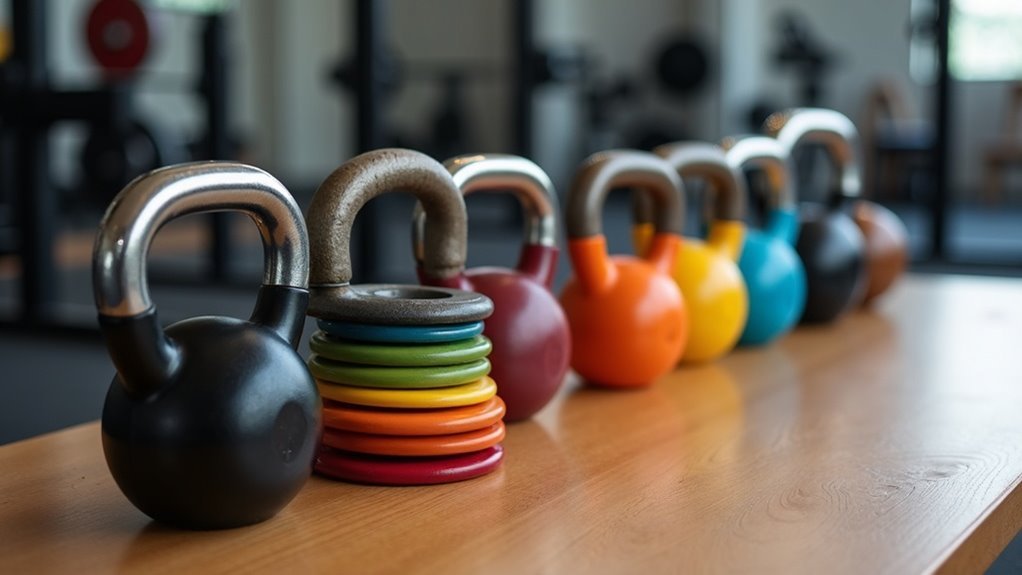
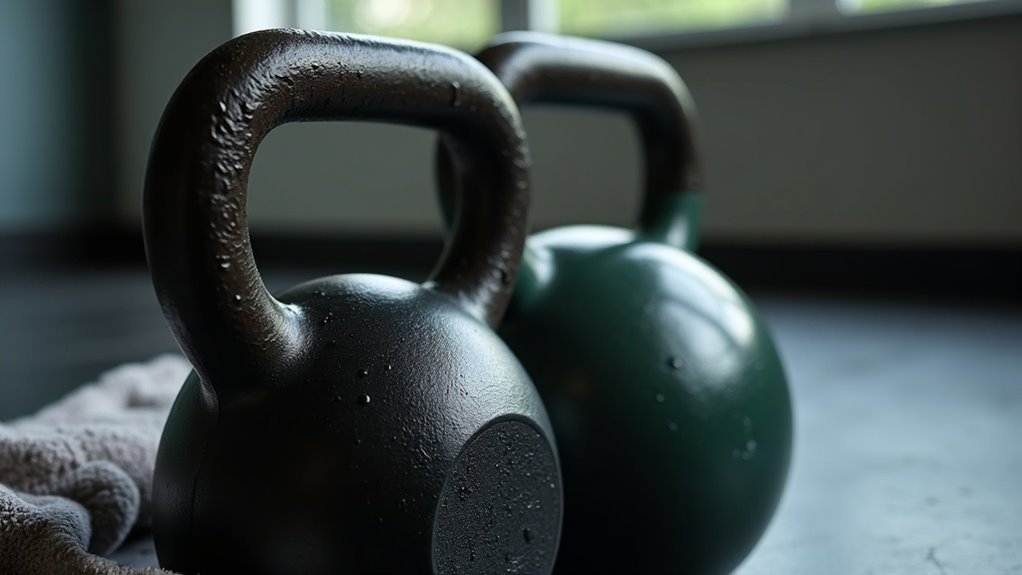
When selecting a kettlebell for your home gym, the handle diameter is a crucial factor that can impact your grip endurance and overall workout performance.
A thicker kettlebell handle may lead to increased grip fatigue, particularly for those with smaller hands. Generally, lighter kettlebells have an average diameter of about 1.2 inches, while heavier options may go up to 1.5 inches.
A thicker kettlebell handle can cause grip fatigue, especially for smaller hands; lighter options typically average 1.2 inches in diameter.
Competition kettlebells, designed for uniformity, maintain a consistent diameter of 33mm (approximately 1.3 inches), ensuring a comfortable grip regardless of weight.
Even minor differences in handle diameter can affect your grip experience, potentially leading to slipping during exercises.
Prioritizing the right grip is essential for both safety and endurance, making handle diameter a key consideration when choosing kettlebells for your home workout routine.
The Impact of Handle Diameter on Grip Comfort
The thickness of a kettlebell handle significantly impacts grip comfort, particularly when accounting for various hand sizes.
If the handle diameter doesn’t match your hand size, you may face discomfort and reduced grip endurance during your home workouts.
Recognizing this relationship is crucial for selecting a kettlebell that enhances your performance and minimizes the risk of injury.
Handle Thickness Importance
Grip comfort plays a vital role in kettlebell training, especially for those exercising at home. The diameter of the handle directly impacts your ability to maintain that comfort throughout your workout. A thicker kettlebell handle can be particularly challenging for grip endurance, especially for individuals with smaller hands. This can result in discomfort and an increased risk of slipping, ultimately affecting your performance and safety.
| Handle Diameter | Grip Comfort Level | Risk of Slipping |
|---|---|---|
| 28mm | High | Low |
| 33mm | Moderate | Moderate |
| 38mm | Low | High |
| 43mm | Very Low | Very High |
| 48mm | Extremely Low | Critical |
Selecting the appropriate handle diameter is crucial for securing a reliable grip and enhancing safety during your home workouts. This ensures you can focus on your fitness goals without worrying about slipping or discomfort.
Hand Size Compatibility
Choosing the right kettlebell handle diameter is crucial for ensuring that your hands fit comfortably, which can significantly enhance your home workout experience.
Mismatched sizes can hinder your performance, making it important to find the right fit. Kettlebell handle diameters typically range from 33mm to 38mm, and this variation can greatly impact grip comfort, especially for those with smaller hands.
Thicker handles may challenge grip endurance, which can lead to decreased performance during your workouts.
It’s essential to consider hand size compatibility with the kettlebell handle diameter; a poor fit can result in slipping and increased fatigue, compromising your workout efficiency.
For a more consistent and comfortable grip, opting for competition kettlebells with a standard 33mm diameter can enhance grip comfort and endurance, regardless of the kettlebell’s weight.
This ensures a safer and more effective home workout experience for both men and women.
Grip Endurance Factors
When selecting kettlebells for your home gym, it’s essential to understand how handle diameter affects grip endurance, which is key to maximizing your performance.
A larger kettlebell handle diameter can lead to grip discomfort, ultimately reducing endurance and increasing strain during your workouts. For instance, lighter kettlebells typically have an average diameter of 1.2 inches, while heavier options can reach up to 1.5 inches, which can significantly impact your grip quality.
Those with smaller hands may find thicker handles particularly challenging, which can hinder both grip endurance and lifting form. To ensure a comfortable workout experience for everyone, consider kettlebells with a uniform handle diameter, such as Blue Lakes Iron’s 33mm.
This choice accommodates various hand sizes and enhances grip endurance during high-repetition kettlebell exercises, making it easier for you to stay healthy and fit from the comfort of your home.
How Grip Affects Performance in Kettlebell Training
While many factors contribute to performance in kettlebell training, handle diameter plays a crucial role in grip endurance, especially for those working out at home. A thicker handle can significantly challenge grip strength, leading to quicker fatigue during workouts.
This fatigue can compromise form, ultimately decreasing overall performance and increasing the risk of injury. As kettlebell weight increases, so does handle diameter, which may be a concern for individuals with smaller hands.
A comfortable grip, influenced by handle diameter, enhances workout efficiency, allowing you to concentrate on technique rather than struggling to maintain your hold. A secure grip is essential for executing dynamic movements safely and effectively, making it important for everyone looking to stay healthy and fit in their home gym.
Selecting the Right Handle Size for Your Hand
How do you determine the right kettlebell handle size for your hands?
Start by evaluating your hand size in relation to the handle diameter. For lighter kettlebells, a diameter of 1.2 inches (30 mm) is common, while heavier ones can reach 1.5 inches (38 mm).
If you have smaller hands, thicker handles might hinder your grip, reducing endurance and affecting your overall performance.
For those looking for a consistent option, consider competition kettlebells with a uniform 33 mm diameter.
Selecting a kettlebell that matches your hand size enhances grip endurance, ensuring a safer and more effective workout experience at home.
Choose wisely for the best results in your home gym routine!
Safety Considerations Related to Handle Diameter
Choosing the right kettlebell handle diameter is crucial for ensuring safety during your home workouts. When the handle size doesn’t align with your hand size, it can lead to grip fatigue, affecting your training experience.
Here are some key safety considerations regarding handle thickness:
- A handle that’s too thick can reduce grip endurance, making it more challenging to maintain a secure hold during exercises.
- An inadequate grip increases the risk of slipping, which can lead to injuries while performing various movements.
- Selecting the correct handle diameter for your hand size ensures optimal performance and safety, allowing you to execute high-repetition sets effectively without compromising grip strength.
Comparing Handle Diameters Across Different Kettlebell Types
When comparing kettlebell handle diameters for your home gym, you’ll find variations that can significantly influence your grip strength and overall workout performance.
Standard sizes typically range from 33mm to 38mm, and this difference can affect how comfortable and secure you feel while exercising at home.
Choosing a handle diameter that suits your hand size and strength is crucial for enhancing grip endurance and reducing fatigue, helping you achieve your fitness goals in a safe and effective manner.
Standard Handle Sizes
Kettlebell handle diameters play a significant role in your grip endurance and overall performance, especially when exercising at home.
Understanding standard handle sizes is crucial for selecting the right kettlebell for your workouts. Here are important points to consider:
- Standard diameters: Generally, lighter kettlebells feature a diameter of 1.2 inches (30mm), while heavier kettlebells have a diameter of 1.5 inches (38mm).
- Competition kettlebells: For those looking to replicate a gym experience at home, competition kettlebells maintain a consistent diameter of 1.3 inches (33mm), ensuring a uniform grip experience.
- Thicker handles: While thicker handles can challenge grip strength and potentially enhance endurance, they may not be suitable for everyone, especially those with smaller hands.
Selecting the right handle size is essential for ensuring safety and optimizing your grip endurance during kettlebell workouts in your home gym.
Impact on Grip Strength
Grip strength is significantly influenced by the diameter of the kettlebell handle you choose, which is crucial for effective home workouts. Handles typically range from 33mm to 38mm, and this variation can greatly affect your grip endurance.
Thicker handles can provide a greater challenge to your grip strength, potentially leading to fatigue during longer training sessions. For example, swinging a 40lb kettlebell with a 1.5” diameter engages more muscles compared to an 8lb kettlebell with a 1.2” diameter.
Individuals with smaller hands may find larger diameters more difficult to handle, highlighting the importance of selecting kettlebells that fit your grip size. This ensures effective strength and endurance training, promoting both safety and optimal performance in your home gym routine.
Choosing Based on Comfort
Selecting the right handle diameter for your kettlebell workouts is crucial for ensuring both comfort and performance, especially since kettlebells come in various handle sizes.
Consider the following options:
- 8lb kettlebell: With a 1.2-inch diameter, this kettlebell is perfect for those with smaller hands, promoting a comfortable and secure grip during your at-home workouts.
- 40lb kettlebell: Featuring a 1.5-inch diameter, this kettlebell may challenge grip endurance, making it suitable for those looking to build strength and resilience, especially if you have larger hands.
- Competition kettlebells: These come with a consistent 33mm (1.3 inches) diameter across all weights, ensuring a uniform grip experience that can enhance your grip strength and endurance.
Choosing kettlebells that fit your individual comfort levels is essential for improving your workout performance while minimizing the risk of slipping and fatigue.
Prioritize your comfort to make the most of your home gym experience!
Tips for Improving Grip Endurance During Workouts
While you may focus on various aspects of your home workout routine, improving grip endurance is essential for enhancing overall performance, especially when using kettlebells.
To build grip strength safely at home, incorporate exercises like farmer’s walks and dead hangs. Choose kettlebell weights that suit your grip size to prevent slipping and enhance comfort during your workouts. Gradually increase the kettlebell weight as your strength improves, ensuring you maintain correct technique.
High-repetition kettlebell exercises, such as swings or snatches, can also boost your grip endurance. Additionally, consider using grip trainers or thick bars to further enhance grip strength and help you achieve your fitness goals effectively in the comfort of your home.