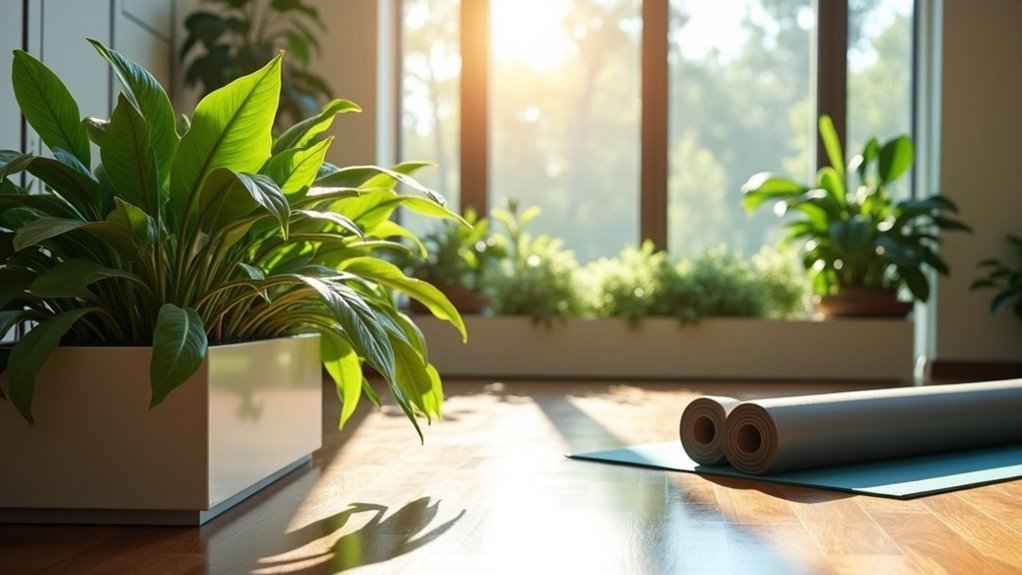
Yes, incorporating plants into your home workout space can enhance air quality by absorbing toxins and adding a refreshing aesthetic that can boost your mood and energy levels during your exercises. While certain species like snake plants and pothos are particularly effective at improving air quality, it’s important to remember that plants alone may not significantly reduce volatile organic compounds (VOCs). Proper care for your plants is crucial, and you’ll need a substantial number to see notable improvements. Additionally, exploring complementary air quality solutions can lead to even better results, which you can learn more about in the upcoming sections.
Key Takeaways
- Incorporating plants like snake plants and pothos into your home gym can help absorb toxins and enhance air quality during your workouts.
- Adding greenery not only improves the aesthetic of your workout space but also boosts your mood, promoting relaxation and reducing stress levels.
- To achieve noticeable improvements in air quality, you’ll need several plants; relying solely on them won’t significantly cut down on volatile organic compounds (VOCs).
- It’s crucial to maintain your plants properly, as overwatering and dust buildup can lead to mold and respiratory issues, which could hinder your fitness journey.
- For the healthiest workout environment, combine the benefits of plants with proper ventilation and air purification systems.
The Importance of Indoor Air Quality (IAQ) in Workout Spaces
When you step into your home gym, the quality of the air can significantly impact your performance and overall workout experience.
Poor indoor air quality (IAQ) can lead to elevated carbon dioxide levels, resulting in dizziness and fatigue that may derail your exercise routine. By maintaining clean indoor air, you can enhance your energy levels and improve your workout efficiency.
It’s also important to be mindful of volatile organic compounds (VOCs) that can be released from cleaning products, as these can irritate your respiratory system.
Prioritizing IAQ not only combats fatigue but also fosters mental clarity and relaxation, enabling you to concentrate on your fitness goals and overall well-being while exercising at home.
How Plants Contribute to Air Quality
You might be surprised to learn that certain plants can actually purify the air by absorbing harmful toxins, which can be especially beneficial in your home gym environment.
While plants like snake plants and pothos not only enhance the aesthetic appeal of your workout space but also lift your mood during exercise, their effectiveness in improving air quality can vary.
Selecting the right plants and maintaining them properly could be key to maximizing their benefits while you focus on staying healthy and fit at home.
Air Purification Capabilities
While many people believe that incorporating plants into home gym spaces can greatly enhance air quality, research suggests the reality is more complex.
Here are some key points to consider regarding the air purification capabilities of plants:
- To achieve significant reductions in volatile organic compounds (VOCs), you’d need between 10 to 1,000 plants per square meter, which is impractical for most home gyms.
- While certain plants can absorb VOCs like formaldehyde, their effectiveness is diminished in well-ventilated areas, such as those often found in home workout spaces.
- Overwatering your plants can lead to mold growth, which may actually worsen indoor air pollution instead of improving air quality.
Ultimately, while plants can provide some benefits, relying solely on them for air quality in your home gym isn’t a comprehensive solution.
Prioritizing proper ventilation and air purification systems can be more effective for maintaining a healthy workout environment.
Aesthetic and Mood Benefits
Incorporating plants into your home workout space offers more than just air purification; it significantly enhances the overall atmosphere and mood.
The aesthetic appeal of greenery creates an inviting environment that promotes relaxation and reduces stress. Studies indicate that plants can boost focus and concentration, helping you stay engaged and motivated during your workouts.
Additionally, they absorb background noise, contributing to a serene ambiance that fosters mental clarity. With their ability to combat fatigue and cognitive fog, plants can help elevate your energy levels, leading to more productive exercise sessions.
Thus, investing in plants not only improves air quality but also enriches your home gym experience, making your journey toward fitness even more enjoyable.
Plant Selection Tips
How can the right plant selection enhance the air quality in your home gym? Choosing suitable plants is crucial for creating a healthy workout environment. Here are some plant selection tips to consider:
- Opt for air-purifying plants: Incorporate Snake Plants and Rubber Trees, known for their ability to effectively remove harmful toxins like formaldehyde and benzene from the air, ensuring a cleaner workout space.
- Consider humidity levels: Pothos plants not only help boost humidity but also absorb carbon monoxide, which can enhance skin hydration during your exercise sessions.
- Assess lighting conditions: Ensure the plants you choose can thrive in the specific lighting of your home gym to maximize their air quality benefits and support your health and fitness goals.
Specific Plants That Enhance Workout Environments
When you think about enhancing your home gym environment, incorporating specific plants can significantly improve air quality and overall well-being.
For instance, snake plants are excellent for absorbing harmful toxins like benzene while also improving air quality. Pothos plants not only remove toxins but also add humidity, which can aid in skin hydration during your workouts.
Incorporating snake and pothos plants enhances air quality while promoting hydration during your workouts.
Rubber trees are effective at drawing in contaminants and reducing mold, making them a great choice for fitness spaces. Dwarf date palms and Boston ferns are known for their air-purifying abilities, while spider plants excel at removing indoor pollutants.
By adding these plants to your home gym, you’ll create a cleaner air environment, ultimately promoting safety and comfort during your exercise routines.
Embrace nature to elevate your indoor air quality and enhance your fitness experience.
Research Findings on Plants and Air Purification
Incorporating plants like snake plants and pothos into your home gym can create a more inviting atmosphere, but it’s important to understand the actual science behind their air purification capabilities.
- A NASA study suggested that certain plants could remove up to 90% of specific VOCs, but these findings aren’t easily replicated in standard indoor environments due to limited air circulation.
- A 2017 study highlighted that Ficus plants only eliminated between 9-75% of VOCs, underscoring their limited effectiveness in purifying air.
- Experts propose that for substantial VOC reduction, you’d need anywhere from 10 to 1,000 plants per square meter, making it unrealistic to depend solely on plants to enhance the air quality in your home gym.
While adding greenery can improve your workout space’s aesthetics and mood, consider combining plants with proper ventilation and air filtration systems for optimal indoor air quality.
Potential Downsides of Houseplants in Indoor Spaces
Incorporating houseplants into your home gym can certainly enhance its aesthetics, but there are potential downsides to consider.
Overwatering your plants may lead to mold spores, which can trigger allergic reactions and asthma in sensitive individuals. Dust accumulation on leaves can redistribute pollutants, negatively impacting indoor air quality, which is crucial for a healthy workout environment.
Overwatering plants can lead to mold and dust accumulation, harming indoor air quality essential for an optimal workout.
Moreover, some plants attract pests, and their waste can introduce respiratory irritants that may hinder your performance. Flowering plants can release pollen or strong fragrances that might cause discomfort for certain individuals.
While houseplants offer minor air quality benefits, you’d need a considerable number to make a significant impact, often making them an inadequate solution for improving indoor air quality in your workout space.
Prioritizing a clean and well-ventilated environment is essential for maximizing your home gym experience.
Effective Strategies for Maintaining Good IAQ
Maintaining good indoor air quality (IAQ) in your home gym is crucial for creating a healthy and effective workout environment.
To ensure you can focus on your fitness goals, consider these strategies:
- Ventilate your space regularly by opening doors and windows to allow fresh air to circulate, especially during intense workouts or when multiple people are exercising.
- Utilize air filtration systems equipped with MERV 13 or HyperHEPA filters to effectively capture airborne pollutants, including volatile organic compounds (VOCs) that can affect your performance and health.
- Monitor air quality periodically to keep levels of carbon dioxide and other contaminants in check, ensuring a safe atmosphere that supports your respiratory health and overall well-being during your workouts.
Final Thoughts on Utilizing Plants in Fitness Areas
Incorporating plants into your home gym can significantly enhance the overall atmosphere, making your workout space more inviting and motivating.
However, it’s crucial to consider their actual impact on air quality. While certain plants, such as snake plants, are known for their ability to absorb toxins, their contribution to improving indoor air quality is minimal when compared to mechanical air purifiers.
Research indicates that in larger, well-ventilated areas like gyms, the benefits of plants may not be as pronounced.
Additionally, while plants can help increase humidity—which may alleviate dry skin during workouts—they can also promote mold growth if not properly maintained.
Ultimately, while adding greenery can beautify your space and boost your mood, ensuring effective ventilation and employing air purification systems remain essential for maintaining optimal air quality in your home gym.
Prioritize a healthy workout environment to maximize your fitness journey!