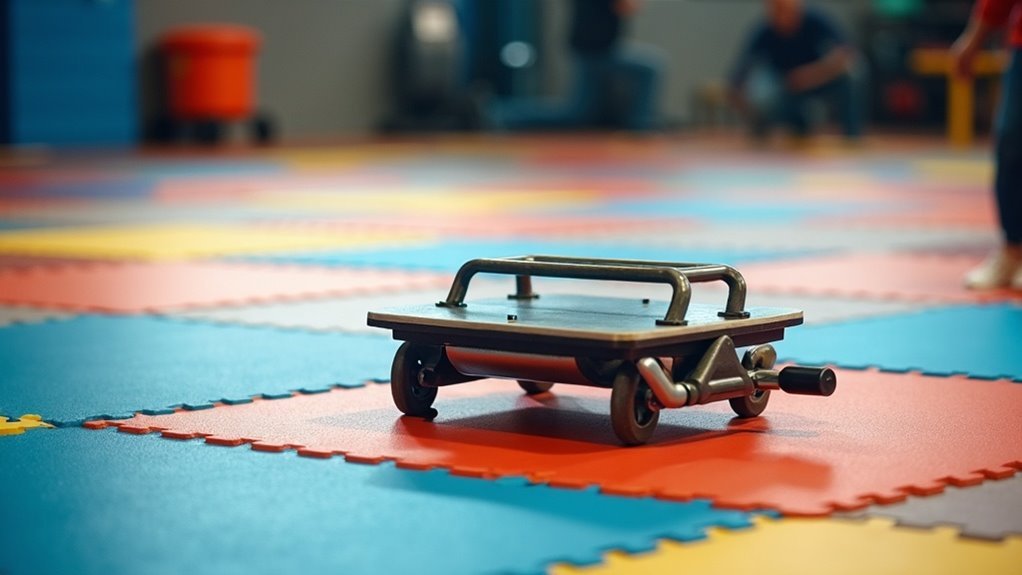
Foam tiles are not ideal for handling sled drags indoors due to their lower density and susceptibility to damage. Designed primarily for lighter workouts, these tiles struggle to support the heavy loads and friction generated by sled drags. Consequently, you may encounter surface damage and a reduced lifespan for your flooring. For those engaging in high-impact exercises, it’s better to opt for alternatives like rubber flooring or specialized turf that can endure the demands of your workout routines. Explore various flooring options and maintenance tips to create the perfect home gym environment that supports your fitness journey.
Key Takeaways
- Foam tiles are not ideal for sled drags, as their lower density makes them susceptible to damage from heavy loads and friction.
- Engaging in sled drags can lead to noticeable surface damage and indentations on foam tiles, which can compromise their longevity.
- While thicker foam tiles may provide improved shock absorption, they still do not compare favorably to rubber or specialized turf when it comes to high-impact activities like sled drags.
- Regular maintenance is crucial for foam tiles; however, frequent sled drags can necessitate replacements every few months.
- For those looking to incorporate sled drags into their indoor workouts, it’s advisable to opt for rubber gym flooring or high-impact turf to ensure optimal performance and durability.
Understanding Foam Tile Durability
When assessing the durability of foam tiles for your home gym, it’s important to understand that these tiles may not be ideal for high-impact activities like sled drags.
Foam tiles typically have a lower density, which makes them more vulnerable to damage from heavy loads and friction. They’re primarily designed for lighter activities such as yoga or playtime with children, and may not offer the necessary support for more intense workouts like sled dragging.
Foam tiles, with their lower density, are better suited for lighter activities rather than intense workouts like sled dragging.
Over time, the surface of foam tiles can compress or degrade, ultimately shortening their lifespan.
For those looking to create a safe and durable workout environment, it’s advisable to consider alternative flooring options such as rubber or specialized turf, which are better suited for demanding exercises and provide enhanced durability and safety in your home gym.
Thickness and Quality Considerations
When selecting foam tiles for your home gym, particularly for sled drags, thickness is crucial for shock absorption and durability.
Opt for thicker tiles, usually between ½ inch to 1 inch, as they offer superior performance under heavy loads, which is essential for effective workouts. High-density materials also ensure resistance to wear and tear, making them a smart investment for your home exercise space.
Additionally, consider the quality of the tiles by looking at their compression strength ratings; this will help you choose options that support your fitness regime safely and effectively, allowing you to stay healthy while exercising at home.
Tile Thickness Importance
Understanding the significance of tile thickness is essential for anyone looking to enhance their home gym setup. For high-impact activities like sled drags, foam tiles should ideally be at least 1 inch thick.
Thicker tiles provide superior shock absorption and durability, reducing the risk of damage and ensuring safety during intense workouts. Choosing foam tiles specifically designed for heavy-duty use enhances performance and extends the flooring’s lifespan in high-traffic areas of your home gym.
Proper installation not only minimizes noise but also protects your subfloor, making tile thickness a critical consideration for both performance and safety.
Prioritize thickness to achieve the best results in your home exercise environment.
Material Quality Factors
When selecting foam tiles for your home gym, prioritizing material quality is just as crucial as thickness. Higher-density foam tiles are more resistant to wear from sled drags, making them ideal for intense workouts. A reinforced backing provides extra durability, ensuring longevity even during high-impact exercises. Textured surfaces improve grip, significantly reducing the risk of slips during your most vigorous training sessions.
| Foam Tile Type | Density | Recommended Use |
|---|---|---|
| Standard Residential | Low Density | Light activities |
| Athletic Grade | Medium Density | Moderate workouts |
| High-Density | High Density | Sled drags & heavy use |
| Reinforced | Very High Density | Extreme conditions |
| Specialized | Ultra High Density | Professional training |
Impact of Sled Drags on Foam Tiles
When you incorporate sled drags into your home workouts on foam tiles, you might observe a reduction in the tiles’ durability due to the significant impact and friction generated.
The softer material of the foam can result in surface damage, such as indentations and accelerated wear over time. While foam tiles provide some initial cushioning, they may not hold up well against the demands of high-impact exercises.
For a more resilient surface that can handle your intense training sessions, consider investing in flooring specifically designed for heavy-duty workouts.
This way, you can protect your home gym setup while staying committed to your fitness goals.
Durability of Foam Tiles
While foam tiles are a popular choice for home gym flooring due to their ability to absorb impact, their durability can be significantly affected by repetitive stress from activities like sled drags. The softness of foam tiles can result in indentations and surface damage, especially when subjected to heavy weights. When compared to rubber flooring, foam tiles typically have lower durability ratings, making them less ideal for high-impact workouts.
| Factor | Foam Tiles |
|---|---|
| Impact Resistance | Moderate |
| Wear and Tear Risk | High |
| Recommended Use | Light Activities |
| Maintenance Needs | Frequent |
| Alternative Option | Rubber Flooring |
To ensure a safe and effective workout space, regular maintenance or timely replacement of foam tiles may be necessary. Consider your fitness routine and the types of exercises you plan to perform when selecting the best flooring for your home gym.
Surface Damage Potential
Foam tiles are a popular choice for home gym flooring due to their cushioning and comfort, but they can struggle under the strain of intense workouts like sled drags.
These tiles aren’t specifically designed to withstand the heavy impact and friction caused by such exercises, which can lead to significant surface damage over time. The soft nature of foam may result in indentations and tears from heavy weights, compromising their durability.
Additionally, sled drags can cause uneven compression, making the surface less stable and potentially reducing the lifespan of your foam tiles. This could mean more frequent replacements, which can be a hassle.
To extend the life of your flooring and maintain a safe workout environment, consider adding protective layers.
While this can complicate setup and maintenance, it may help preserve the integrity of your foam tiles. Remember to prioritize safety in your home gym to ensure a productive and enjoyable exercise experience.
Maintenance Tips for Foam Tiles
To ensure your foam tiles stay in top condition for your home gym, regular maintenance is key.
Start by wiping them down with a damp cloth or a mild detergent to eliminate dirt and sweat from your workouts. Avoid dragging heavy equipment across the surface, as this can lead to unnecessary wear and tear.
Make it a habit to check your tiles periodically for any signs of damage or compression; replacing any that show significant wear will help maintain a safe workout environment.
Consider using protective pads or mats underneath heavy equipment to prevent indentations.
Lastly, when your workout session is over, store your foam tiles in a cool, dry area to prevent moisture buildup and potential mold growth, ensuring your home gym remains clean and hygienic for all your fitness needs.
Alternatives to Foam Tiles for Sled Drags
When selecting a surface for sled drags in your home gym, it’s essential to choose options that can handle heavy weights and frequent use. Here are some excellent alternatives to consider:
| Surface Type | Key Features |
|---|---|
| Rubber Gym Flooring | Highly durable, anti-slip, and impact-absorbing |
| Turf for Sled | Specifically designed for high-speed and high-impact activities |
| Heavy-Duty Rubber | Offers great resistance to wear and tear, perfect for intense workouts |
| Interlocking Tile | Provides a seamless surface that minimizes tripping hazards |
These materials enhance performance and safety, ensuring that both you and your equipment stay secure during sled drags. Opt for these alternatives instead of foam tiles for the best results in your home gym setup.
Safety Measures to Consider
While foam tiles can provide some cushioning benefits, their suitability for sled drags depends significantly on specific safety measures.
To ensure a safe workout environment in your home gym, opt for high-density foam tiles designed for high-impact activities. This choice will help minimize wear and tear from the sled’s weight and friction.
Additionally, laying the tiles over a solid subfloor will enhance weight distribution, reducing the risk of damage. Regularly inspect the tiles for any signs of wear or indentations, as maintaining their integrity is crucial for safety.
Long-Term Performance and Replacement Needs
While foam tiles can create a comfortable workout environment at home, their durability under the demanding conditions of sled drags may not meet your expectations.
Frequent use of sleds can lead to considerable wear on foam surfaces, necessitating more regular replacements compared to sturdier options like rubber or turf. In fact, if you’re engaging in high-intensity sled workouts, you might find yourself needing to replace foam tiles every few months.
To extend their lifespan, consider limiting the frequency of sled drags or incorporating protective mats designed for high-impact activities.
It’s important to factor in potential replacement costs and maintenance, as foam tiles may not deliver the long-lasting performance required for repeated sled drag exercises in your home gym.