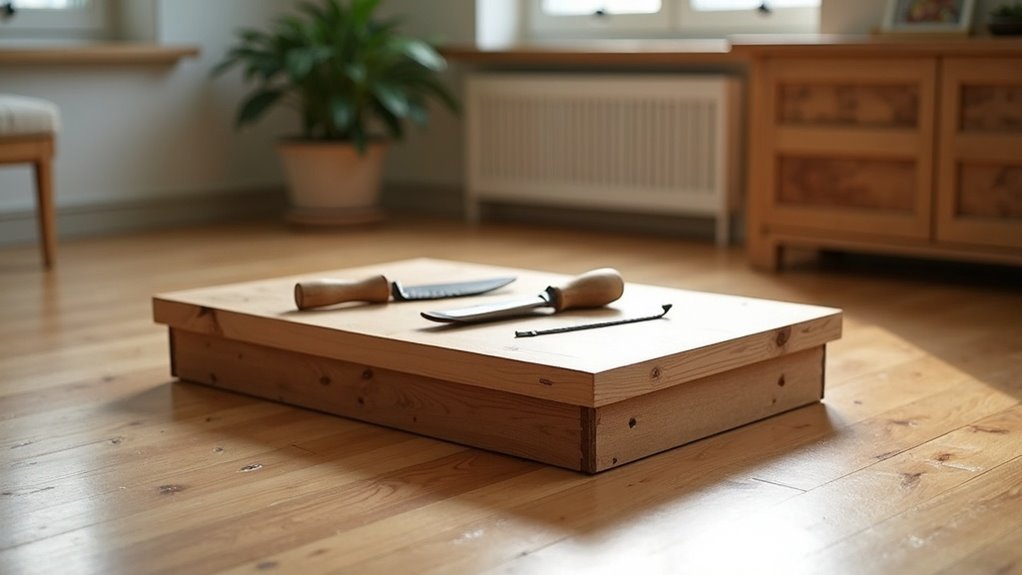
DIY platforms can effectively protect your floors while you work out at home by absorbing shock and reducing noise during weightlifting sessions. They offer stability, which not only enhances safety but also improves your lifting form, making them an excellent addition to your home gym. By using materials like low-grade plywood paired with rubber surfaces, you can create a durable setup that can withstand heavy weights. Regular maintenance is key to ensuring your platform remains effective, while proper construction techniques will help prevent any shifting during your workouts. If you’re interested in exploring the best materials, maintenance tips, and how DIY platforms compare to pre-made options, there’s a wealth of valuable information available to guide you on your fitness journey.
Key Takeaways
- DIY lifting platforms are an excellent way to absorb shock and minimize noise, ensuring your floors are protected during weightlifting sessions at home.
- Made from sturdy materials such as low-grade plywood and rubber, DIY platforms provide the stability and safety you need for dynamic lifts, making them ideal for home gym setups.
- By regularly maintaining and inspecting your DIY platforms, you can extend their lifespan and continue to safeguard your flooring during your workouts.
- Customizable designs offer superior shock absorption and stability, making them a more effective choice for floor protection compared to limited pre-made options.
- Using proper construction techniques, such as securing top sheets with countersunk screws, prevents shifting and further protects the flooring beneath, allowing you to focus on your fitness goals.
Understanding the Importance of Floor Protection
When you lift weights at home, the last thing you want to worry about is damaging your flooring. That’s where DIY lifting platforms come in handy.
Constructed from plywood and rubber, these platforms serve as a shock-absorbing barrier, effectively preventing cracks and damage from repeated impacts. They not only create a dedicated lifting area but also help minimize noise and vibrations, making your home workout environment more enjoyable.
Regular use ensures a stable surface for dynamic lifts like the clean & jerk or snatch, enhancing your safety during exercises. By protecting your flooring, you’re also extending the life of your gym equipment, reducing wear and tear from uncontrolled drops.
This makes your home gym not just functional, but a long-lasting investment in your health and fitness journey.
Benefits of DIY Platforms for Floor Protection
DIY lifting platforms are a must-have for anyone serious about creating a home gym, offering numerous advantages that significantly enhance your workout experience. These platforms are designed to absorb the impact from dropped weights, effectively distributing force to minimize damage to your flooring. Made from durable rubber materials, they also help reduce noise and vibration, ensuring a quieter workout environment for you and your family.
A stable lifting platform is crucial for executing dynamic movements safely, ultimately lowering the risk of injury. With superior traction provided by materials like horse stall mats, you can maintain proper lifting form, which is essential for maximizing your performance. Plus, regular maintenance of your lifting platform will extend its lifespan, ensuring it continues to protect your floors and support your fitness journey effectively.
| Benefit | Description |
|---|---|
| Impact Absorption | Distributes force to reduce floor damage |
| Noise Reduction | Creates a quieter workout environment |
| Enhanced Safety | Provides stability for dynamic lifting movements |
Key Materials for Effective DIY Platforms
When building an effective DIY home gym platform, selecting the right materials is crucial for stability and performance.
Start with low-grade plywood for the base, which provides a solid foundation, and then add a layer of 3/4″ MDF for enhanced durability and a flat surface ideal for various exercises.
To further improve your workout experience, consider incorporating rubber landing surfaces; these will absorb shock and minimize noise, ensuring your platform remains resilient under heavy use while you stay committed to your fitness journey at home.
Essential Material Choices
Choosing the right materials is crucial for constructing effective DIY platforms that can support heavy weights while ensuring a safe lifting environment.
Begin with low-grade plywood arranged perpendicularly to create a stable surface, and consider using two layers to boost durability. For the top layer, 3/4″ MDF provides a flat area that minimizes damage to your equipment.
Incorporate rubber mats, like horse stall mats, for added safety and noise reduction, making your home gym more enjoyable. Adding a second layer of rubber further absorbs impact and dampens vibrations, enhancing your lifting experience.
Ensure that the thickness of the wood sheets matches that of the rubber flooring for a snug fit, promoting both safety and stability during your workouts.
Construction Techniques Overview
To create a functional and safe platform for your home gym, it’s essential to understand the right construction techniques.
Begin with a sturdy base consisting of two layers of low-grade plywood, topped with 3/4″ MDF to provide a smooth, durable surface for your workouts.
To enhance safety and shock absorption, consider adding rubber landing surfaces using horse stall mats or rolled rubber sheeting around the edges.
If you’re building a raised platform, make sure to secure the top sheet with countersunk screws to avoid any damage.
For a flush platform, ensure that the rubber flooring fits tightly to reduce the risk of tripping.
Regularly inspect your platform for wear and ensure weight is evenly distributed to maintain its effectiveness and safety, so you can focus on your fitness goals without worry.
Maintenance and Durability Factors
While maintaining your home gym equipment, understanding the key materials and their durability is essential for ensuring long-lasting performance. Regular inspections help identify wear and tear, allowing you to keep your space safe for workouts. Using 3/4″ MDF enhances flatness and longevity, providing a stable surface for your exercises. Secure your gym platform with construction adhesive and masonry screws to prevent shifting during intense workouts. Employ rubber landing surfaces for improved shock absorption and moisture resistance, making your home gym safer and more comfortable. Choosing thicker plywood (1/2″ or more) guarantees better impact protection, promoting a durable workout environment.
| Material | Benefits |
|---|---|
| 3/4″ MDF | Longevity, flatness |
| Rubber matting | Shock absorption, moisture resistance |
| Thicker plywood | Impact protection, weight distribution |
| Construction adhesive | Stability, durability |
| Regular inspections | Safety, maintenance |
Construction Techniques for Durable Platforms
When constructing a durable DIY platform for your home gym, it’s essential to start with a solid foundation to ensure longevity and stability during your workouts.
Begin with two layers of low-grade plywood for the base, topped with 3/4″ MDF to provide a flat, stable surface for various exercises. Secure the top layer with screws along the edges, making sure they’re countersunk to protect any rubber bumpers you might use.
For added safety and to enhance your workout experience, incorporate horse stall mats or rolled rubber sheeting around the edges to absorb impact and reduce noise. If you plan to lift weights on the platform, consider adding a second layer of rubber for improved sound dampening.
Regular inspections, along with the use of construction adhesive along the edges, will help maintain stability and prevent shifting, ensuring a safe and effective workout environment.
Maintenance Tips for Long-lasting DIY Platforms
To keep your DIY home gym platform in top shape, it’s essential to establish a regular inspection schedule to catch any signs of wear early.
Ensure that you’re distributing weight evenly across the platform during your workouts to prevent stress on specific areas.
Additionally, pay close attention to environmental factors like humidity, as they can significantly impact the materials and overall durability of your platform, which is crucial for maintaining a safe and effective workout space.
Regular Inspection Schedule
Establishing a regular inspection schedule is essential for maintaining the integrity and safety of your home gym equipment. Aim for monthly checks to identify signs of wear and tear, such as cracks in any wooden components or damage to rubber edges.
During each inspection, look for loose screws or fasteners that could compromise the stability of your equipment. Inspect the rubber landing surfaces for deterioration and replace them if needed to ensure effective shock absorption during workouts.
Regularly evaluate the levelness of your equipment; any shifting or sagging may signal deeper issues that need attention. Additionally, monitor the surrounding environment for humidity, as it can impact the longevity of wooden components in your home gym setup.
Keeping your equipment in top shape is vital for a safe and effective workout experience.
Proper Weight Distribution
Proper weight distribution is crucial for ensuring the durability and functionality of your DIY lifting platform, especially for those dedicated to maintaining a home gym. To enhance your workout experience, make sure that heavy weights are evenly distributed across the platform. This helps prevent sagging and preserves its structural integrity.
Opt for bumper plates and low-grade plywood to maximize shock absorption, which not only minimizes noise but also protects the platform from concentrated impacts during your lifts. It’s a good practice to regularly rotate the placement of weights, as this prevents consistent pressure in one area and helps to avoid localized damage.
Always be mindful of the total weight capacity of your platform and refrain from exceeding it, as overloading can compromise stability and safety during your workouts. Lastly, make it a habit to inspect your platform frequently for signs of warping or wear—catching any issues early on can save you from costly repairs down the line and keep your home gym in top shape.
Environmental Considerations
Maintaining your DIY lifting platform is crucial not only for its longevity but also for protecting the floors below it, especially in a home gym setting.
Regular inspections for wear and tear will help you identify areas that may need maintenance, ensuring your equipment remains safe and effective.
Apply a sealant to wooden components to enhance moisture resistance, preventing warping that could impact your workouts.
Keeping the lifting surface clean will minimize debris that can damage both your platform and hardwood floors.
Consider using high-quality rubber mats around the edges for added shock absorption and noise reduction, creating a more comfortable workout environment.
Lastly, ensure proper weight distribution during use to prevent sagging and excessive stress on both the platform and the floor beneath it.
For any necessary adjustments, a utility knife can be a handy tool.
Prioritize these maintenance tips to create a safe and effective home gym experience.
Comparing DIY Platforms to Pre-made Options
When considering the benefits of DIY platforms versus pre-made options for your home gym, it’s evident that DIY platforms offer unique advantages that cater to your specific fitness needs. DIY platforms are not only budget-friendly but also provide enhanced shock absorption and the flexibility to customize your setup in ways that pre-made options often cannot. You can choose materials that ensure optimal floor protection and stability, especially during heavy lifting sessions.
| Feature | DIY Platforms | Pre-made Options |
|---|---|---|
| Customization | High | Limited |
| Cost-effectiveness | More affordable | Generally pricier |
| Shock Absorption | Superior with quality materials | Often less effective |
| Stability | Greater control | Factory-made variance |
| Versatility | Adjustable features possible | Fixed design |
Real-world Examples of DIY Platform Effectiveness
Many individuals may have reservations about the effectiveness of DIY platforms, but real-world examples demonstrate their true value, especially in home gyms.
Users have shared that robust DIY platforms constructed from plywood and rubber mats effectively absorb impact, significantly minimizing floor damage and reducing noise transmission—an important factor for those living in shared spaces.
Research indicates that platforms designed with two layers of plywood and rubber not only prolong the life of both flooring and weightlifting equipment but also enhance safety during workouts.
Properly secured DIY platforms improve stability during Olympic lifts, preventing any unwanted shifts.
Home gym enthusiasts and owners alike find that investing in these materials is a smart move, offering protection against cracks and wear while promoting a healthier lifestyle through effective at-home exercising.