Anchor bolts can be removed from concrete with minimal damage when the right techniques are applied, making it easier to adapt your space for home gym equipment. For male anchors, methods like hammering and cutting can be used to carefully extract them, allowing you to rearrange or upgrade your workout area. Female anchors can often be unthreaded or removed with specialized tools, making the transition smoother. Always prioritize safety by wearing protective gear and taking your time during the removal process. If you’re interested in the best practices and tools for ensuring a damage-free removal, there’s plenty more to explore to create your ideal home gym setup.
Key Takeaways
- Removing anchor bolts can be done without damaging concrete if proper techniques and tools are utilized, which is essential for maintaining an effective home gym setup.
- Male anchors may cause more damage and require forceful removal methods, while female anchors are more complex but generally safer to extract, ensuring your workout space remains intact.
- Specialized tools like the Boltbreaker can help minimize damage during the removal of anchor bolts, allowing you to reconfigure your gym equipment as needed.
- Drilling out anchors with progressively larger bits reduces spalling and protects the surrounding concrete, ensuring your home gym floor remains in good condition.
- Always wear safety gear and proceed slowly to maintain the integrity of concrete surfaces during removal, ensuring your home gym stays safe and functional for your fitness journey.
Understanding Concrete Anchor Types
When setting up home gym equipment, it’s essential to understand the different types of concrete anchors that may be used for securing your gear.
There are two main categories: male and female anchors. Male anchors, such as wedge anchors and sleeve anchors, typically require forceful removal methods, like pounding them deeper or cutting them flush with the concrete. This can risk damaging the surrounding area, which is something to consider when installing your equipment.
On the other hand, female anchors utilize an expanding mechanism to lock in place, making removal a bit more complicated without causing damage. Often, when you need to remove these types of anchors, it’s more practical to make them flush with the concrete surface rather than extracting them completely.
This approach not only preserves the integrity of your home gym setup but also maintains the surrounding structural stability.
Techniques for Removing Male Anchors
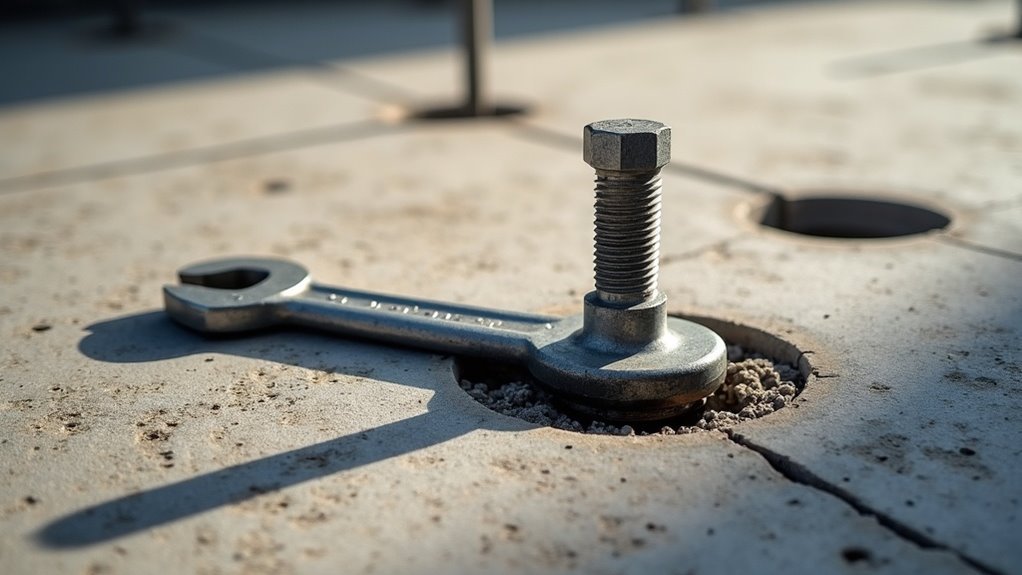
Removing male anchors can be a bit tricky, but with the right techniques, you can minimize damage to your home gym surfaces. For wedge anchors, try hammering them deeper into the concrete to lessen any visible damage. A Boltbreaker tool can snap the rod cleanly, making removal much easier.
If the anchor head is sticking out, you might need to use a hacksaw or grinding wheel to cut it off, which will leave some threads embedded that could require patching later on.
When dealing with hammer drive anchors, chiseling or using a pry bar may be necessary, but be careful—these methods can potentially damage the surrounding concrete.
Always prioritize safety by wearing goggles and gloves when using cutting tools or applying heavy impact for anchor bolt removal. This way, you can keep your workout space intact while ensuring a safe and effective home gym environment.
Methods for Removing Female Anchors
Removing female anchors, such as machine screw anchors and drop-in anchors, can be a bit tricky, especially when setting up your home gym.
Since these anchors expand within the concrete, their extraction requires careful handling to avoid damaging your walls or floors. Here are some steps to help you manage the removal process effectively:
- Start by unthreading the bolt or screw, leaving the female concrete anchor flush with the surrounding surface to maintain a clean look.
- If you’re using lag shield anchors, they may offer an easier removal process, as they contract when the lag screw is taken out, making it simpler to pull them out.
- If complete removal is necessary, you might need to use cutting tools like saws or grinding wheels, but be cautious to protect your concrete surfaces.
- For critical applications, or if you’re unsure about the process, consider seeking professional assistance. This ensures that the integrity of your home gym’s setup remains intact and you can focus on your fitness goals without worry.
Specialized Tools for Anchor Removal
While traditional methods like hammering can risk damaging your home gym setup, specialized tools for anchor removal provide a more efficient and safer alternative for securing fitness equipment.
The Boltbreaker, for instance, utilizes heat to weaken and snap bolts cleanly, minimizing the risk of damaging your walls or floors. QRFS offers various anchor bolt removal tools tailored to expedite the removal process for different anchor types, perfect for adjusting or relocating gym equipment.
These tools often include drill attachments, streamlining screw removal and facilitating the extraction of embedded anchors. By employing these specialized tools, you can considerably reduce the likelihood of damaging your home gym environment, ensuring a safer, more effective setup and workout experience.
Best Practices to Minimize Concrete Damage
To effectively minimize concrete damage while setting up or removing equipment for your home gym, it’s essential to assess the type of anchors used and employ the appropriate removal method tailored to their design.
Here are some best practices:
- Use specialized tools like the Boltbreaker to remove wedge anchors without applying excessive force, ensuring your gym setup remains intact.
- Gently pound with a flat pry bar and hammer to loosen the anchor, taking care not to damage the surrounding concrete.
- When drilling out, use progressively larger bits to minimize spalling of the surrounding concrete, preserving the integrity of your home gym area.
- Always wear safety gear and proceed slowly to prevent unintended concrete damage, ensuring a safe environment for your workouts.
Implementing these techniques can enhance the safety and durability of your home gym setup while maintaining the integrity of your concrete surfaces.