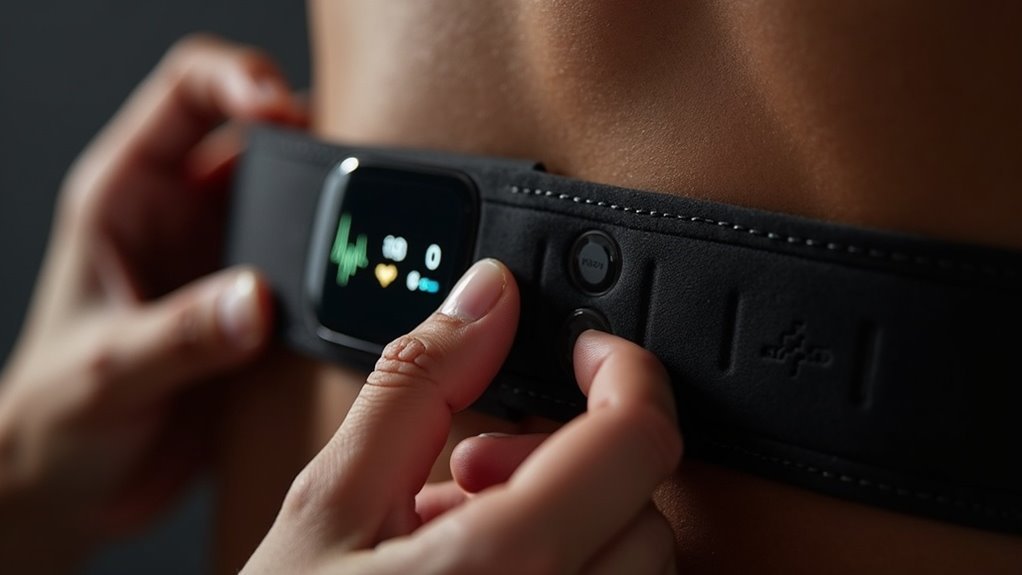
Yes, the placement of your heart rate strap significantly impacts your readings, which is crucial for anyone looking to optimize their home workouts. For accurate data, it’s essential to position the strap snugly just below your chest or bra line to ensure proper skin contact. Avoid wearing the strap over body hair or tattoos, as these can interfere with signal transmission. Regular adjustments are important to maintain a secure fit and prevent fluctuations in readings. If you’re aiming to enhance your workout effectiveness and ensure reliable data, it’s vital to consider these factors for a more successful home exercise routine.
Key Takeaways
- Proper placement of the heart rate strap is essential for accurate readings, ideally positioned just below the chest or bra line.
- Enhancing the contact area with a little water, gel, or saliva can significantly boost conductivity and improve the accuracy of the signal.
- Ensuring a snug fit of the strap is important to prevent it from shifting during workouts, as movement can cause fluctuations in heart rate readings.
- Common mistakes to avoid include incorrect positioning of the strap and insufficient dampening, both of which can lead to unreliable readings.
- Regularly adjusting the strap and maintaining consistent skin contact are key for obtaining reliable heart rate measurements during your home workouts.
Understanding Heart Rate Strap Placement
When using a heart rate strap at home, understanding its proper placement is essential for accurate readings during your workouts.
Position the strap snugly just below your chest muscles or bra, ensuring optimal sensor contact with your skin. Misplacement can lead to inconsistent readings, which may hinder your ability to effectively monitor your heart rate while exercising.
To enhance conductivity, consider dampening the contact area with gel, water, or saliva. Ensure a secure fit—tight enough to stay in place during movement, yet comfortable enough to allow for unrestricted breathing.
Regularly check and adjust the strap’s position before starting your home workout to maintain accuracy and get the most out of your fitness routine.
Importance of Proper Positioning
Proper positioning of your heart rate strap is crucial for capturing accurate data during your home workouts.
For men, placing the strap snugly below the chest muscles and for women, positioning it below the bra ensures optimal skin contact, which significantly enhances accuracy.
Additionally, adjusting the strap for comfort helps prevent movement and avoids inaccuracies that can arise from an improper fit during exercise.
This attention to detail helps you stay on track with your fitness goals while working out from the comfort of your home.
Optimal Strap Location
The correct positioning of your heart rate strap can greatly impact the accuracy of your readings, especially when working out at home.
For optimal heart rate data collection, place the strap snugly below the chest muscles for men and below the bra for women. This ensures consistent sensor contact with the skin, providing accurate heart rate readings as you exercise in your home gym.
A loose strap can lead to fluctuations, compromising your results during workouts. Additionally, dampening the contact area can enhance electrical conductivity for even better performance.
By ensuring proper strap snugness and positioning before your workout, you can access the best areas for sensor contact, guaranteeing reliable monitoring throughout your activity without the need for mid-activity adjustments.
Stay healthy and maximize your home workout sessions with precise heart rate tracking!
Adjusting for Comfort
Finding the right fit for your heart rate strap significantly boosts both comfort and accuracy during your at-home workouts.
Proper positioning is essential for obtaining precise heart rate readings. Here are some tips for adjusting for comfort:
- Place the chest strap snugly just below the chest muscles for men and just below the bra line for women.
- Ensure the strap is tight enough to stay in place during movement, but not so tight that it restricts your breathing.
- Damping the contact area with a little moisture can enhance sensor contact for better readings.
By establishing the correct fit before your home exercise session, you can maintain focus and ensure reliable data throughout your workout.
Regular adjustments are key to keeping your workouts safe and effective.
Impact on Accuracy
When you position your heart rate strap correctly, it significantly affects the accuracy of your readings, which is vital for effective home workouts.
Proper chest strap placement is crucial; it should fit snugly just below the chest muscles for men and just below the bra for women. This ensures optimal contact with your skin, allowing the sensors to transmit accurate signals.
Moistening the contact area can enhance electrical conductivity, further improving the accuracy of your readings. Avoid loose fittings that can lead to erratic measurements, and be cautious about placing the strap over body hair or tattoos, as these may obstruct signals.
Regular adjustments will help you maintain reliable heart rate tracking, ensuring you get the most out of your home gym equipment and exercise routines.
Factors Influencing Reading Accuracy
To achieve accurate heart rate readings during your home workouts, it’s essential to pay attention to the proper strap positioning and ensure good skin contact.
A snug fit just below the chest muscles or bra line boosts conductivity, making your readings more reliable. Additionally, using proper dampening techniques can further enhance the accuracy of your data.
To ensure consistency, try to minimize external factors such as excessive movement and sweat during your exercises. This way, you can trust your heart rate monitor to help you stay on track with your fitness goals at home.
Ideal Strap Positioning
Proper placement of the heart rate strap is essential for achieving accurate readings during home workouts. To ensure effective strap positioning, consider the following tips:
- Position the strap snugly just below the chest muscles for men and just below the bra line for women.
- Apply a dampening agent, such as water or gel, to improve conductivity at the contact area.
- Adjust the strap before your workout to prevent any disruptions during your exercise routine.
Wearing the strap too loosely may lead to inaccurate readings, while an overly tight fit can hinder your comfort.
Make it a habit to regularly clean your strap to maintain consistent accuracy and extend its longevity.
Keep these factors in mind to optimize your home gym performance and ensure a safe workout experience.
Skin Contact Quality
Achieving accurate heart rate readings at home while working out goes beyond just positioning the strap correctly; the quality of skin contact is equally important. For optimal performance of your chest strap, the electrodes must maintain consistent contact with your skin to effectively detect your heart’s electrical signals.
Factors such as sweat and moisture can actually enhance skin contact quality, improving conductivity during your home workouts. However, dirt or excessive body hair can hinder the electrical connection, resulting in inaccurate readings.
Dampening the contact area with a bit of water or gel can significantly enhance signal quality. Make sure the strap fits snugly but comfortably, and remember to regularly clean the sensors to prevent debris build-up that could interfere with accurate heart rate detection.
This attention to detail can help you get the most out of your home gym experience and stay on track with your fitness goals.
Common Placement Mistakes
While many people focus on the technology of heart rate monitors, common placement mistakes can greatly affect the accuracy of your readings, especially when exercising at home.
To ensure consistent and precise readings during your home workouts, avoid these pitfalls:
- Failing to dampen the contact area with water, gel, or saliva, which can hinder conductivity.
- Wearing the strap too loosely, which can cause it to shift and interrupt your heart rate data.
- Positioning the strap too high or too low, which can disrupt effective detection.
For optimal performance, ensure your chest strap fits snugly just below the chest muscles for men and right below the bra line for women.
This will help you stay on track with your fitness goals while working out at home.
Tips for Correct Strap Adjustment
Achieving the right fit for your heart rate strap is essential for maximizing both accuracy and comfort during your home workouts. To ensure optimal performance, position the strap snugly just below your chest muscles or beneath the bra band, allowing for direct skin contact which is crucial for precise readings. To enhance conductivity, consider dampening the contact area with a small amount of water or gel.
It’s important to adjust the strap for comfort; a fit that is too tight can restrict your breathing and lead to inaccurate readings. Make sure the electrodes maintain direct contact with your skin, steering clear of any obstructions like clothing or hair. Establishing the correct fit before beginning your workout is key to effective heart rate monitoring.
| Step | Action | Result |
|---|---|---|
| Positioning | Place strap snugly below chest/bra band | Ideal skin contact |
| Dampening | Apply water/gel on contact area | Enhanced accuracy |
| Comfort Adjustment | Adjust for comfort without restricting breathing | Accurate and safe readings |
Impact of Strap Fit on Performance
The fit of your heart rate strap is crucial for optimal performance and accurate readings, especially when working out at home.
The fit of your heart rate strap is vital for precise readings and enhanced performance during at-home workouts.
- Proper placement of the strap enhances the reliability of your data.
- A snug fit reduces the chances of sensor misalignment.
- Adjusting the strap for comfort can significantly improve your workout effectiveness.
It’s important to position your strap just below the chest muscles or bra area. A snug fit ensures consistent contact with your skin, leading to more accurate heart rate readings.
Conversely, a loose strap can result in erratic data, while a strap that’s too tight may hinder your breathing.
Regularly adjusting your strap before each workout not only enhances heart rate monitoring but also ensures your safety and comfort throughout your home exercise routine.