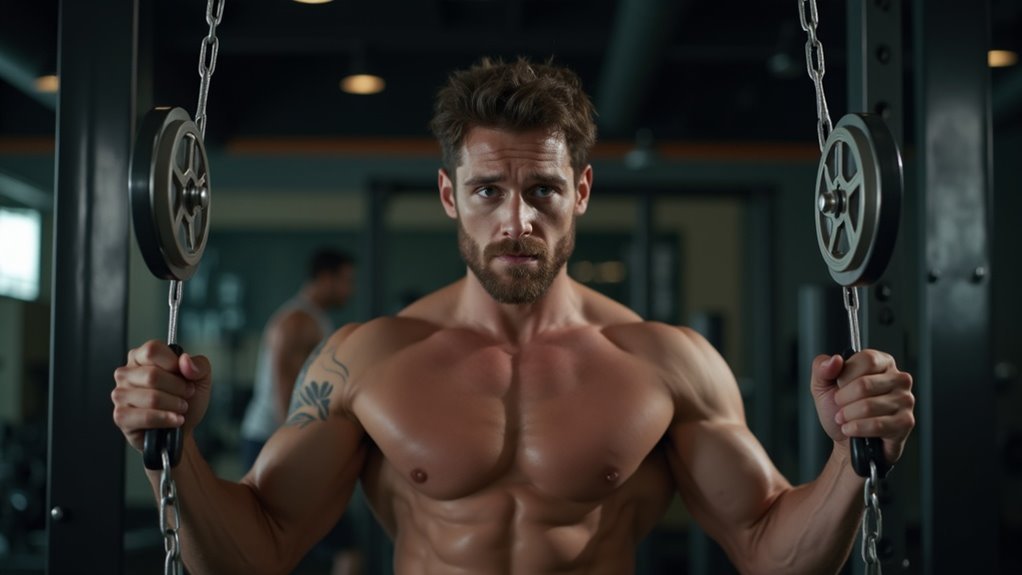
Yes, pulley height significantly affects exercise strength curves by altering the angle of resistance. This change influences how your muscles engage throughout the movement, impacting both workload and muscle activation. When using higher pulleys, there’s an emphasis on the eccentric phases of movement, while lower pulleys facilitate easier lift initiation during concentric phases. By adjusting pulley height, you can customize your home workouts to focus on specific muscle groups, making your training more effective. Understanding these dynamics will help you maximize your home gym experience and achieve your fitness goals. Explore further to discover more tips and insights!
Key Takeaways
- Pulley height plays a significant role in altering the angle of resistance, which directly affects the strength curve and muscle engagement during home workouts.
- Utilizing higher pulleys can emphasize the eccentric phase of exercises, while lower pulleys focus on enhancing the concentric phase, allowing for a well-rounded workout.
- Adjusting the pulley height in your home gym equipment facilitates targeted muscle activation, optimizing strength and hypertrophy for specific muscle groups.
- Finding the ideal pulley positioning can maximize resistance and highlight different phases of the strength curve, improving the effectiveness of your home exercise routine.
- Experimenting with various pulley heights can help you identify and strengthen weak points in your lifts, contributing to balanced muscle development and overall fitness at home.
The Importance of Pulley Height in Strength Training
When you’re working out at home, the height of the pulley in your gym equipment can significantly affect the effectiveness of your strength training routine.
Adjusting the pulley height changes the angle of resistance, which directly influences the strength curves and muscle engagement during your exercises.
Adjusting pulley height alters resistance angles, impacting strength curves and muscle activation throughout your workout.
Setting the pulley higher emphasizes the eccentric phase of the lift, creating a descending strength curve that challenges you at the beginning of the movement.
Conversely, using lower pulley settings shifts the focus to the concentric phase, resulting in an ascending strength curve that makes starting the lift easier.
How Pulley Height Affects Resistance and Muscle Engagement
The height of the pulley in your home gym setup plays a crucial role in determining the angle of resistance, which can significantly affect how your muscles engage during different exercises.
By adjusting the pulley position, you can create variations in resistance that either increase or decrease muscle workload throughout your range of motion. Understanding these dynamics allows you to optimize your home workouts for specific muscle groups, enhancing both strength and hypertrophy, and ultimately supporting your health and fitness goals at home.
Whether you’re aiming to build muscle or maintain overall fitness, mastering pulley adjustments can lead to more effective and efficient workouts for both men and women.
Optimal Pulley Positioning
Ideal pulley positioning is crucial for maximizing resistance and muscle engagement during home workouts. Adjusting the height of your pulleys can significantly change the angle of resistance, influencing how effectively you recruit different muscle groups throughout your exercises.
For instance, positioning a pulley higher targets the upper muscle fibers, which can enhance hypertrophy and strength development, while a lower pulley placement emphasizes the lower range of motion, allowing you to focus on specific weaknesses in your strength curve.
This strategic adjustment is particularly beneficial for those exercising at home, as it enables you to tailor your workouts to your individual fitness levels and goals. Higher pulleys also provide increased leverage during the eccentric phase of movements, promoting greater muscle tension and growth.
A well-placed pulley system ensures constant tension throughout the entire range of motion, making your home workouts more effective and safe for both men and women looking to improve their strength and overall fitness.
Resistance Variation Impact
Adjusting pulley height not only enhances the effectiveness of your home workouts but also significantly influences resistance variation and muscle engagement.
By changing the angle of resistance, you can modify the strength curve, increasing the challenge for your muscles. When the pulley is positioned higher, it increases tension throughout the movement, stimulating muscle growth and maximizing recruitment at key points in the strength curve.
On the other hand, lowering the pulley may reduce resistance on certain muscles, altering engagement and potentially hindering your progress.
Customizing pulley height allows you to focus on different muscle areas, optimizing your training for improved strength gains while ensuring safety and effectiveness in your home exercise routine.
Adjusting Pulley Height for Optimal Exercise Effectiveness
By understanding how pulley height influences exercise dynamics, you can optimize your home workouts for better muscle engagement and growth.
Here are four key considerations when adjusting pulley height for your home gym:
- Assess the strength curve: Identify which points in your movement require more focus to enhance your home exercise routines.
- Target weak points: Adjust the pulley height to challenge specific areas in your strength curve, helping you strengthen those harder-to-target muscles.
- Ensure constant tension: Different heights can help maintain resistance throughout your entire range of motion, crucial for effective home workouts.
- Create tailored workouts: Customize your exercises to align with your individual fitness goals and needs, making your home gym experience more effective.
With these adjustments, you’ll boost muscle engagement and maximize the effectiveness of your training sessions at home, leading to better results and a healthier lifestyle.
Practical Applications of Pulley Height in Workouts
Adjusting the height of your pulley system can significantly influence muscle engagement during your at-home workouts.
Lowering the pulley increases resistance at the beginning of movements such as tricep extensions, which enhances muscle activation where it matters most.
On the other hand, raising the pulley can reduce initial tension, allowing you to concentrate on targeting specific muscle groups more effectively.
This flexibility in pulley height is essential for optimizing your home gym routine, catering to both men and women looking to stay fit and healthy from the comfort of their own space.
Impact on Muscle Engagement
When you adjust the pulley height in your home workouts, the angle of resistance changes, which directly affects muscle engagement throughout your exercises.
Modifying the pulley height can:
- Highlight different phases of the strength curve for balanced development.
- Increase the load on muscles during the upper portion of the movement, enhancing strength.
- Target specific muscle groups to address weaker areas and improve overall performance.
- Ensure consistent resistance throughout the lift for effective training.
These adjustments boost muscle activation, leading to better strength gains.
By optimizing pulley height, you enable a fuller range of motion, maximizing muscle workload and promoting greater hypertrophy.
This personalized approach ensures safer, more effective workouts that align with your fitness goals, making it perfect for both men and women working out at home.
Adjusting Resistance Levels
Understanding how to adjust resistance levels through pulley height can significantly enhance your home workout effectiveness.
By manipulating pulley height, you can change the angle of resistance, which impacts the strength curve and alters muscle engagement during each exercise. Higher pulley settings create a descending strength curve, making the lift more challenging right from the start. Conversely, lower pulley heights result in an ascending strength curve, which can ease the initial movement.
Targeting Specific Muscle Groups
By strategically manipulating pulley height, you can effectively target specific muscle groups during your home workouts. This approach allows you to optimize your strength curve and enhance your training results from the comfort of your own space.
Consider the following:
- Lower pulleys for targeted work on glutes and legs during cable squats, perfect for building lower body strength at home.
- Mid-range settings to engage arms effectively in tricep pushdowns or standing cable curls, ensuring a well-rounded upper body workout.
- Higher pulleys emphasize upper body muscles with chest flies or lat pulldowns, giving you the tools to sculpt your physique without a gym.
- Adjustments can help address weak points by altering the range of motion, promoting balanced muscle development and improved performance, making your home gym experience more effective.
Equip your home gym wisely and take control of your health through targeted exercises!
Analyzing Different Exercises and Their Strength Curves
Adjusting pulley height in cable exercises is crucial for optimizing your home workout routine. By modifying the angle of resistance, you can enhance muscle engagement throughout your lifts, making your home gym sessions more effective. For example, positioning the pulley high during cable flies increases tension at the peak of the movement, while lowering it enhances resistance during the eccentric phase. This targeted approach to specific muscle fibers can significantly benefit your resistance training efforts.
| Pulley Height | Exercise Type | Strength Curve Effect |
|---|---|---|
| High | Cable Flies | Increased tension |
| Medium | Cable Rows | Balanced load |
| Low | Cable Curls | Enhanced eccentric phase |
Recommendations for Incorporating Pulley Systems Into Training
Incorporating pulley systems into your home gym workouts can significantly enhance your efficiency and effectiveness. Here are some recommendations to optimize your training program:
- Adjust Pulley Height: Experiment with different heights to change the strength curve, maximizing muscle engagement and allowing for a more versatile workout.
- Target Weak Points: Utilize varied pulley settings to identify and strengthen weak points in your lifts, helping you achieve a more balanced physique.
- Combine with Resistance Bands: Integrate resistance bands into your pulley exercises for additional variable resistance, which can lead to enhanced overall muscle development.
- Tailor Training Programs: Customize your training routines based on insights gained from pulley adjustments, ensuring a comprehensive approach to muscle growth and performance while working out at home.