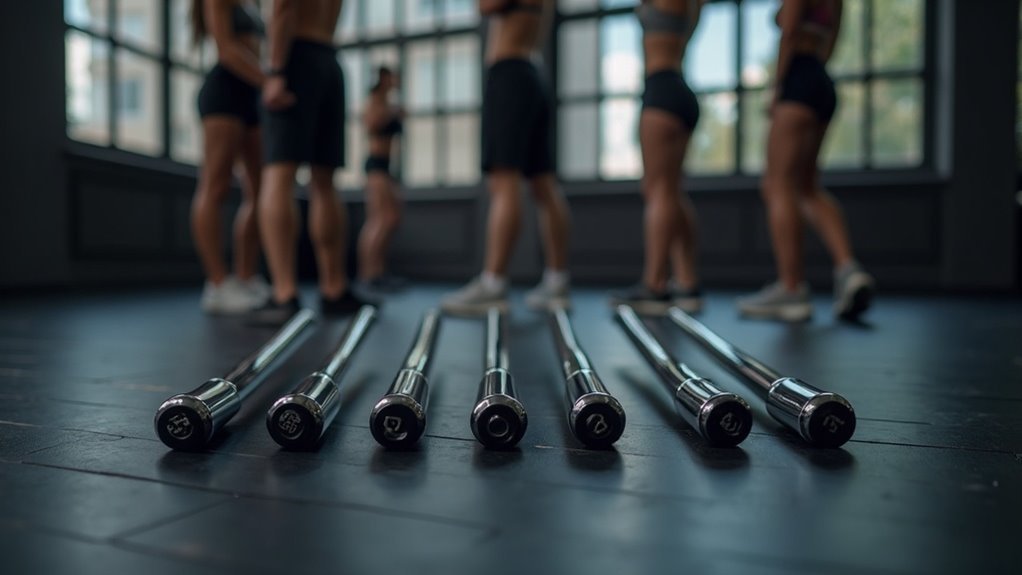
Vertical barbell storage can be safe for sleeves if you take proper precautions in your home gym. Make sure to choose a high-quality barbell and consider adding rubber padding to absorb any impacts. Regular maintenance, like cleaning and lubrication, is crucial to minimize wear and prevent lubricant pooling. For those using needle bearing bars, handle them with care to avoid potential damage. Bushing bars, on the other hand, typically handle vertical storage quite well. If you’re interested in learning more about best practices for maintaining your home gym equipment and ensuring a safe workout environment, feel free to ask!
Key Takeaways
- Vertical barbell storage can lead to lubricant pooling in sleeves, so it’s important to conduct regular maintenance checks to ensure your equipment is performing at its best.
- High-quality bushing bars are typically safer for vertical storage than needle bearing bars, which require more careful handling to avoid potential issues.
- Incorporating rubber padding into vertical holders can help minimize impact damage and protect the internal components of your barbell, ensuring longevity.
- Regular cleaning and lubrication are crucial for reducing wear and maintaining the functionality of barbell sleeves when stored vertically.
- While vertical storage is a great way to optimize space in your home gym, considering horizontal options may help reduce the risk of damage and promote better oil distribution in sleeves.
Understanding Vertical Barbell Storage
When considering vertical barbell storage for your home gym, it’s essential to understand how it can affect your equipment. Vertical storage can put needle bearing bars at risk of damage if not handled properly, especially if they’re dropped.
However, high-quality bushing bars can be safely stored vertically with minimal risk to their internal components. To keep your equipment in top shape, regular maintenance—such as cleaning and lubrication—is crucial to minimize any risks associated with this storage method.
High-quality bushing bars can be stored vertically with minimal risk; regular maintenance is key to preserving their condition.
To further safeguard your investment, consider adding rubber padding to your vertical holders. This will help soften impacts and reduce wear on your bars.
Additionally, ensuring the stability and proper alignment of weights during vertical storage is vital to prevent accidents and maintain a safe exercising environment in your home gym. Prioritizing these factors will help you create a safe and efficient workout space that supports your health and fitness goals.
Benefits of Protective Features in Storage Units
Protective features in storage units are crucial for keeping your home gym equipment, like barbells, in optimal condition. Units equipped with UHMW inner linings significantly minimize the risk of scratches and damage to the sleeves, ensuring your gear stays looking and performing its best.
The REP 9-Bar Vertical Storage Unit, for example, features protective tubing that helps maintain sleeve integrity, preventing outward lean and securely holding your bars in place.
High-quality storage solutions also reduce exposure to rust and deterioration, effectively extending the lifespan of your barbells.
Additionally, vertical storage units with cushioning elements absorb impacts during barbell placement and removal, offering extra protection for vital components such as bearings and bushings.
Impact on Needle Bearing Bars
While vertical storage may seem convenient for your needle bearing bars in a home gym setting, it carries specific risks that can compromise their integrity.
Consider the following points:
- Dropping or improperly placing the barbell vertically can lead to damage of the bearings, which can affect your workouts.
- Needle bearing bars require careful handling due to their spinning mechanism, making it crucial to ensure they’re stored properly.
- Long-term vertical storage can result in consistent wear, even if heavy drops don’t lead to immediate damage, impacting performance over time.
For home gyms focused on strength training, horizontal wall racks are often preferred to minimize these risks.
Regular maintenance and careful handling are essential to ensure the peak performance and longevity of your needle bearing bars.
Regular maintenance and careful handling are vital for maximizing the performance and lifespan of your needle bearing bars.
Prioritize safety and proper storage to keep your equipment in top shape and support your fitness journey at home.
Considerations for Bushing Bars
When storing bushing bars vertically in your home gym, you can save space while keeping them in good condition.
However, it’s important to handle them carefully to avoid damaging their internal components.
To ensure they last longer, make cleaning and lubrication a regular part of your maintenance routine, no matter how you choose to store them.
This way, you can keep your home gym equipment in top shape and maintain your commitment to staying healthy and fit from the comfort of your own home.
Vertical Storage Benefits
Vertical storage of bushing bars provides numerous advantages that improve both space efficiency and the longevity of your home gym equipment. By opting for vertical storage, you can:
- Optimize the floor space in your home gym, making it easier to create a workout area that feels spacious and organized.
- Shield internal components from damage with protective rubber padding, ensuring your equipment remains in top condition.
- Sustain peak performance through regular maintenance and lubrication, allowing for a smoother workout experience.
This storage method is generally safe, as high-quality bars are designed to withstand pressure without significant risk of damage.
Many home gyms successfully implement vertical storage for bushing bars, demonstrating that it’s a practical solution when proper precautions are observed.
Just remember to avoid heavy drops to minimize shock on the bearings during placement, ensuring your equipment lasts longer and performs better.
Potential Risks Involved
While vertical storage for bushing bars can save space and enhance your home gym’s organization, it’s important to recognize the potential risks that could affect the durability and effectiveness of your equipment.
High-quality bushing bars are designed to endure pressure; however, impacts during storage may compromise the lifespan of the sleeves. To minimize these risks, consider using a rubber pad in the holder to cushion your barbell during storage.
Regular maintenance and careful handling are vital for preventing internal wear and tear. Although many users report no significant issues, taking precautions will help ensure that your bushing bar remains in excellent condition for years to come.
Always prioritize safety to protect your investment in your home gym and support your fitness journey.
Maintenance Recommendations
To keep your bushing bars in optimal condition, regular maintenance is essential for your home gym setup.
Following these maintenance recommendations will ensure their longevity and peak performance:
- Clean the bars regularly to remove dirt and debris that can affect functionality.
- Lubricate the internal components to minimize wear and tear, ensuring a smooth workout experience.
- Use a rubber pad in the vertical holder to soften impacts and protect both your equipment and your body during exercises.
Managing Oil Accumulation
When storing your barbell vertically in your home gym, be mindful of the risk of lubricating oil pooling at one end, which can affect performance during your workouts.
To manage this effectively, consider your storage orientation and employ oil distribution techniques that ensure an even spread.
Regular maintenance and proper oil application are crucial to prevent accumulation issues and to keep your barbell sleeves functioning optimally, allowing you to focus on your fitness goals at home.
Oil Distribution Techniques
Managing oil accumulation in vertically stored barbells is crucial for ensuring a safe and effective home workout experience. Here are some tips to maintain optimal lubrication distribution for your home gym equipment:
- Regularly inspect your barbells for any oil settling at one end of the sleeve, as this can affect performance.
- Stick to a consistent lubrication schedule to prevent any issues that could disrupt your workouts.
- Consider investing in newer barbells with sealed oil systems, which can help minimize oil buildup and enhance longevity.
Stay alert; if you notice oil dripping from your barbell, it may be time to reassess your storage method or add oil.
Proper oil distribution is vital for maintaining the functionality of barbells stored vertically, ensuring they’re safe and ready for your home fitness routine.
Storage Orientation Effects
While vertical storage of your barbell may seem like a space-saving solution for your home gym, it can lead to oil accumulating at one end of the sleeves. This pooling can impact performance, necessitating regular checks and maintenance of lubrication.
On the other hand, horizontal storage offers improved oil distribution, as you can easily spin the sleeves to redistribute any pooled lubricant. Although many newer barbells come equipped with sealed oil systems to reduce these issues, it’s still important to keep an eye out for any dripping oil, which could signal lubrication concerns.
Ultimately, no matter how you choose to store your equipment, consistent maintenance is crucial to ensure that your sleeves operate smoothly and to extend the lifespan of your barbells, keeping your home workouts effective and enjoyable.
Preventing Scratches and Damage
To prevent scratches and damage during vertical barbell storage in your home gym, it’s important to consider the materials and design of your storage solution.
Preventing scratches and damage during vertical barbell storage requires careful consideration of your storage solution’s materials and design.
Here are some effective strategies to keep your equipment in top shape:
- Opt for vertical holders that feature protective linings to reduce the risk of scratching.
- Regularly check the sleeves for any signs of wear or damage to ensure longevity.
- Consider adding rubber pads to your holders to cushion impacts and provide a softer landing for your barbells.
Best Practices for Leaving the Bar Loaded
Leaving a barbell loaded for an extended period can compromise its structural integrity, so it’s crucial to follow best practices to maintain your home gym equipment.
In a garage gym, always unload lower-quality barbells after use to prevent permanent bending. High-quality bars can endure short-term loading, but consistent stress can lead to wear.
Periodically rotate and unload your barbell to ensure even stress distribution and optimal performance. If you must leave it loaded, store it in a stable position to prevent accidents that could damage the sleeves.
By adhering to these guidelines, you help protect your investment and promote safety for everyone using your home gym.
Prioritizing the upkeep of your equipment will support your health and fitness goals as you exercise at home.