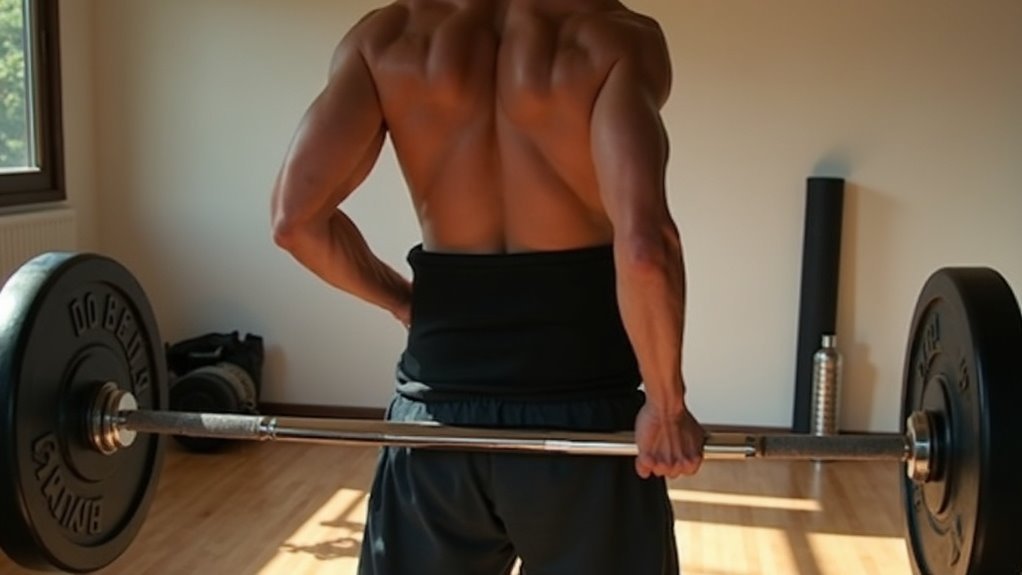
Yes, a lifting belt can be incredibly beneficial for home deadlifts, whether you’re a man or a woman. It enhances your performance and safety by increasing intra-abdominal pressure and stabilizing your spine, particularly when lifting heavier weights. However, it’s important to first master your form and build some core strength before incorporating a belt into your routine. Keep in mind the potential drawbacks, such as reduced core development. If you want to learn how to use a belt effectively and choose the right one for your home gym needs, there’s plenty of valuable information ahead!
Key Takeaways
- A lifting belt enhances spinal stabilization and intra-abdominal pressure, improving safety during home deadlifts for both men and women.
- It reduces spinal loading and minimizes stress on the lower back, promoting injury prevention, which is crucial for anyone exercising at home.
- Using a belt can help maintain proper form and technique, especially during heavier lifts, making it a valuable tool for home workouts.
- Beginners should focus on building core strength first, while those at an intermediate level can benefit from using a belt during heavy sets to maximize their performance.
- Opting for the right belt, ideally 4 inches wide, ensures optimal support for effective workouts at home, catering to your fitness goals.
The Benefits of Using a Lifting Belt for Deadlifts at Home
When deadlifting at home, incorporating a lifting belt can significantly improve both your performance and safety. This essential piece of equipment offers vital support, enhancing intra-abdominal pressure and stabilizing your spine, particularly when handling heavier weights.
By alleviating spinal loading, the belt helps reduce stress on your lower back and core, making it a wise choice for preventing injuries. Moreover, using a lifting belt promotes proper form and technique, which can boost your confidence as you progress to heavier lifts.
With the right lifting belt, you can focus on building core strength while ensuring your home workouts are effective and injury-free. This makes it an invaluable addition to your home gym setup for both men and women looking to stay healthy and fit.
When to Start Incorporating a Belt Into Your Deadlift Routine
As you progress in your home deadlifting routine, knowing when to incorporate a lifting belt can significantly enhance your performance and safety.
For beginners, it’s essential to focus on mastering proper deadlift form and building core strength during the first 1-3 months before introducing a belt.
Intermediate lifters can consider using a belt when lifting heavy weights that reach 75% to 80% of their one-rep max. A well-fitting belt can be beneficial for your last one or two sets of heavy lifts, particularly when performing 8 reps or fewer.
Intermediate lifters should use a lifting belt for heavy sets, particularly when approaching 75% to 80% of their one-rep max.
This will help improve core stability and maximize intra-abdominal pressure, allowing you to manage heavier weights effectively while working out at home.
How to Properly Use a Lifting Belt for Deadlifts
Using a lifting belt effectively during deadlifts can significantly improve your performance and safety while working out at home.
To wear the belt correctly, position it snugly around your waist, just above your hip bone. Before lifting, engage your core by flexing your abdominal muscles and taking a deep breath into your stomach.
Introduce the belt during your second or third warm-up set, ideally when lifting around 80% of your working weight. It’s important to experiment with the tightness of the belt to ensure stability without sacrificing your ability to breathe comfortably.
Focus on building your core strength without the belt initially, using it primarily for heavier weights to maximize the performance benefits and support your fitness journey at home.
Potential Drawbacks of Wearing a Belt
While a lifting belt can provide support during heavy lifts at home, it’s important to be aware of its potential drawbacks. Relying on a belt may create a false sense of security, leading you to overlook proper form, which can increase the risk of injury. Additionally, over-dependence on a lifting belt can hinder your core strength development by preventing the engagement of stabilizing muscles. Some individuals may also experience discomfort, particularly if they have a shorter torso, as belts can restrict movement and breathing. Using a belt during lighter lifts may reduce the training benefits and elevate intra-abdominal pressure, which could pose risks, especially for those with cardiovascular concerns.
| Drawback | Explanation |
|---|---|
| False Sense of Security | Neglecting proper form increases injury risk. |
| Core Strength Development | Masks weaknesses, limiting stabilizing muscle engagement. |
| Discomfort | May restrict movement and breathing for some users. |
| Improper Use | Reduces benefits from lighter lifts without the belt. |
| Blood Pressure Concerns | Elevated pressure may pose risks for some individuals. |
Choosing the Right Belt for Home Deadlifting
Choosing the right lifting belt for home deadlifting can significantly enhance your performance and safety, whether you’re a man or woman looking to improve your strength training routine.
Aim for a 4-inch wide belt, ideally 10-13 mm thick, to ensure optimal support and stability during heavy lifts. A leather belt offers maximum durability and support, while a nylon belt provides the flexibility needed for comfort during varied workouts.
Make sure it features adjustable closures, such as prongs or a lever, which allow for proper bracing without restricting movement.
Keep in mind your deadlifting style; sumo lifters may prefer a lower belt position, while conventional lifters typically wear theirs higher.
Trying out different styles will help you find the best fit for your core strength and technique, making your home gym experience safer and more effective.