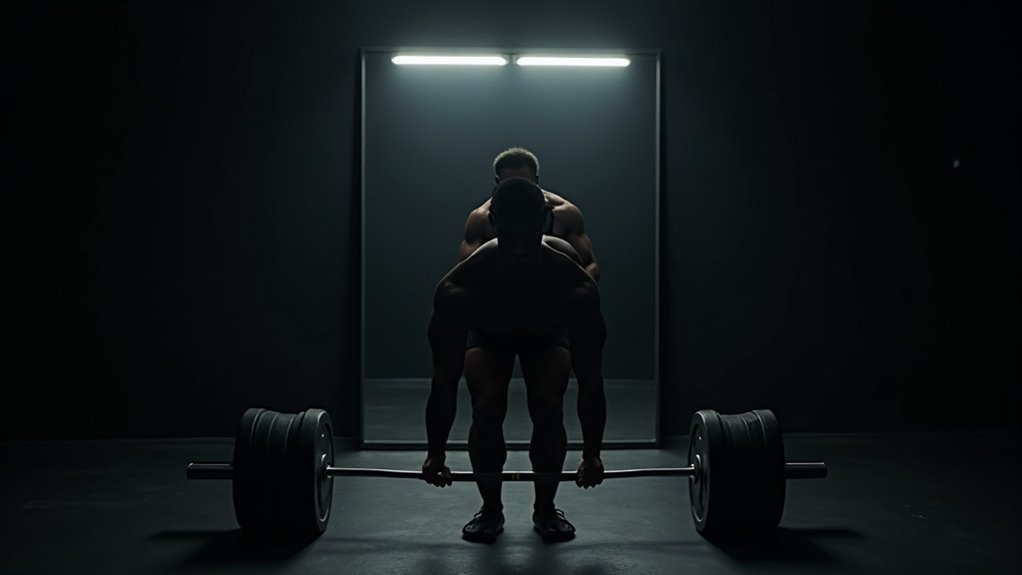
Mirrors aren’t essential for safe solo lifting, especially when working out at home. Instead, focusing on developing your body awareness and relying on internal sensations can significantly improve your technique. While mirrors can provide some visual feedback, they may also distract you from mastering proper form. By opting for mirrorless training in your home gym, you enhance your proprioception and build confidence in your lifting abilities. This approach empowers you to make instinctual adjustments for better results. Explore further to discover practical tips and alternative methods for assessing your form while exercising at home.
Key Takeaways
- Mirrors are not essential for safe solo lifting; you can develop proper technique through body awareness and proprioceptive cues, which can be particularly beneficial for home gym workouts.
- Relying too much on mirrors may impede your ability to tune into your body’s internal sensations during lifts, which is crucial for safety and effectiveness.
- Instead of mirrors, consider using alternative methods such as video analysis or getting feedback from workout partners, which can help you assess your form without needing a reflective surface.
- Creating a safe lifting environment with the right home gym equipment and practices is key to enhancing safety during your solo lifting sessions.
- By focusing on developing body awareness and internal cues, you can boost your performance and confidence in lifting, all while exercising in the comfort of your home gym without the need for visual feedback.
The Role of Mirrors in Gym Environments
Although mirrors are often overlooked in home gym settings, they play a crucial role in enhancing your workout experience. They provide immediate visual feedback, allowing you to monitor and correct your form during exercises like squats and deadlifts.
This real-time feedback helps refine your technique and strengthens the neural pathways associated with specific lifts. With optimal mirror placement, you can gain valuable insights into your body mechanics from various angles, making your home workouts more effective.
While mirrors are beneficial for ensuring correct form and muscle engagement, it’s important to balance this visual feedback with internal cues to avoid distractions and overcorrection during your exercises at home.
Limitations of Mirror Use During Lifting
While mirrors can assist with basic form checks in your home gym, they come with notable limitations when it comes to evaluating multi-joint movements.
Turning your head to check your form can disrupt your balance and potentially lead to safety issues during heavy lifts.
Moreover, relying on visual feedback can distract you from cultivating the body awareness necessary for enhancing your lifting technique, which is crucial for achieving your fitness goals at home.
Visual Limitations in Technique
Mirrors can create a false sense of security when evaluating your lifting technique in your home gym, as they primarily offer feedback from the frontal plane.
While mirrors help with a quick form check, they miss significant aspects of your lifting technique. Keep these visual limitations in mind:
- Mirrors only capture front-facing angles, neglecting the essential sagittal and transverse planes.
- Relying on them can distract you, which may compromise your focus and balance during workouts.
- Delayed visual feedback can hinder your ability to make timely corrections to your form.
- Over time, dependence on mirrors can diminish your proprioception, leading to reliance on visual cues rather than feeling your body’s movements.
For safe and effective lifting at home, it’s crucial to develop an internal kinesthetic sense that goes beyond what mirrors can offer.
Focus on building your awareness of your body mechanics to enhance your workout experience and results.
Distraction and Focus Issues
Using mirrors in your home gym routine can lead to significant distractions that undermine your focus and performance.
Constantly checking your form in a mirror can interrupt the flow of your lifts, causing you to lose concentration on the movement itself, which may increase your risk of injury.
Additionally, mirrors can foster self-consciousness and anxiety about your appearance, detracting from the mental focus that’s essential for safe lifting at home.
Relying on mirrors for feedback might also create overconfidence in your technique, as visual assessments can be misleading.
Instead, focusing on a steady point can enhance your balance and stability, ultimately improving your overall lifting performance and safety while exercising in your home gym.
Transitioning to Mirrorless Training
Transitioning to mirrorless training at home shifts your focus from external visual cues to internal body awareness, which is essential for maximizing your home workout experience.
By relying on proprioception, you’ll develop a deeper understanding of your mechanics and enhance your lifting technique, even without visual feedback.
Embracing this change may feel challenging at first, but it ultimately builds confidence and improves your performance, helping you achieve your fitness goals right in your home gym.
Embracing Body Awareness
While many home gym enthusiasts rely on mirrors to check their form, training without them can significantly enhance your body awareness. By focusing on your kinesthetic sense, you can better feel your movement patterns and mechanics, fostering self-reliance and instinctual adjustments.
Here’s what to consider for a more effective home workout:
- Strengthened proprioception leads to improved movement accuracy, crucial for avoiding injuries at home.
- Enhanced mind-muscle connection boosts performance, allowing you to maximize your workouts without needing a gym.
- Learning to trust your bodily sensations promotes independence, making you more attuned to your body’s needs while exercising at home.
- Embracing discomfort during mirrorless training drives personal growth, helping you push past limits and achieve your fitness goals in the comfort of your own space.
Developing Internal Cues
Training without mirrors in your home gym shifts your focus from visual checks to cultivating internal cues, which are essential for enhancing your kinesthetic awareness.
By emphasizing internal feedback, you improve your proprioceptive awareness, allowing for instinctive adjustments during your at-home workouts. This approach fosters confidence in your lifting techniques, as you learn to trust your bodily sensations to identify proper form and depth without the need for a reflective surface.
Embracing the discomfort of mirrorless sessions can lead to personal growth and a deeper understanding of body mechanics, making your home workouts even more effective.
Supplement your training by recording your workouts for analysis or seeking feedback from trusted workout partners, ultimately developing a more intuitive approach to safe and effective lifting in the comfort of your own space.
Developing Body Awareness Without Visual Feedback
As you lift without the aid of mirrors, you’ll learn to rely on your body’s proprioceptive cues, enhancing your awareness of position and movement.
Developing body awareness through kinesthetic awareness allows you to make quicker adjustments, improving your performance and reducing the risk of injury, especially when working out at home.
- Trust your instincts and body cues.
- Refine your technique based on internal sensations.
- Foster a deeper connection with body mechanics.
- Build confidence in your lifting abilities.
Engaging in this mirrorless training helps you become more in tune with your physical capabilities, ultimately enhancing your safety and effectiveness during solo lifts in your home gym.
This approach not only promotes healthier exercise habits but also empowers both men and women to reach their fitness goals from the comfort of home.
Alternative Methods for Assessing Form
To effectively assess your lifting form at home without relying on mirrors, consider integrating various alternative methods that enhance your self-awareness and technique.
Use video recordings to analyze your lifts after your workout, helping you identify any form issues. Partnering with a trusted workout buddy can offer valuable feedback during your solo sessions.
Using video recordings and a workout buddy can enhance your lifting technique and help spot form issues effectively.
Focus on external cues, like the movement of weights and your interaction with the ground, to heighten your kinesthetic awareness. Incorporate blind sets—lifting without a mirror—to foster intuitive body mechanics.
Additionally, occasional sessions with a personal trainer, either in-person or virtually, can reinforce proper technique and provide insights that mirrors can’t offer.
Prioritize safety and technique for the best results in your home gym.
Benefits of Training Without Mirrors
While many home gym enthusiasts rely on mirrors for feedback, training without them can greatly enhance your overall performance. By focusing on the experience rather than your reflection, you’ll improve:
- Body awareness: Develop a deeper understanding of your movements, which is crucial for effective home workouts.
- Mind-muscle connection: Engage your muscles more effectively, leading to better results in your exercises.
- Instinctive adjustments: Make real-time corrections based on how your body feels, allowing for safer and more effective training sessions.
- Distraction-free environment: Eliminate self-doubt and distractions to enhance your focus on your workout.
Embracing mirrorless training might feel uncomfortable at first, but it can lead to significant personal growth and improved execution of your exercises by honing your internal cues.
Whether you’re lifting weights, doing bodyweight exercises, or using home gym equipment, this approach can elevate your fitness journey at home.
Practical Tips for Safe Solo Lifting
Training without mirrors can enhance your focus and body awareness, but it also requires a solid approach to ensure safety during solo lifting at home. Here are some practical tips tailored for your home gym setup:
| Tip | Description |
|---|---|
| Safe Lifting Environment | Use bumper plates and safety bars, especially if you’re lifting heavy weights. Ensure your workout area is clear of obstacles. |
| Warm-Up Routine | Establish a consistent warm-up routine that includes lighter lifts to prepare your muscles and joints. |
| Assess Your Form | Record your lifts with your smartphone to effectively evaluate your technique and make necessary adjustments. |
Additionally, fix your gaze on a point ahead to improve balance, and try incorporating “blind sets” to strengthen your kinesthetic awareness. Stay safe and lift smart at home!
Encouraging Confidence in Your Lifting Technique
Building confidence in your lifting technique is essential for effective solo home workouts, especially when mirrors aren’t part of your setup. Training without mirrors encourages you to trust your kinesthetic sense, enhancing your proprioception and ability to make adjustments.
Focus on these aspects to improve your home fitness routine:
- Feel the weight and your breathing patterns during lifts to ensure you’re maintaining control.
- Emphasize proper positioning by relying on internal cues, allowing you to achieve optimal form without visual aids.
- Practice consistently to develop independence in identifying form errors, making your home workouts more effective.
- Cultivate a deeper understanding of movements without visual feedback, helping you stay motivated and confident in your exercise regimen.
With dedication and the right mindset, you can elevate your lifting game right from the comfort of your home gym!