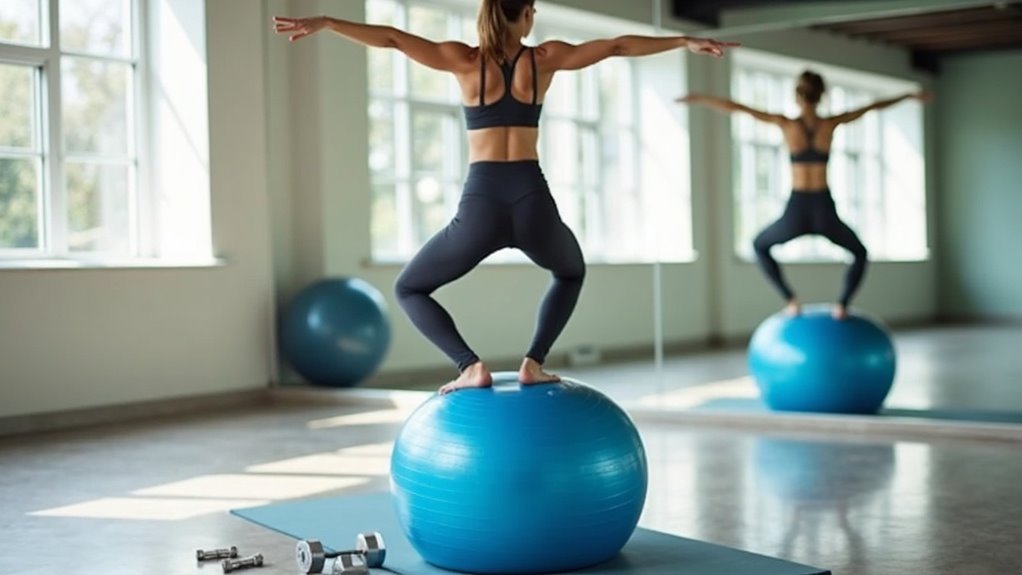
To safely integrate balance tools like the BOSU into your home workout routine, begin with basic exercises on the flat side for added stability. Start by standing on both feet, then gradually progress to single-leg holds and seated movements. Ensure that the surface beneath the BOSU is flat, and use a wall for support during your initial attempts. It’s important to wear proper footwear and regularly check your equipment for any signs of wear. With consistent practice, you’ll effectively strengthen your core and enhance your balance, making your home gym workouts more effective. Explore additional exercises to further enhance your routine and maximize the benefits of this versatile equipment for optimal results.
Key Takeaways
- Begin your home workout routine by performing basic exercises on the flat side of the BOSU to build your stability and confidence before advancing to more complex movements.
- During your initial training sessions, place the BOSU near a wall or a sturdy piece of furniture for support, which will help reduce the risk of falls.
- Make sure to use the BOSU on a flat, even surface to prevent slipping and enhance your safety while exercising at home.
- Opt for proper footwear with a good grip to minimize slipping hazards when using balance tools in your home gym.
- Regularly check your BOSU and other equipment for any signs of wear and tear to ensure safe and effective workouts.
Understanding the Benefits of Balance Tools
Balance tools, such as the BOSU Ball, provide a variety of benefits that can significantly enhance your home fitness routine.
These tools challenge your stability and improve balance, engaging stabilizing muscles more effectively than traditional exercises. This leads to heightened body awareness and control during your movements.
By incorporating the BOSU into your home workouts, you not only strengthen your core but also reduce the risk of injury by fortifying muscles and enhancing reflexive responses to instability.
Incorporating the BOSU into your workouts strengthens your core and reduces injury risk by enhancing muscle stability and reflexes.
Whether you’re just starting out or are an experienced fitness enthusiast, using balance tools in your home gym promotes stability and balance, making your workouts more versatile and dynamic.
Ultimately, this contributes to improved posture and overall physical health for both men and women looking to stay fit at home.
Starting With Basic Exercises
When you’re ready to incorporate balance tools like the BOSU Ball into your home workout routine, starting with basic exercises is crucial for establishing a solid foundation. Begin by standing on both feet on the BOSU to create a sense of balance. As you progress, practice static holds by standing on one leg for 15-30 seconds to develop unilateral strength. Seated exercises, such as chair marches, will help you become familiar with the equipment. Finally, introduce dynamic movements like gentle squats to enhance your balance. Consistency is key; aim for 2-3 sessions a week to see noticeable improvements in your balance.
| Exercise Type | Purpose |
|---|---|
| Static Holds | Build unilateral strength |
| Seated Exercises | Equipment familiarization |
| Dynamic Movements | Enhance balance |
| Consistency | Achieve noticeable progress |
Progressing to Intermediate Movements
As you gain confidence with basic exercises at home, it’s time to elevate your training by incorporating intermediate movements that challenge your stability and engage multiple muscle groups.
Here are some effective ways to progress using home gym equipment:
- Squat-to-Press: This combines strength and stability, promoting coordination while making effective use of dumbbells or resistance bands.
- Lateral Lunges: These challenge stability and work your legs and core, making them a great addition to your home workout routine.
- Mountain Climbers: A dynamic movement that boosts your heart rate and coordination, perfect for getting your cardio in without leaving home.
- Balance Pad Knee Lifts: These enhance stability and strengthen your core, especially when performed on an exercise mat or balance pad.
Always prioritize proper form to prevent injuries and maximize the benefits of your balance training.
Aim for 2-3 sessions per week for the best results, and enjoy the convenience of working out in your own space!
Safety Precautions When Using Balance Tools
Safety should always be your top priority while using balance tools in your home gym, especially if you’re just starting out.
Position your BOSU ball near a wall or sturdy support during initial exercises to prevent falls. Ensure that the surface beneath it’s flat and even to minimize slipping risks.
Begin with simpler exercises on the flat side to gradually enhance your stability and build confidence in your balance. Wear proper footwear with good grip to avoid slipping, and regularly check your equipment for signs of wear or damage.
Keeping your balance tools in safe condition ensures that your home workouts are both effective and secure, allowing you to focus on achieving your fitness goals.
Integrating Balance Training Into Your Routine
Now that you’ve established safety precautions for using balance tools, it’s time to effectively integrate balance training into your home workout routine.
Start with foundational strength exercises before adding the BOSU Ball for enhanced stability. Follow these steps:
- Begin with basic exercises on stable surfaces to build your strength.
- Practice on the flat side of the BOSU Ball for added stability.
- Gradually progress to the domed side for a greater challenge.
- Aim for consistency, training 2-3 times a week to see real improvements.
Incorporate exercises like squats, lunges, and planks to enhance core stability and coordination.
Monitoring Your Progress and Listening to Your Body
To enhance your balance training at home, it’s crucial to consistently track your progress.
Take note of how long you can maintain a single-leg stand and how you can increase the complexity of your movements on equipment like the BOSU ball.
Always pay attention to your body; if you experience pain or fatigue, feel free to adjust your routine.
Keeping a training log can serve as a great motivation and help you stay focused on your fitness goals, ensuring your progress is both safe and effective while working out in your home gym.
Track Your Improvements
Monitoring your progress in balance training at home can significantly enhance your overall performance and safety.
To effectively track your improvements while utilizing home gym equipment, consider these expert tips:
- Maintain a training log to document your home workouts, including exercises, duration, and repetitions.
- Regularly assess your balance by timing single-leg stands or performing dynamic movements on a stability ball or balance board.
- Incorporate periodic evaluations, such as balance tests, to measure your advancements and keep your workouts challenging.
- Utilize sensory feedback from smart home gym equipment or insights from online trainers to refine your technique.
These steps not only help you maintain balance but also reduce the risk of falling, ensuring a safer training experience as you enhance your reaction time and coordination right from the comfort of your home.
Recognize Physical Signals
Recognizing physical signals during your home workout routine is essential for achieving optimal performance and preventing injury. Pay close attention to signs of fatigue or discomfort, as these often indicate the need for rest or modifications to your exercise regimen.
Regularly monitor your progress; if you find maintaining balance on your home gym equipment easier, consider increasing the challenge with more advanced exercises. Listen to your body’s feedback—any pain or instability suggests it’s time to reassess your technique or seek professional guidance.
Keeping a training log can help you track improvements and sensations, ensuring you stay motivated and aware of your progress. Remember, consistency is key; if you notice a decline in performance, it may signal the need for more foundational stability work or a short break before advancing your home workout routine.