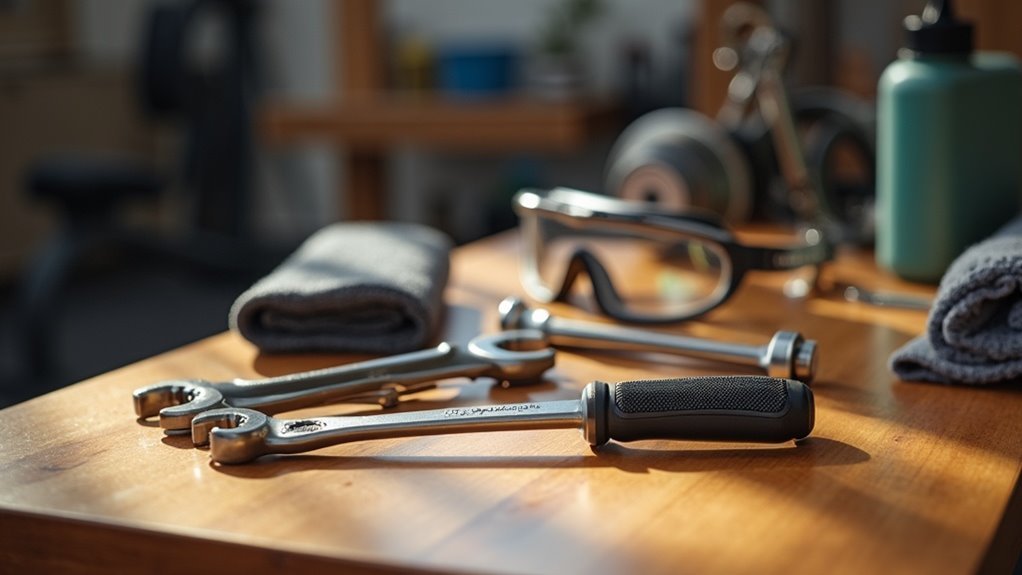
To select tools for basic home gym maintenance, begin with a fundamental toolset that includes wrenches, screwdrivers, pliers, and a mallet. Ensure you have a torque wrench for precise tightening and Allen wrenches for hex screws commonly found in gym equipment. A utility knife is also handy for various tasks, while a magnetic tool can help retrieve dropped items. For hygiene, opt for approved cleaning products and microfiber cloths to keep your equipment in top shape. To maintain efficiency, organize your toolbox by functions, and keep track of each tool’s condition and usage. With the right tools and practices, you can ensure your home gym remains safe and effective for your fitness journey.
Key Takeaways
- Begin with a fundamental toolset that includes wrenches, screwdrivers, pliers, and a mallet, which are essential for general maintenance tasks in your home gym.
- Consider investing in a torque wrench to ensure that bolts and nuts are tightened to the manufacturer’s specifications, providing safety and stability for your equipment.
- Don’t forget to include Allen wrenches, as they are crucial for adjusting and assembling gym machines that utilize hex screws, ensuring everything is properly set up for your workouts.
- A utility knife is also a handy tool for cutting cables and belts, which is vital for timely repairs to keep your home gym running smoothly.
- Lastly, a magnetic tool can be invaluable for retrieving dropped screws or small parts, enhancing efficiency during maintenance and allowing you more time to focus on your fitness goals.
Essential Tools for Equipment Assembly and Repairs
To maintain your home gym equipment effectively, it’s important to have a basic toolset that includes essential items like wrenches, screwdrivers, pliers, and a mallet.
Incorporate a torque wrench to ensure that all bolts and nuts are tightened to the manufacturer’s specifications, which helps prevent damage from over-tightening.
A set of Allen wrenches is crucial for adjusting and assembling equipment with hex screws, commonly found in various home gym machines.
Don’t forget a utility knife for cutting cables and belts, and a magnetic tool to easily retrieve dropped screws or small parts.
With these essential tools, you’ll streamline your home gym maintenance, promoting safety and functionality in your equipment assembly and repairs, allowing you to focus on your fitness journey at home.
Cleaning Supplies for Hygiene Maintenance
Maintaining hygiene in your home gym is essential for everyone, regardless of fitness level.
Using approved cleaning products, such as antibacterial sprays, is key to effectively disinfecting high-touch surfaces and equipment. Microfiber cloths are perfect for cleaning weight stacks and frames, as they trap dust without scratching the surfaces.
For stubborn stains, a mix of mild detergent and warm water works well without damaging any finishes. Remember to regularly replace your cleaning supplies to ensure optimal hygiene practices.
Steer clear of harsh chemicals and abrasive cleaners, as they can shorten the lifespan of your equipment.
Organizing Your Toolbox for Efficiency
Although organizing your home gym equipment might seem like a minor task, it greatly enhances your efficiency during workouts and maintenance.
Start by categorizing your tools and accessories based on function—weights for strength training, resistance bands for flexibility, and mats for floor exercises. Use a storage system with compartments to keep smaller items like clips, straps, and lubricants accessible, preventing clutter.
Categorize your gym equipment by function to enhance efficiency and prevent clutter during workouts.
Label each section for quick identification, ensuring a smooth workout flow. Regularly audit your equipment to verify all necessary items are present and in good condition, replacing damaged equipment promptly.
Consider adding a checklist of essential gear inside the storage area for quick reference, streamlining your fitness routine.
Assessing Specialized Tools for Specific Issues
How do you ensure your home gym equipment remains safe and functional? Evaluating specialized tools is crucial for effective maintenance.
A torque wrench helps you tighten bolts to manufacturer specifications, which enhances both safety and performance. Use a digital caliper for precise measurements of components like cables and pulleys, ensuring everything fits perfectly.
For diagnosing electrical issues, a multimeter can identify faulty wiring in your machines, keeping your workouts uninterrupted. A cable tension gauge measures the tension in cables, ensuring your weight stack operates at peak performance.
Finally, a hydraulic lift provides safe access to heavy equipment, minimizing injury risks during inspections.
Prioritize these specialized tools for thorough maintenance and reliability of your home gym, so you can focus on staying healthy and fit.
Regular Maintenance and Inspection Practices
To keep your home gym equipment in top shape and support your health journey, regular maintenance and inspection practices are essential for both men and women.
Begin with daily visual inspections to spot any visible wear and tear or damage, addressing potential safety hazards immediately to ensure a safe workout environment.
Conduct weekly checks to tighten bolts and nuts, as loose fittings can increase injury risks during your fitness routines.
Monthly inspections of cables and belts are crucial for assessing tension and wear, which can impact your workout performance.
Additionally, establish a routine lubrication schedule for moving parts to minimize friction and enhance the longevity of your equipment.
Finally, maintain a detailed log to track inspections, repairs, and replacements, ensuring all equipment remains functional and safe for your regular use.