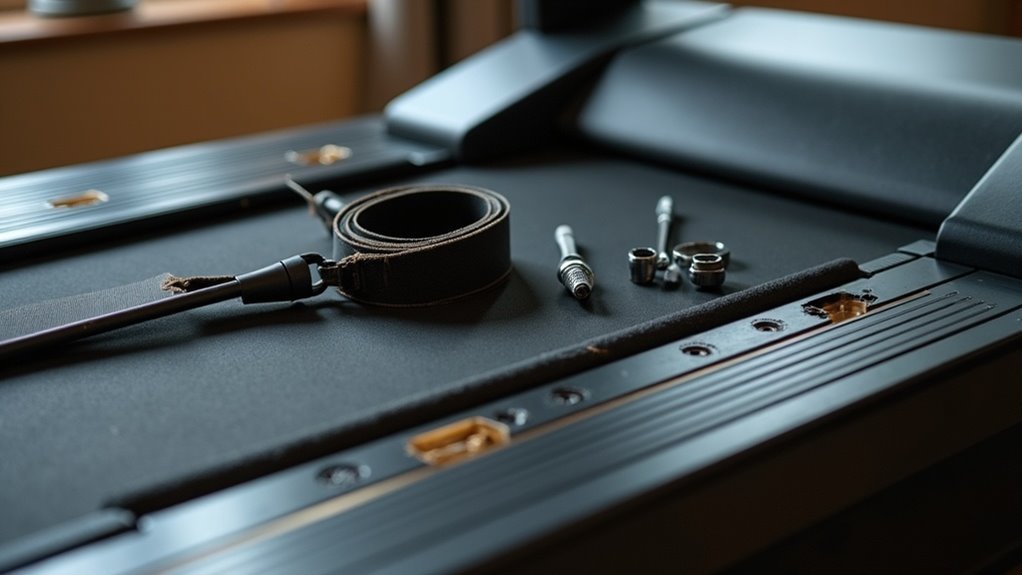
To replace the belt on your compact treadmill, first unplug it to ensure your safety during the process. Grab a Phillips head screwdriver to remove the motor hood, and then use an Allen wrench to loosen the belt tension. Carefully slide the old belt off the rear roller and position the new one on the deck. Once the new belt is in place, reattach the motor hood and plug the treadmill back in. It’s important to test the treadmill for proper tension and alignment before using it again. Stick around for essential maintenance tips and troubleshooting advice to keep your home gym equipment in peak performance, helping you stay committed to your fitness journey at home!
Key Takeaways
- Before starting the belt replacement process on your compact treadmill, make sure to unplug the machine to ensure your safety.
- Use a Phillips head screwdriver to carefully remove the motor hood, which will give you access to the treadmill belt.
- To make the removal of the old belt easier, use an Allen wrench to loosen the belt tension.
- Position the new belt evenly on the deck, then adjust the tension bolts to ensure a proper fit for your workouts.
- Once the new belt is installed, apply lubricant to it to improve performance and extend its lifespan, keeping your home gym equipment in top condition for your fitness journey.
Tools Needed for Treadmill Belt Replacement
When you’re ready to replace the belt on your compact treadmill, having the right tools is essential for a hassle-free experience.
To get started, you’ll need a Phillips Head Screwdriver to remove the motor hood and access the internal components of your treadmill. An Allen Wrench is also crucial for loosening tension bolts, allowing you to adjust the belt properly for optimal performance.
Depending on your specific model, an Electric Drill may be needed to swiftly remove any screws or bolts. Additionally, keep some treadmill lubricant on hand to ensure your machine runs smoothly after the installation.
Always refer to your treadmill’s instruction manual for any specific tools that may be required for your model.
Step-by-Step Belt Replacement Process
Now that you have the necessary tools ready, it’s time to begin the belt replacement process for your compact treadmill, an essential step in maintaining your home gym equipment for optimal performance.
Get your tools ready and start the essential belt replacement for your compact treadmill to keep your home gym in top shape.
First, ensure your safety by unplugging the treadmill. Next, use a Phillips head screwdriver to remove the motor hood and gain access to the internal components.
- Begin by loosening the old belt tension with an Allen wrench to facilitate the removal process.
- Carefully slide the old belt off the rear roller.
- Position the new belt onto the deck, ensuring it’s centered for balanced performance.
- Finally, adjust the tension bolts until the belt can lift 2-3 inches, achieving the perfect tension for your workouts.
Reassembly and Testing of the Treadmill
As you finish replacing the belt on your compact treadmill, proper reassembly is crucial to ensure your home gym equipment functions safely and efficiently.
Begin by reattaching the right front and rear mounting screws to secure the rear roller, making sure everything is aligned correctly. Next, reinstall the right guard rail using the original screws to maintain the structural integrity of your treadmill.
After that, replace the front motor hood and fasten it securely to protect the internal components from dust and damage.
Once you’ve reassembled your treadmill, plug it back in and conduct a test run. Pay close attention to the belt tension and alignment during the test.
Ensure the belt lifts 2-3 inches when you apply pressure, and listen for any signs of slipping or unusual noises. This final check will help you maintain an effective workout environment in your home gym, allowing you to stay committed to your health and fitness goals.
Maintenance Tips for Longevity
To ensure your compact treadmill stands the test of time, it’s essential to implement a consistent lubrication schedule and regularly check the belt for signs of wear.
Look for fraying edges or any slipping during your maintenance checks.
Regular Lubrication Schedule
Regular lubrication of your compact treadmill belt is crucial for ensuring its longevity and performance, especially for those who prioritize home workouts.
To keep your treadmill in top shape, adhere to the following lubrication schedule:
- Lubricate at least once a year for regular use to ensure optimal performance.
- Use a silicone-based lubricant specifically designed for treadmill belts to avoid damage.
- Pay extra attention to areas showing signs of wear and tear to minimize friction and enhance functionality.
- Keep a log of lubrication and inspections to monitor the condition of your treadmill belt effectively.
A well-lubricated belt not only improves performance but also enhances user safety by increasing traction and reducing the risk of injury.
Don’t wait for issues to arise; maintain your equipment regularly to keep your home gym running smoothly and support your fitness journey!
Inspect for Wear
While using your compact treadmill at home, it’s crucial to regularly inspect the belt for any signs of wear.
Keep an eye out for fraying edges, curling, or a polished underside, as these could indicate that the belt is deteriorating and may need replacement.
If you notice any slipping or jerky movements during your workout, this could signal a loss of grip and present potential safety hazards.
Ensuring proper alignment of the belt is important to prevent uneven wear and prolong the life of your equipment.
Additionally, don’t forget to monitor the rollers and deck for any damage, as these components directly affect the belt’s performance and your overall workout experience.
Staying proactive with maintenance will help you maintain an effective and safe home gym environment.
Troubleshooting Common Issues
When you notice issues with your compact treadmill belt, such as slipping, fraying, or misalignment, it’s essential to address them quickly to ensure optimal performance and safety during your home workouts.
Follow these steps to troubleshoot:
- Always unplug the treadmill before inspecting it to avoid any accidents.
- Look for signs of wear, such as curled edges or shiny surfaces that indicate excessive friction.
- If the belt is slipping, you can adjust the tension bolts to achieve the correct tightness.
- Should the problems persist, refer to your treadmill’s manual or reach out to customer support for assistance.
Importance of Proper Lubrication
To keep your compact treadmill in optimal condition for your home workouts, proper lubrication of the belt is crucial.
Using your treadmill without sufficient lubrication can increase friction, leading to premature wear and potential safety risks. It’s advisable to apply a silicone-based lubricant at least once a year to ensure peak performance and a smooth workout experience.
This maintenance step not only extends the lifespan of the belt but also reduces noise, allowing you to focus on your fitness goals. Failing to lubricate can result in uneven wear, slippage, and costly repairs due to an overworked motor.