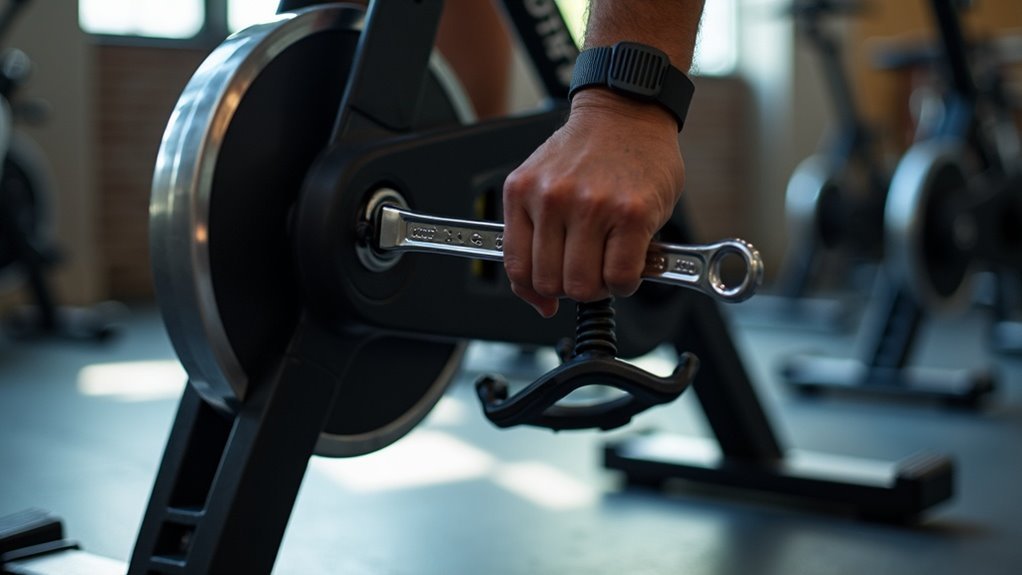
To tighten loose pedals on your spin bike, start by checking for any wobbling or rattling that may affect your workout. Grab a 15mm pedal wrench and tighten the right pedal by turning it clockwise, while the left pedal should be tightened counter-clockwise. Inspect the crank arms to ensure all bolts are securely fastened. For precise tightening and to avoid potential damage, consider using a torque wrench. Regular maintenance of pedal connections is essential; keep them flush against the crank arm for optimal performance. By following these steps, you’ll ensure your spin bike remains in top shape, helping you stay healthy and active in your home gym routine.
Key Takeaways
- Begin by inspecting your spin bike pedals for any side-to-side wobble and listen for any rattling noises, which may indicate looseness.
- To tighten the pedals, use a 15mm pedal wrench: turn the right pedal clockwise and the left pedal counter-clockwise for a secure fit.
- Ensure that the pedal nuts are flush against the crank arm; this helps prevent them from loosening during your workouts.
- If necessary, check and tighten any crank arm bolts to ensure there’s no movement detected during your inspection.
- For optimal performance and longevity of your spin bike, make it a habit to conduct regular inspections and apply grease to the pedal spindles for smooth operation. This will help you maintain a safe and effective home gym environment, promoting a healthy lifestyle for both men and women.
Identifying Loose Pedals
To ensure your spin bike operates optimally and supports your home workout routine, it’s crucial to identify any loose pedals before they escalate into bigger problems.
Start by checking for side-to-side wobbling when you stand on the pedals; this is a clear sign of looseness. Inspect the connections to the crank arms for any gaps or movement, which indicates that the pedal shaft may not be secured tightly enough.
Check for side-to-side wobbling and inspect crank arm connections for gaps to ensure your pedals are secure.
Wiggle the crank arms to see if there’s any noticeable movement, signaling that it’s time for some tightening. Additionally, listen for any rattling noises while pedaling, as these could point to an unsecured pedal assembly or bearings.
Regularly check that pedal nuts are flush against the crank arm to avoid persistent loosening issues, keeping your workouts safe and effective.
Tools Needed for Tightening
Having the right tools is essential for efficiently tightening loose pedals on your spin bike, a key component for maintaining a productive at-home workout.
To tackle this task, you’ll need a 15mm pedal wrench to easily loosen and tighten the pedal connections. A socket wrench might also be required to secure the pedal spindle nut against the crank arm effectively.
For optimal safety and performance, using a torque wrench is advisable to ensure you apply the correct torque, preventing over-tightening that could damage your bike’s components. A flathead screwdriver can come in handy for any adjustments that involve prying or aligning parts during the tightening process.
Additionally, it’s wise to keep maintenance tools like grease and cleaning cloths readily available to ensure smooth operation and enhance the longevity of your pedal assembly after tightening, allowing you to focus on your fitness goals in the comfort of your home gym.
Step-by-Step Tightening Procedure
Begin the tightening process by inspecting the pedal connections for any visible looseness or wobbling, ensuring a safe and effective workout at home.
Follow these steps to guarantee proper tightening for your spin bike:
- Use a socket wrench to tighten the right side pedal by turning it clockwise, while ensuring the left side tightens counter-clockwise. This helps maintain stability during your cycling sessions.
- Check the connection between the crank arms and crank shaft, tightening any bolts if necessary. A secure connection is crucial for optimal performance and safety.
- Inspect the crank shaft for movement in its bearings or cartridge, tightening carefully to avoid damage. Proper maintenance here will enhance your bike’s durability.
Regularly maintain and inspect the pedal assembly to keep connections secure, prolonging the lifespan of your spin bike components and supporting your home fitness journey.
Inspecting Pedal and Crank Assembly
Inspecting the pedal and crank assembly is essential for ensuring your spin bike operates safely and effectively, especially when you’re committed to staying healthy through home workouts.
Start by checking for any side-to-side wobble at the pedal connection to the crank arm; this could indicate looseness that might affect your ride.
Check for side-to-side wobble at the pedal connection; it may signal looseness that can disrupt your ride.
Next, take a look at the crank arms for any visible movement on the crank shaft, as this may signify an insecure attachment that requires your attention.
It’s also important to assess the crank shaft for looseness in its bearings or cartridge, as this can compromise pedal stability and impact your workout.
Lastly, inspect the pedal nut to ensure it’s flush against the crank arm; any misalignment here can prevent proper tightening and lead to ongoing looseness.
Regular inspections are crucial to maintaining the performance of your home gym equipment.
Maintenance Tips for Longevity
To keep your spin bike in top shape, regular maintenance is essential for extending the life of its components, especially the pedals.
Here are some crucial tips to ensure safety and optimal performance for your home workouts:
- Frequently check pedal connections; tighten them as necessary to avoid any loosening during your ride.
- Use a socket wrench to ensure the pedal nut is securely tightened, making sure it sits flush against the crank arm for stability.
- Apply grease to the pedal spindles and clean the bearings regularly to minimize friction and prevent wear.
Make sure to document your pedal adjustments and maintenance according to the manufacturer’s guidelines.
This will help you track performance and inform future upkeep efforts for maximum efficiency in your home fitness routine.