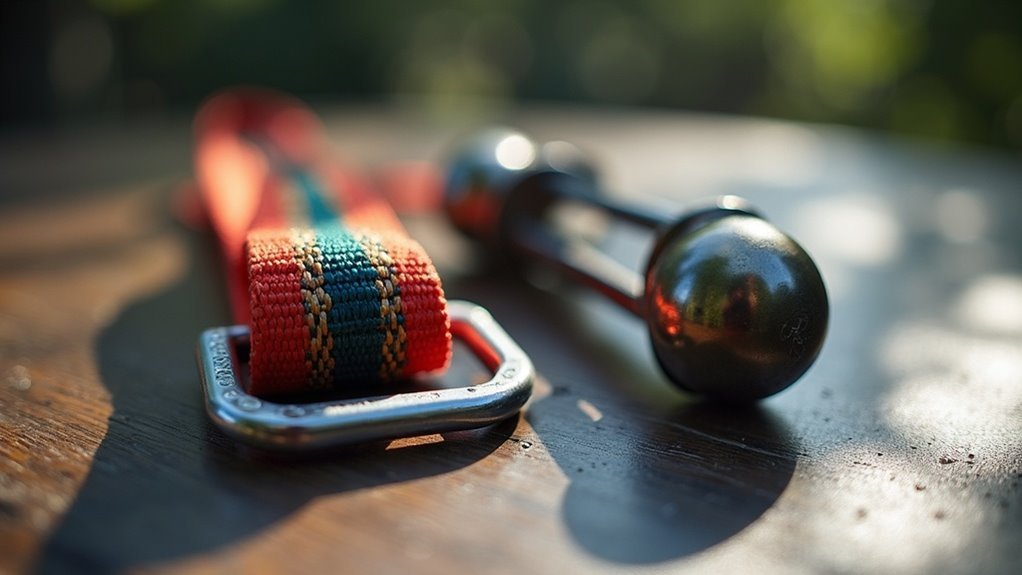
When selecting between safety straps and pins for your home gym, it’s important to consider your workout style and safety requirements. Safety straps are designed to absorb impact better, provide adjustable heights, and offer enhanced protection for your equipment, making them ideal for dynamic exercises. On the other hand, safety pins are a trusted option, crafted from durable steel, but they come with fixed heights, which can restrict your range of motion. Reflect on what matters most to you—if you prioritize impact absorption and flexibility in your workouts, safety straps are the way to go; if you seek reliable and steadfast support, opt for safety pins. By weighing these options, you can make an informed decision that aligns with your fitness routine at home.
Key Takeaways
- Assess your workout needs: Choose safety straps for impact absorption and adjustability, or safety pins for reliability and fixed height support, depending on your home gym setup.
- Consider the type of exercises: Straps are ideal for dynamic lifts, providing flexibility for various movements, while pins are better suited for static lifts like squats and bench presses, which are common in home workouts.
- Evaluate durability: Look for straps made from reinforced nylon for enhanced durability, especially if you’re lifting heavy weights at home, while metal pins may wear down over time under intense use.
- Check compatibility: Ensure that your chosen safety equipment works seamlessly with your specific power rack model to maximize safety and effectiveness during your home workouts.
- Prioritize user experience: Seek out products that improve your workout flow, minimizing any jarring impacts and enhancing overall lifting safety and performance, which is essential for a successful home gym routine.
Understanding Safety Straps and Pins
When it comes to home gym equipment, particularly in weightlifting, understanding the differences between safety straps and pins is essential for ensuring a secure and effective workout.
Safety straps, crafted from heavy-duty fabric or rubber, absorb impact and provide a softer landing for failed lifts, making them ideal for home use where safety is a priority. They offer adjustable height settings, enhancing convenience and versatility for various exercises.
In contrast, pins are rigid metal crossbeams with fixed heights, which can limit your range of motion and may not be as suitable for a home gym environment. While straps minimize damage to your barbell and operate quietly, metal pins can create distracting noise and cause scratches on your equipment.
Choosing the right option can significantly enhance your lifting experience and overall safety, allowing you to stay healthy and fit in the comfort of your home.
Benefits of Safety Straps
While many fitness enthusiasts concentrate on their performance and technique, the advantages of using safety straps in your home gym shouldn’t be overlooked.
Here are three key benefits:
- Impact Absorption: Safety straps absorb impact better than rigid surfaces, providing a gentler landing for your barbell during failed lifts. This reduces the risk of injury, making your workouts safer.
- Adjustability: The adjustability of safety straps is a great feature, allowing you to set them at various heights. This maintains a full range of motion during your lifts without abrupt stops, enhancing your workout experience.
- Equipment Protection: Safety straps help protect your barbell and other gym equipment from scratches and damage. This ensures that your investments last longer and remain functional for all your home workouts.
Incorporating safety straps into your home gym routine is a smart safety measure that enhances your overall lifting experience while promoting a healthy lifestyle.
Advantages of Safety Pins
Safety pins are an essential addition to your home gym, providing a sturdy and reliable option for securing your barbell during intense workouts. Crafted from durable 11-gauge steel, these pins form a solid barrier that catches the barbell if it falls, ensuring your safety while lifting heavy weights.
Their adjustable height accommodates different lifting preferences, making them perfect for a variety of exercises like squats and bench presses. Unlike safety straps, safety pins offer a fixed stopping point, reducing the risk of unintended movement.
Additionally, they’re easy to install and maintain, making them a practical choice for both men and women who prioritize safety and performance in their home training routines.
Key Differences Between Safety Straps and Pins
When comparing safety straps and pins for your home gym setup, you’ll notice key differences in their impact absorption capabilities, height adjustment flexibility, and durability.
Safety straps provide enhanced shock absorption, making them ideal for various lifts and offering more versatility in your workouts.
On the other hand, pins offer a fixed height and a more rigid stop, which may limit your lifting options.
Understanding these distinctions will help you choose the right option to enhance your home exercise experience and stay healthy while working out.
Impact Absorption Capabilities
Choosing the right equipment for your home gym can significantly impact your performance and safety, particularly when it comes to the impact absorption capabilities of safety straps versus pins.
Here are three key differences to consider for your at-home workouts:
- Impact Absorption: Safety straps excel in absorbing impact, providing a flexible landing surface that helps reduce wear and tear on your barbell and weights, crucial for maintaining your equipment over time.
- Force Distribution: Unlike rigid safety pins, straps distribute force evenly across the material, minimizing abrupt stops during your lifts. This feature is essential for both safety and performance as you push your limits.
- Protection: The softer composition of safety straps protects against scratches and dents from metal-on-metal contact, enhancing your overall lifting experience and boosting your confidence as you tackle heavier weights in your home gym.
Invest in the right safety equipment to optimize your home workouts and stay healthy!
Height Adjustment Flexibility
How adaptable are your home gym setups? Safety straps provide remarkable height adjustment flexibility, allowing you to customize catch points for various exercises, enhancing versatility during your at-home workouts.
Unlike safety pins, which typically offer a fixed height, straps enable smoother lifting motions and reduce jarring impacts. The adjustable nature of safety straps is ideal for incline or decline lifts, expanding your workout options right in the comfort of your home.
You’ll find that the ease of adjusting straps leads to a more fluid and efficient training session, whereas safety pins can restrict your range of motion and require cumbersome adjustments.
Prioritize safety and adaptability with your home gym equipment choices to stay healthy and fit.
Durability and Damage Risk
While both safety straps and pins are crucial for ensuring safety in your home gym, their durability and potential damage risks vary significantly. Here are some important factors to consider:
- Material Composition: Safety straps, crafted from reinforced nylon, are designed to absorb impacts more effectively than rigid metal pins, thereby reducing the risk of damage to both the equipment and the user.
- Force Distribution: Straps offer better force distribution, which enhances their durability. In contrast, metal pins can become compromised under heavy loads, leading to potential failures during workouts.
- Wear and Tear: Many users find that safety straps experience less wear over time, as they cushion the impact and help prevent scratches and dents on your bars, maintaining the aesthetic and functional quality of your equipment.
When choosing between safety straps and metal pins, consider how each option can influence not only the longevity of your equipment but also your overall safety during home workouts.
Choosing the Right Safety Equipment for Your Lifts
When selecting safety equipment for your home gym lifts, it’s crucial to understand the differences between safety straps and pins to enhance your workout experience.
Safety straps provide superior impact absorption compared to rigid pins, resulting in a softer landing for the barbell and significantly lowering the risk of injury during failed lifts. While pins serve as a solid stopping mechanism, they can potentially damage your barbell over time.
Safety straps offer better impact absorption than rigid pins, reducing injury risk and protecting your barbell over time.
Straps also offer greater height adjustments, making them versatile for various lifting styles, including incline and decline exercises, which are important for a well-rounded fitness routine.
Additionally, it’s essential to consider the weight capacity of the equipment. Heavy-duty pins may support loads of 700-1000 lbs, but the shock-absorbing properties of straps could be more beneficial for your safety needs, while also enhancing the flow of your workouts.
Investing in the right safety equipment is a key step in creating a safe and effective home gym environment for both men and women committed to staying healthy through exercising at home.
User Experiences and Feedback
When considering user experiences with home gym equipment, many lifters emphasize the benefits of impact absorption and quick adjustments that safety straps provide during workouts.
On the other hand, some users still value the traditional feel and support that metal pins offer, citing their reliability.
Strap Performance Insights
As you delve into the performance of safety straps for your home gym, user feedback consistently highlights their advantages over traditional pins, especially in minimizing impact during lifts.
Many fitness enthusiasts prioritize safety straps for their:
- Gentler impact: They effectively cushion a dropped bar, reducing jarring effects during bench presses, making your workouts safer and more enjoyable.
- Quick adjustment: Users appreciate the faster setup, which enhances workout flow and convenience, allowing you to focus on your fitness goals without interruptions.
- Durability: The quality stitching in these straps ensures longevity and effectiveness in absorbing impact, giving you peace of mind as you push your limits at home.
Incorporating safety straps into your routine not only boosts your performance but also contributes to a safer and more efficient home workout experience.
Pin Effectiveness Perspectives
While many fitness enthusiasts value the reliability of metal pins for securing their barbells, user feedback indicates some notable drawbacks that can affect both performance and safety during home workouts.
Lifters report that while pins provide a solid catch, they can damage the barbell and produce jarring impacts when the bar is dropped. Furthermore, the fixed height of pins restricts range of motion, making them less versatile compared to adjustable safety straps.
Additionally, users have noted that pins don’t absorb shock effectively, resulting in a harsher experience during failed lifts.
Ultimately, for those looking to enhance their home gym setup, the flexibility and shock-absorbing qualities of safety straps are favored for improved safety and a superior lifting experience.
Recommendations for Safety Strap and Pin Selection
Selecting the right safety straps or pins is essential for ensuring safety and enhancing performance during your home workouts. To help you make an informed choice, consider the following recommendations:
- Safety Straps: Choose adjustable options that cater to different heights, improving your overall lifting experience and accommodating various exercises.
- Durability: Look for high-quality materials, as this will significantly influence the longevity and reliability of your safety equipment, ensuring it stands up to regular use.
- Compatibility: Confirm that the safety straps or pins you select are compatible with your specific power rack model. This is crucial for maintaining safety and functionality while you work out at home.
Additionally, keep in mind your personal workout preferences; some individuals may find safety pins better suited to their lifting style, while others may prefer straps.
Prioritizing your comfort and safety will lead to a more effective home gym experience for both men and women.